Colleen Grablick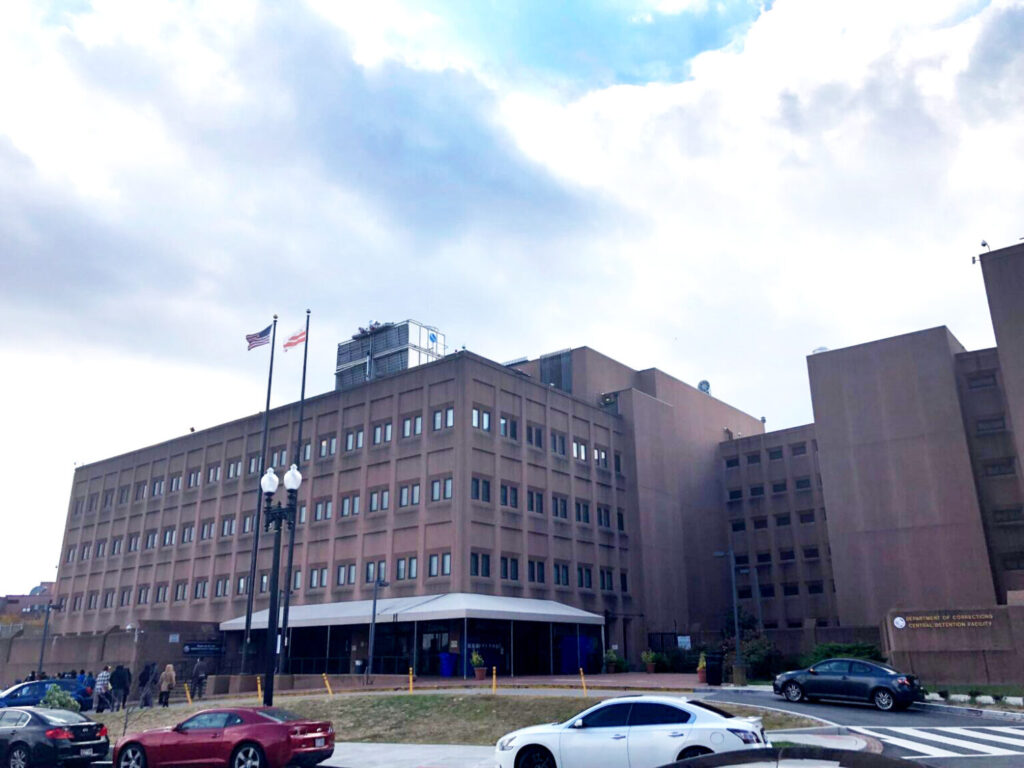
Ward 1 D.C. Councilmember Brianne Nadeau is re-upping a years-long effort to ban solitary confinement at the D.C. Jail and other facilities operated by the city’s Department of Corrections.
In a press release Wednesday, Nadeau announced her intent to introduce the ERASE (Eliminating Restrictive and Segregated Enclosures) Solitary Confinement Act of 2023, which would ban all forms of solitary confinement for any reason — including for long-term suicide prevention or discipline. It would also prevent solitary confinement from being used to separate transgender or otherwise vulnerable residents, and ban administrative segregation, such as when residents are moved or reassigned for safety reasons or to reduce conflicts. The only exemptions are for short-term suicide prevention or medical isolation.
The forthcoming legislation is a narrowed version of a previous iteration of the ERASE Solitary Confinement Act, which was introduced by former Ward 3 Councilmember Mary Cheh last summer but did not make it past a public hearing.
“Solitary confinement can lead to serious and lasting psychological damage, and it has no place in institutions controlled by the District government,” Nadeau said in a press release announcing the bill. “Not only is it harmful, but there is no evidence that it actually deters negative behavior. It’s time for us to end solitary confinement in the District of Columbia.”
Research shows that prolonged solitary confinement has detrimental, and potentially deadly, effects. A 2020 study found that individuals who have spent any amount of time in solitary confinement, even just one day, were more likely to experience premature death after release (by suicide, homicide, or opioid overdose) than those who have never experienced solitary confinement.
The actual bill is still being drafted, Nadeau told DCist/WAMU in an interview Wednesday, as staffers work with the local Unlock The Box movement, a coalition of transformative justice advocates and survivors of solitary confinement. Organizations like the D.C. American Civil Liberties Union, the DC Justice Lab, Harriet’s Wildest Dreams, and the Public Defender Service for the District of Columbia have all convened to assist in the bill’s creation.
Beyond outlawing solitary confinement, the legislation would also mandate that all residents in a DOC facility receive at least eight hours of out-of-cell time a day, require DOC to return property that’s taken when moving a resident’s cell within six hours, and charge DOC with providing residents mental health services any time they’re placed in prolonged confinement, medical isolation, or suicide watch. An oversight provision of the bill would require DOC to collect and publish data every three months on the ongoing use of solitary, and allow residents to file special fast-track grievances and potentially sue DOC if they’ve been subject to prolonged confinement.
“There’s enough evidence to demonstrate that, while solitary confinement certainly does punish people, it doesn’t hold people accountable in ways that allow a person to be capable of actually repairing the harm they’ve caused,” said Devin Smith, member of Unlock the Box DC, in a statement. “All industrialized, Western nations have figured out alternatives to solitary confinement, I’d like to think that we can also.”
Spokespeople for the D.C. DOC could not immediately comment on the forthcoming bill.
Nadeau said the legislation is meant to be a more streamlined version of the bill introduced last summer, which would’ve banned the use of solitary confinement for both adult and juvenile corrections facilities, and restricted the D.C. Jail’s use of “safe cells.” These are housing cells meant to keep people at risk of suicide or self-harm safe, but former residents of D.C. Jail and advocates say they end up doing the opposite. A Washington City Paper report documented allegations of horrific conditions inside safe cells, where residents sometimes went without water, proper medication, or access to legal assistance.
While the specifics of this bill are still being written, Nadeau hopes that by narrowing its scope, it may be easier to move it through the legislative process and eventually to a vote. Spokespeople for Ward 2 Councilmember Brooke Pinto, who chairs the council’s judiciary committee, did not immediately return DCist/WAMU’s request for comment on whether she would support the legislation. The bill would first need a hearing in her committee before moving further through the legislative process.
Last year’s version of the legislation also extended the ban on confinement to D.C.’s youth detention centers, which fall under the D.C. Department of Youth Rehabilitation Services. Although there is a law on the books that bans the use of room confinement as a disciplinary measure in youth detention facilities, youth justice advocates alleged earlier this spring that a staffing and overpopulation crisis within DYRS resulted in lockdowns that lasted almost 24 hours and other unsafe conditions within the Youth Services Center, D.C.’s youth jail.
It could complicate the legislative process, as DYRS falls under a different council committee than the DOC. Nadeau said, however, that a youth ban may still be included in the final draft of the bill, which is expected to be introduced this fall when lawmakers return from recess.
“We do have to think about how do we get this [youth] piece done, I do think that adding in youth now or in another iteration is really important,” Nadeau told DCist/WAMU.
The use of solitary confinement or otherwise restrictive housing has been a constant issue for years. According to a DOC memo, in 2018 eight percent of the population was held in solitary confinement at any given moment; in 2017, it was nine percent. This is nearly three times the national average, according to a Bureau of Justice Statistics Report published in 2015.
When COVID-19 began to spread in 2020, the D.C. Jail adopted a near-total lockdown, restricting residents — some of whom were still awaiting trial and had not yet been convicted of any crime — to their cells for 23 to 24 hours a day to stop the spread of coronavirus. That total lockdown was still continuing well over a year later, totaling more than 400 days of almost constant confinement — circumstances experts say is a human rights violation.
Herbert Robinson, a D.C. native, last spent time at the D.C. Jail in 2013. After being released from a federal prison in October in 2022, he began working with prison and justice reform organizations like More Than Our Crimes, and the D.C. Justice Lab, and now is pushing for an end to solitary confinement in the city. During his time at the D.C. Jail, he recalled periods where solitary confinement meant only leaving a cell every other day, not once a day.
“Physical isn’t the hardest part, it’s the mental, the psychological effect that comes with it, and stuff other than conditions. Being lonely, not being able to communicate with your family,” he told DCist/WAMU. “Having to go through that, having to live through it, and knowing that others are still going through this experience, that’s my motivation to change it.”
Robinson said that during periods of solitary confinement, which could last anywhere from 14 to 90 days depending on the situation, incarcerated residents would go without legal assistance and would miss phone calls with lawyers and family members. He also said that when residents were placed in solitary confinement for mental health reasons, the confinement often just exacerbated the crisis, both for the individual and the other residents of the jail.
“It’s like, I’m put in this position because I have a health issue, and you’re punishing me,” he said. “I shouldn’t be punished, I need help.”