 Aja Drain
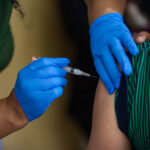
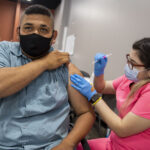
Yesterday, the CDC recommended an updated FDA-approved COVID booster for patients 6 months and older. People can start making appointments at local pharmacies and through their healthcare provider, with appointments at some places starting as early as next week, according to CVS Health.
“The boosters that we took for COVID are waning; their efficacy declines the farther away you get from that shot,” Montgomery County Executive Marc Elrich said in a press conference. “So getting a booster is critically important to maintain the protection they gave us.”
There’s been an uptick in COVID cases across the country, including in the D.C. region, and the rollout of an updated booster could help mitigate the spread of the virus. The latest version of the vaccine targets the XBB.1.5 lineage of omicron, which is the variant currently circulating. Now the booster will be available in D.C., Maryland, and Virginia in the coming weeks.
In prior surges, health departments had federal support to distribute vaccines and free tests. This time around, private insurers are covering the bulk of the costs – which could be upwards of $120-130 without coverage. Under the Affordable Care Act, all insurance companies are required to cover vaccines recommended by the Advisory Committee on Immunization Practices (ACIP), according to the CDC. That also includes Medicaid and Medicare, according to the Washington Post.
“It’s really important that people are calling ahead of their appointments to ask about availability of new vaccines, whether or not they’re eligible, and any out-of-pocket costs that they may come to expect,” Communications Officer for the Alexandria Health Department Eve Elliot says.
Elliot adds that those without insurance may have a harder time finding an appointment for a free vaccine. Across the region, over 326,000 people under 65 are uninsured, according to 2021 data from the U.S. Census. And with thousands of Medicaid patients being disenrolled across the region, that number may increase over the next year as patients try to reapply for coverage.
Local health departments in the region, including in Maryland and Virginia, are channeling their resources toward assisting underinsured and uninsured patients. City-run COVID centers in D.C. closed permanently back in May, but the District provides vaccine resources on its website.
The CDC’s Bridge Access Program will assist adults without insurance through the end of 2024, and Vaccines for Children provides access for kids at participating practices.
With the fall approaching, COVID isn’t the only respiratory virus in circulation. Historically, the region has seen surges in RSV and flu cases around this time of year, as kids head back to school and cooler weather brings people inside.
“This year, we have up-to-date vaccines for COVID flu and RSV so people can think about their appointments for all sorts of respiratory illnesses going into the season so that they can protect themselves and their loved ones and all the fun plans that we’re making for the fall in the winter,” Elliot says.
For more information, you can visit vaccines.gov.