 Olga Imbaquingo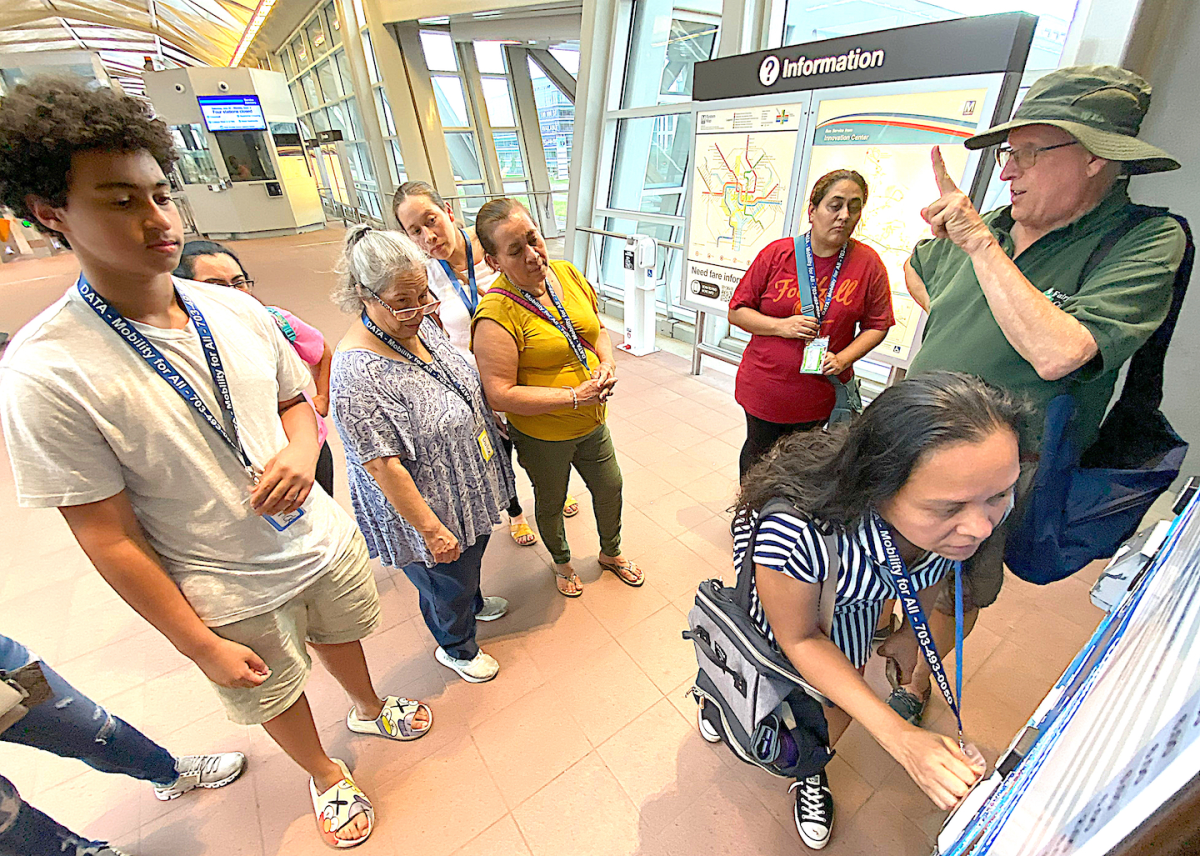
This story was produced by El Tiempo Latino. La puedes leer en español aquí.
A coalition of organizations in Northern Virginia is teaching people how to use public transportation, aiming to help those limited by not having a car. Lack of access, or not knowing what resources are available, disproportionately harms low-income people, elderly residents, people with disabilities, and non-English-speaking immigrants.
The Dulles Area Transportation Association (DATA) is working with Centreville Immigration Forum and other organizations to remove some of those barriers. Their pilot program is training 55 participants, all of whom are low-income and do not speak English fluently. Each person received a transit card worth $100 for their training trips.
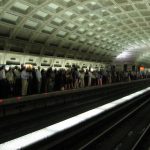
“Thanks to these partnerships, we are training them at bus stops and train stations,” said Luke Frazza, a program outreach manager at DATA. “We teach them how to read route maps, use the phone and bus stop numbers to know when a vehicle will arrive, or to use apps that simplify connections and schedules.”
The idea is to promote public transportation: buses, trains, bicycles, and carpooling.
“We don’t reject private vehicles; we simply aim for a sustainable service and reducing carbon emissions in our area,” said Sarah McGowan, director of programs at DATA. “It’s proven that increased use of public transportation reduces traffic, waiting times, and is more economical.”
In 2019, the average U.S. household spent 16 cents of every dollar on transportation, according to the American Public Transportation Association. More than 90% of that money went toward private vehicles, which the association says was the largest expense after housing.
McGowan said DATA’s Mobility For All projects have focused on older adults. But their partnership with the Centreville Immigration Forum and the Herndon Neighborhood Resource Center unveiled another reality: “They told us, ‘the people who really need to learn how to use public transportation are young Spanish-speaking individuals with two jobs and no car,’” she said. “Without transportation, they can’t get a better job, and they rely on buses and the Metro.”
Technology is an ally

Dulce Gómez lives in Reston and has already completed the training. Before that, she didn’t know how to travel by bus. But her car died with no way to fix it.
“I found out about this program from a flyer, and it has helped me so much. I had no idea about the stops, stations, and transfers,” said Gómez, an assistant teacher.
For example, Gómez didn’t know that there was a train station at the airport and that she could send a text by dialing the bus stop number to find out the exact time it would arrive.
“My fear was not arriving on time and not knowing where to get off. That’s what the training helped me with,” Gómez told El Tiempo Latino.
Denis Paddeu is the trainer who was in charge of the first group. He had a career in public transportation and now dedicates his time in retirement to helping people use buses and trains in Fairfax. To him, good training dispels fears.
“The most common question is, ‘How do I know the bus will come here?’” Paddeu says. “Now, we have technology as an ally. If we teach people to use Trip Planner and send a text with the stop numbers, they won’t have that concern anymore.”
He added that when in doubt, it’s never a bad idea to ask the bus driver.
More funding for another group

For Frazza, the program outreach manager, another goal is helping participants find better jobs, especially in the Dulles Airport area and beyond. “There are studies that indicate that language barriers put those who don’t speak English at a disadvantage. We try to close that gap,” he said.
This pilot project is funded by the Claude Moore Charitable Foundation and is inspired by studies conducted by the Mineta Transportation Institute. Frazza reported that they have just secured funding to train a new group of residents.
Once participants learn how the system works, the hope is that they will teach others. “We live in counties where there are areas of high income, but there are also sections where people are disadvantaged, and we are working for them,” Frazza said.
McGowan acknowledges the crisis in the transportation system in the United States. Not everyone can afford a car, and there is not public transportation available for everyone.
“We have to keep advocating for more routes, more stops, and safer bike lanes because it’s possible to travel through these means,” she said.
This article was translated into English by El Tiempo Latino.