Amanda Michelle Gomez
There are three Black-owned beer companies in the District and none have their own brewery. Eamoni Collier of Urban Garden Brewing is trying to change that.
Collier, a D.C. native, wants to open a brewery in her hometown. She and her business partner, Lindsay Castillo, have their eyes on a space in Northeast, a two-minute walk from the Fort Totten Metro. Collier expects to sign a lease “very soon,” she tells DCist/WAMU.
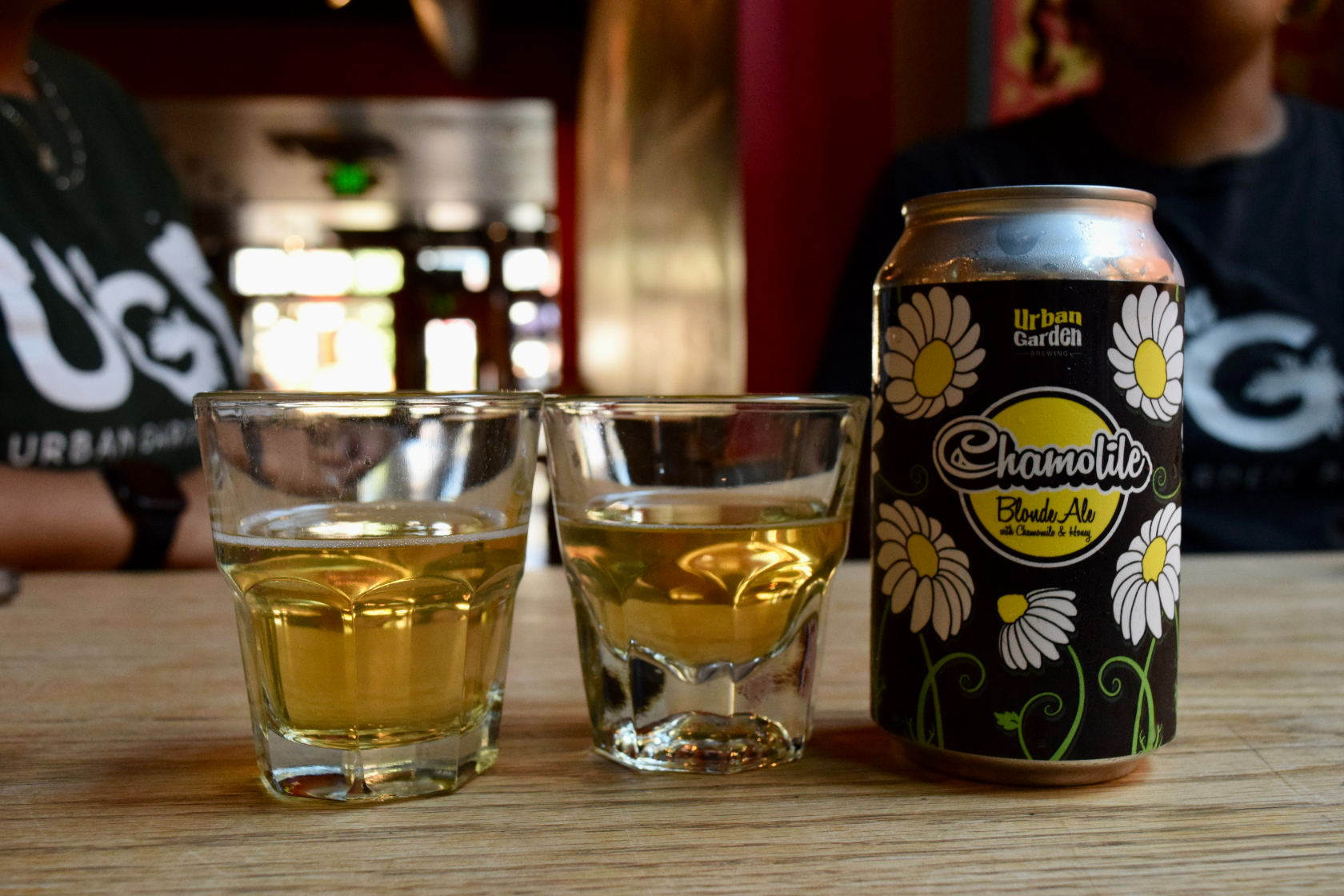
Opening a production facility means being able to meet demand for Urban Garden beer, which includes “Chamolite,” a blonde ale made with chamomile and honey, and “Roses Aren’t Dead,” a pale ale made with dried red rose petals — plus make new brews, such as an india pale ale.
Urban Garden leans on botanicals to brighten the beer, which attracts non-beer drinkers too. “We offer a different kind of experience that people aren’t used to seeing in beer,” Collier says.
Collier currently brews her beers on a contract basis at a few spots around town. Manifesting her dream of brewing her own beer in her own space has been years in the making. To sign a lease with confidence, Coller had to raise thousands of dollars through an Indiegogo campaign. She needs the money for startup costs like licensing, permitting, and legal fees. Financial challenges in particular are what inhibit Black-owned breweries, Collier tells DCist/WAMU.
“There is literally no Black-owned breweries … three of these brewing companies all have to contract brew because we don’t have the access to capital,” Collier says during an interview at Right Proper Brewing, where she’s currently brewing.
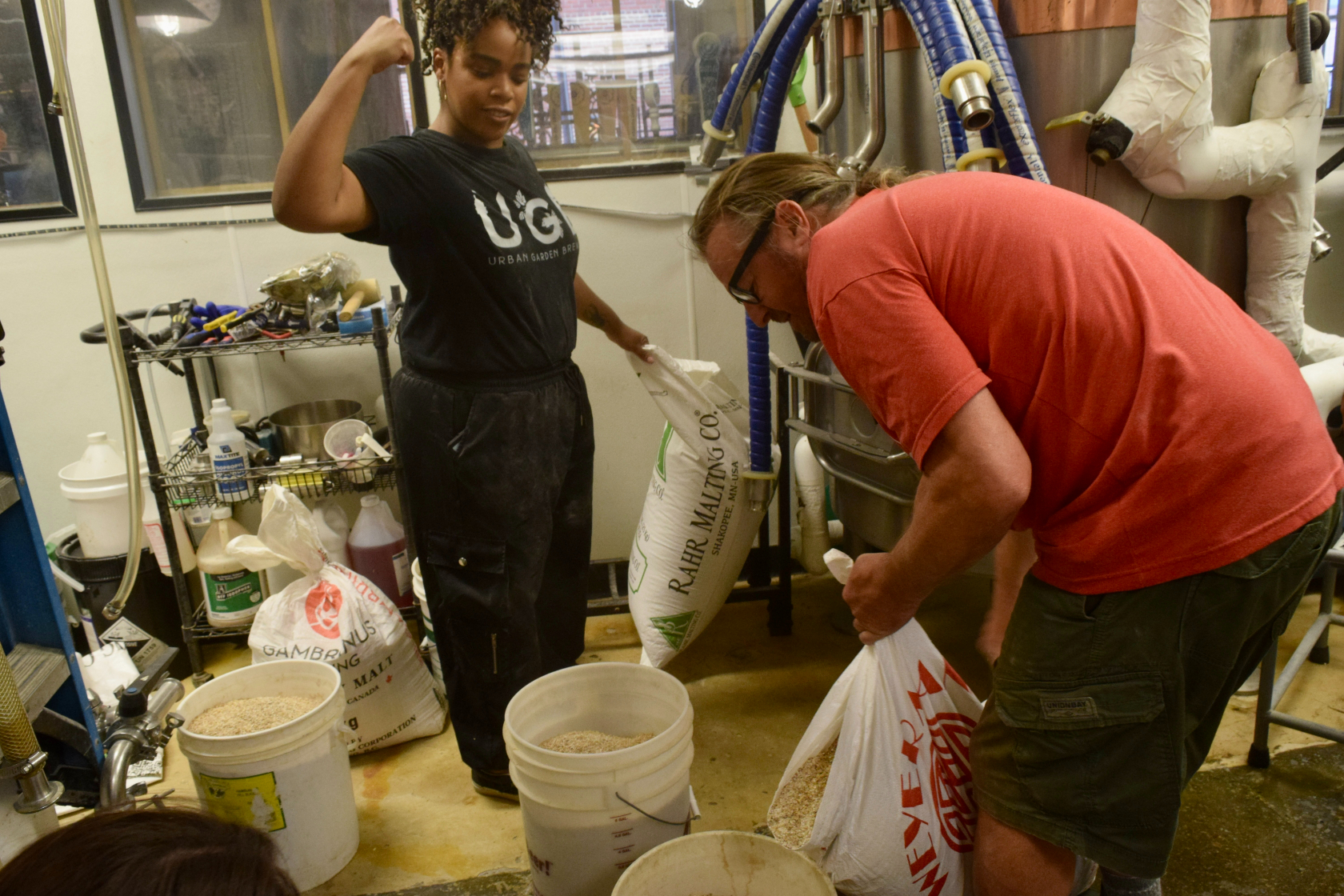
Collier was at the brewery in D.C.’s Shaw neighborhood to make beer for a collaboration with Colada Shop, a Latina-owned Cuban restaurant. The beer will be made with Colada Shop’s coffee beans and guava leaves, and sold next month at the restaurant’s D.C. and Virginia locations.
All Urban Garden beer is brewed and packaged at Right Proper, DC Brau, or City-State Brewing. Making a small batch of beer will cost Urban Garden between $1,500 to $2,000, which includes labor and manufacturing, according to Collier; and a larger batch between $7,000 to $10,000.
“Contract brewing is hard,” Collier says. “You make very little profit.” Plus, Urban Garden is beholden to the other facilities’ availability.
Collier has an ally in Right Proper, where she worked as a hostess, server, and bartender for six years before leaving last year to pursue her beer business. In fact, it was Right Proper co-owner Leah Cheston who introduced Collier to the Northeast D.C. space she hopes will be the home of her brewery. Right Proper is one of the city’s few beer companies with a production facility that is woman-owned.
“People helped us get where we are. So we think is our absolute mission to pass that on,” Cheston tells DCist/WAMU.
Collier says support from the local beer community has been immense, particularly from Sankofa and Soul Mega, which are D.C.’s first and second-oldest Black-owned beer companies. The three of them and others have formed an informal group called the Collective to help one another.
Collier calls the Sankofa and Soul Mega founders her “big brothers;” they’ve been encouraging her since she started making beer out of her uncle’s house, creating recipes from plants in the garden and brewing with an electric burner in the backyard, she says. Sankofa’s Kofi Meroe and Soul Mega’s Elliott Johnson gave her the push she needed to finally launch Urban Garden in 2021.
“Diversity and inclusion is important,” Collier says. “Honestly, if I didn’t have those two people that already started breaking the barriers, paving the way, I probably still wouldn’t have started.”
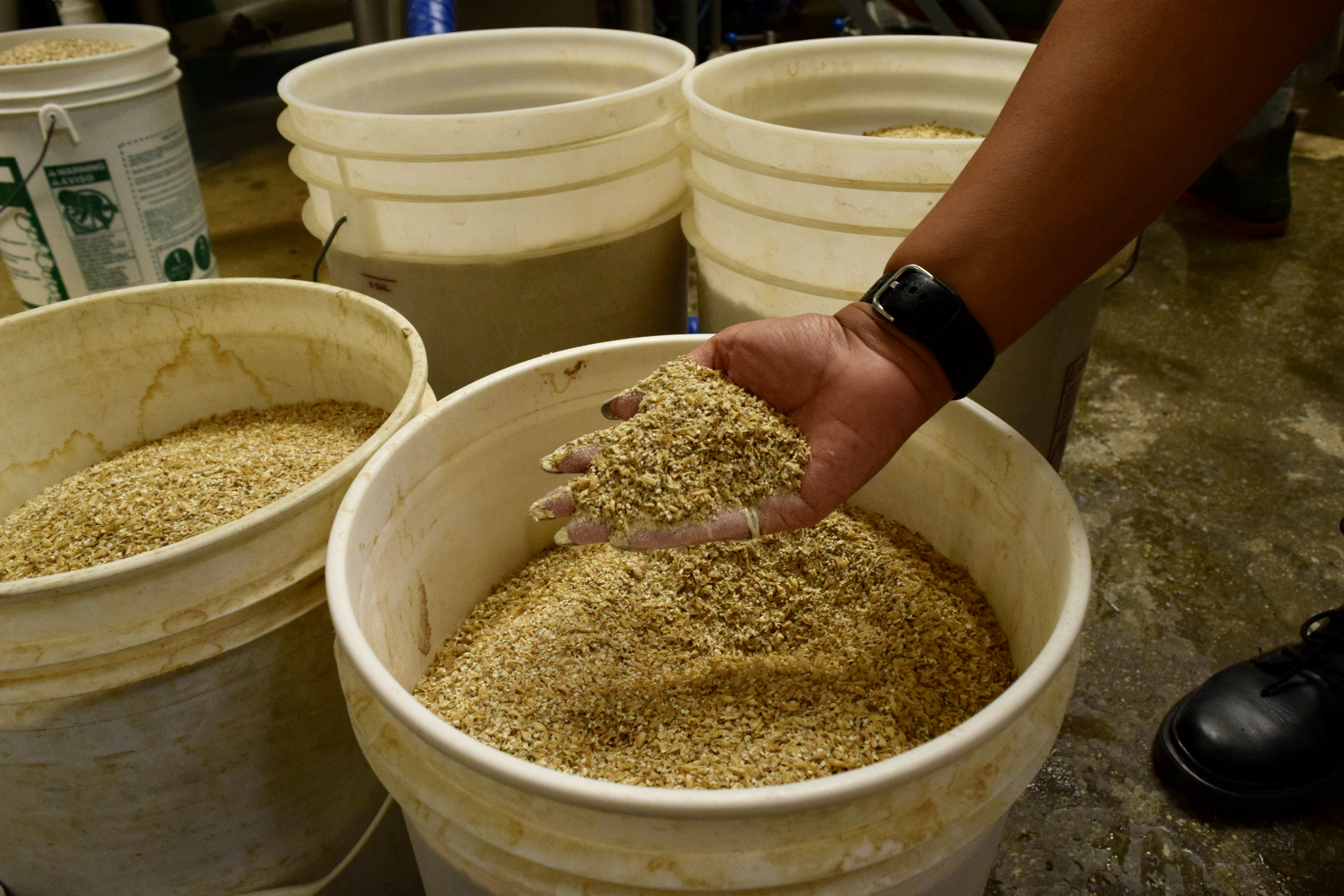
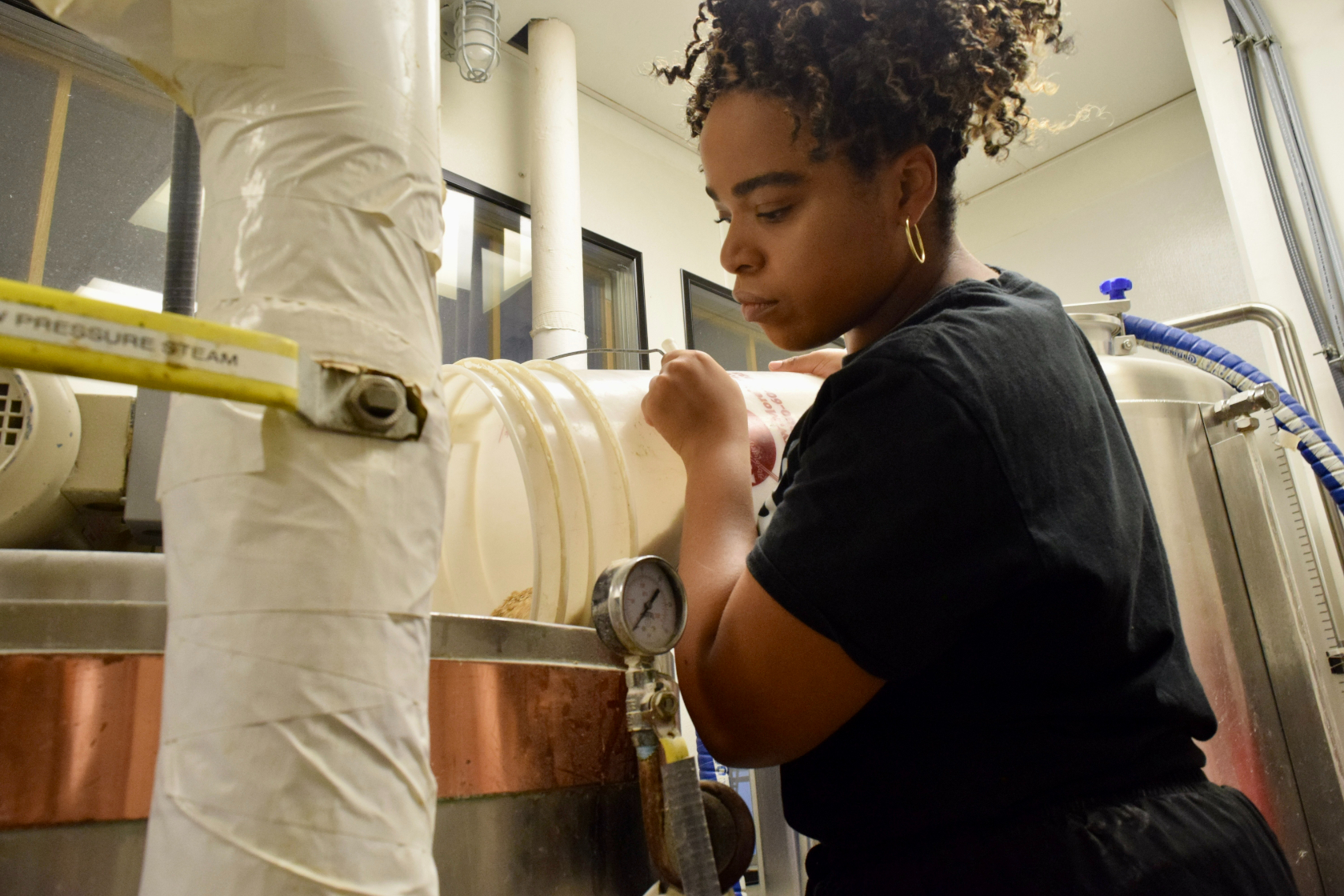
Camaraderie amongst the local beer community was on full display on that recent Friday morning at Right Proper, when Collier got help making the Colada Shop beer from Barrett Lauer, the brewery’s director of brewing operations. Collier, Castillo, and Lauer were all pitching in on the batch, which should total about 600 gallons. Lauer has been brewing for 27 years and taught Collier about the process through an initiative called “beer college.”
Right Proper hosts contract brewers a handful of times a year at their original, decade-old facility in Shaw — something they do because they know opening a brick-and-mortar is very challenging. There are a lot of steps, including procuring funders and getting permits, Lauer says. The District is also very expensive place to operate a business, he adds.
“Eamoni’s got a lot of work ahead of her,” says Lauer.
It’s been especially challenging for Urban Garden because Collier found herself ineligible for D.C. government funding she looked into. She didn’t qualify for start-up grants because opportunities for minority-owned businesses were for ones opening in wards 7 and 8 or for restaurants or hair salons.
“We’re not thinking about giving money to Black-owned breweries because none of them exist,” Collier says.
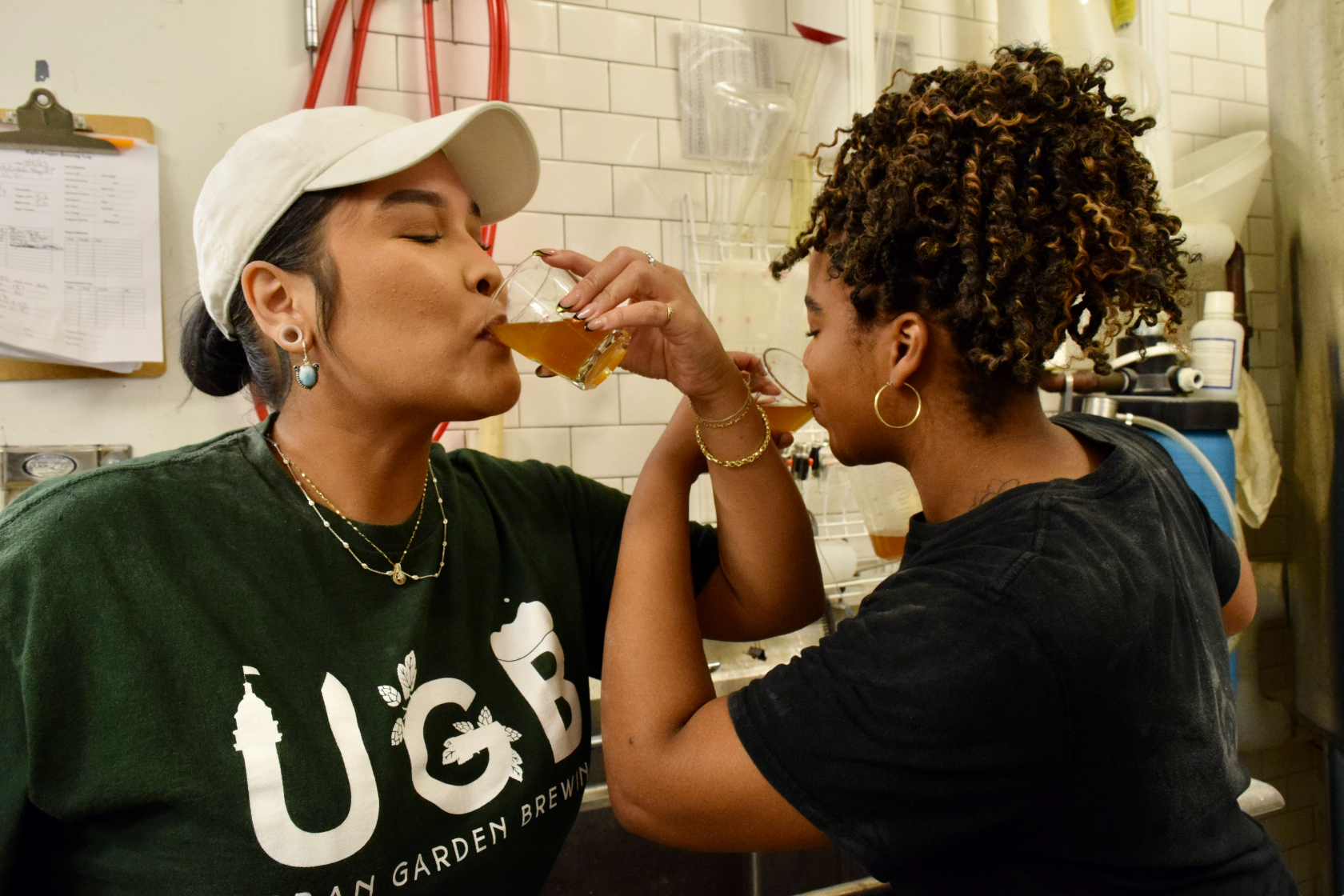

The Urban Garden team is scrappy and up for the challenge. Collier focuses on the beer and leans on Castillo, her right-hand woman, for the operations side of things. The pair were friends first, but Castillo says being the Virgo she is, she couldn’t help but get involved when she saw Collier needed an extra pair of hands.
“She calls me an octopus,” Castillo says of Collier. “If you believe in a dream, you just have to chase it regardless of how, we’re going to make it happen.” Castillo helps out in whatever way she can — including delivering kegs to bars when their driver moved away.
“I would go in to do a beer delivery and I’m like, ‘Hi, I’m here to deliver beer.’ And they’re like, ‘What?’ Castillo says, adding that the person receiving the beer was surprised to see a woman deliver. “Mind blown.”
The pair say they are constantly surprising people, particularly at pop-up events. Visitors to their table sometimes assume they are the brand ambassadors, not the brewers. They get frustrated having to correct people, but say they are quick to let it go. The pair is excited about what their brewery will mean to the community they are leaning on.
They plan to host brewers like themselves who need time and support before opening their own production facility. They also hope to host other creative types, like DJs, because they themselves are artists. In fact, Collier is a singer and one of her songs inspired a beer she brewed.
“These are my roots,” Collier says. “It will mean the world to me to be able to build something in my hometown.”