Colleen Grablick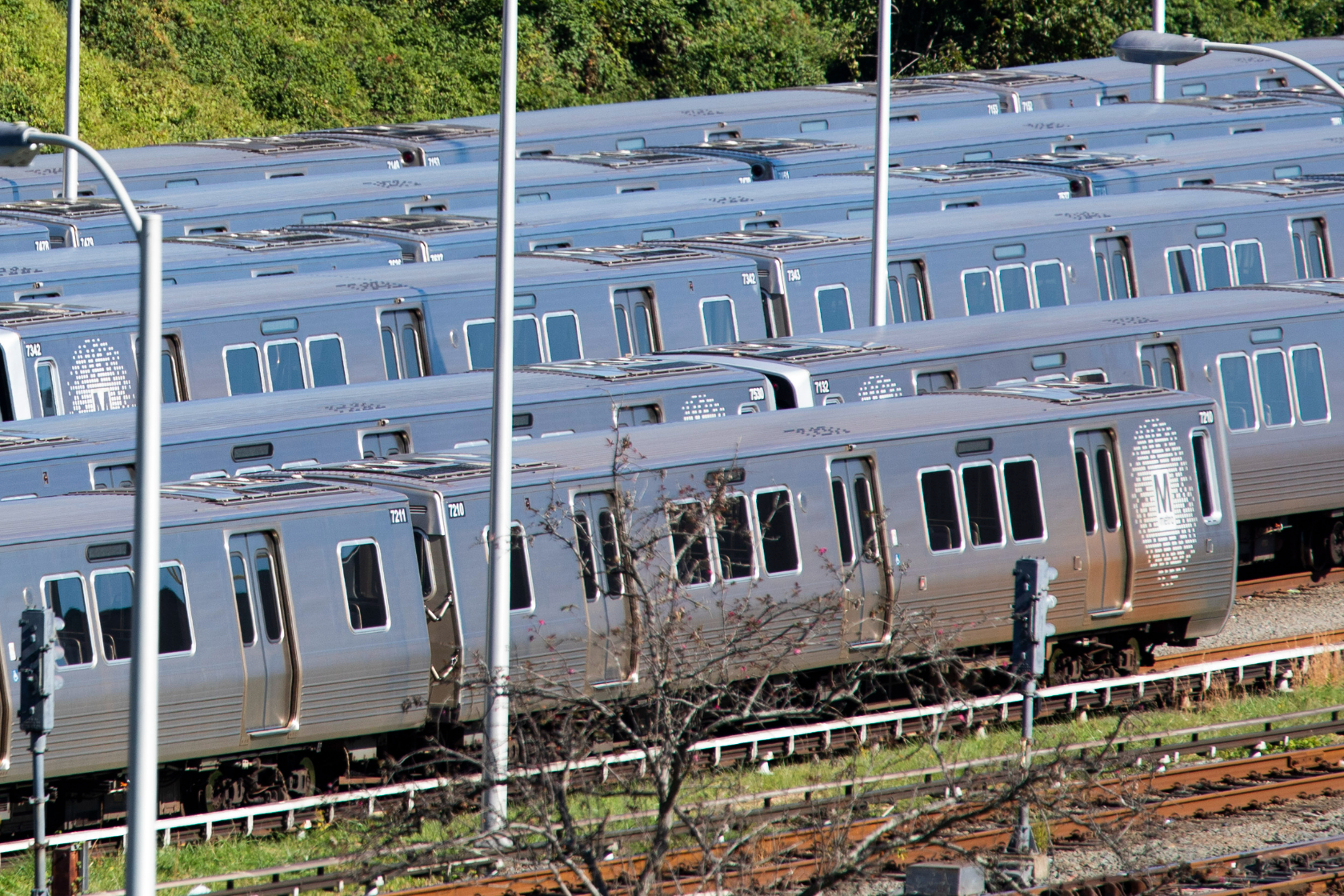
Nearly two years after the disastrous derailment of a 7000-series Blue Line train sidelined 60% of Metro’s fleet, a 7000-series train derailed Friday morning. It does not, however, appear that Friday’s derailment is related to the wheel issues plaguing the 7000-series trains and necessitating regular safety checks.
According to Metro, around 10:45 a.m., a Blue Line train derailed outside National Airport. No injuries were reported, as around 50 passengers were transferred to shuttles.
https://twitter.com/AdamTuss/status/1707792704887787539
At around 1 p.m., train service on the Blue and Yellow lines resumed with single tracking between National Airport and Potomac Yard. According to Metro’s most recent service update, Yellow Line trains will be running every 24 minutes and Blue Line service between Largo and Arlington Cemetery is running every 12 minutes.
Speaking at a press conference later Friday afternoon, Metro General Manager Randy Clarke said the derailment was not caused by an issue with a 7000-series train — but rather an older-model 3000-series train that preceded it on the track. Part of a brake assembly unit from that 3000-series train is believed to have fallen onto the track, causing the 7000-series train to derail when its front wheels encountered the object, according to Metro spokespeople. (The 7000-series trains can’t catch a break, literally.)
In response, Clarke ordered all 2000 and 3000-series trains to be inspected immediately.
That Friday’s derailment was not rooted in a 7000-series wheel issue is somewhat welcome news for riders — and for the transit agency, which has recently boasted about having the most rail service in Metro’s history.
The now-canonical October derailment was caused by a wheel anomaly; the wheels of the train had moved a fraction of an inch farther apart than they were supposed to, an issue that had been spotted on dozens of other 7000-series models. The transit agency sidelined the entire fleet of new trains, and it took Metro more than a year (and a lot of money) to return the entire fleet to service — disrupting riders and slowing arrival times. As Metro slowly returned the trains to service, they were subject to regular wheel checks every four days. Eventually, that was lengthened to every seven days in January 2023, but it wasn’t until later this spring that Metro could finally return all of its 7000-series trains to service.
ATU Local 689, the labor union representing rail workers, has issued a statement calling for an investigation into Friday’s derailment.
“Local 689 calls for a thorough investigation and the implementation of safety measures to prevent future derailments. Our first priority will always be the safety of the riding public, our members, and all those that rely on mass transit,” reads a statement from ATU Local president Raymond Jackson.