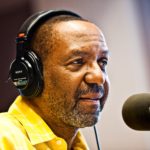
Matt Blitz
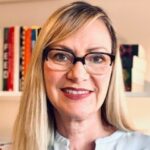 Ingalisa Schrobsdorff
Matt Blitz grew up in Fairfax County, a rare local who can say he’s actually from here. Since joining WAMU/DCist as a freelancer in 2018, he’s covered a wide range of issues, everything from the fight to desegregate Glen Echo Park to the future of RFK Stadium.
Matt has also written and reported for a number of other local and national publications, including Smithsonian Magazine, Popular Mechanics, Washingtonian, and Washington Post Magazine.
Matt joins WAMU/DCist as the producer of WAMU’s weekly live local politics show, The Politics Hour, hosted each Friday by Kojo Nnamdi and political analyst Tom Sherwood. He’s been in the job on an interim basis since May. In that role, he follows the political happenings across the region, inviting local officials to join the show to discuss the week’s news.
Matt will also produce WAMU’s live Kojo In Our Community townhall events across the region on issues affecting neighborhoods and communities. As the former head of the Atlas Obscura Society D.C., he has experience producing unique events, including meeting a local falconer and paddling among a forgotten fleet of sunken ships in Mallows Bay.
Matt lives in Alexandria with his wife Caroline, who works in local news.
Matt sat down recently with Kojo Nnamdi and Tom Sherwood on The Politics Hour to talk about his new role.
Kojo: We’re all about local on the Politics Hour, and you are in fact a real local. Where’d you grow up?
I’m from Reston, Virginia. I remember there was a blueberry farm on the street over and a horse stable across the road. That wasn’t that long ago, I swear!
Kojo: When you went to college, did you think you were headed for a career in journalism?
Well, I went to Syracuse University to be a sports broadcaster. But during my freshman year, I saw how many–let’s say, very self-confident guys–were trying to do sports, and I realized that it wasn’t for me. Plus, I really liked other things–politics, history, comedy, documentaries–and I didn’t want sports to consume my life.
So, I shifted to the Television, Radio, and Film program and began making documentaries and wanting to write. I’ve always been drawn to stories; more specifically, the fact that everyone has one.
From there, it was sort of a natural progression to journalism. What’s the profession that you get to tell real, true stories about those around you and in your community? Local journalism, of course.
Kojo: We traffic in news and politics here, and we’re about facts, not fiction. But you started your career in network television helping to make… procedural crime dramas? Tell us more about that, and how you ended up in news?
Yes, it’s true. I moved to Los Angeles after college and my first job in television was working as a production assistant on CSI: Miami. I eventually worked for network comedies as well, including How I Met Your Mother. There’s actually a whole How I Met Your Mother episode named after me. Please don’t look it up.
Then, a similar thing happened; I started gravitating back to non-fiction storytelling. I wrote for news talk shows, including for CNN, and then started writing features for magazines. I started working for Atlas Obscura, working with the community to lead events to very cool places.
In 2014, my wife and I decided to move back to the region, and I continued reporting history features for various publications. Then, in 2018, I started freelancing for DCist. Nearly a decade later, I’m here and working full-time with this fantastic team at WAMU.
Kojo: You’re from Fairfax County, so it’s not surprising you know the region well. But you have especially deep knowledge of Northern Virginia politics. What interests you about local news and politics?
Why I’m so interested in local news and politics is the direct impact it has on the community we all live in and I grew up in. Unlike national politics, those who are elected and the policies and laws they enact directly influence our day-to-day lives. How local officials manage affordable housing, traffic safety, and schools has an immediate and consequential effect on our community and the place we all call home. I think there’s nothing more important to how we live our lives and democracy than understanding and holding accountable our local elected leaders.
Kojo: Our region is unique when it comes to local politics, as it includes D.C., Maryland, and Virginia; that’s a lot to cover. How do you approach booking the weekly show?
Yes, it’s a lot to cover, but thankfully we have a fantastic and knowledgeable newsroom to consult with and talk through potential guests with. Basically, each week I read as much news I can from as many local sources as I can, from the Washington Post to MoCo 360 to the Virginia Mercury to ARLnow plus DCist/WAMU, of course. That gives me a sense of not just the stories of the week, but what’s being talked about around the region. I speak with our audience engagement team to see what our readers and listeners are paying attention to as well.
Then, I walk around our newsroom (literally, I take a walk) and just chat with reporters and editors about who they think are the newsmakers of the week. I put together a list of potential guests and sit down with our managing editor Ingalisa Schrobsdorff to talk about who we should reach out to about being on the show. Finally, we email or make calls to potential guests.
Sometimes, the folks we really want are not available to come on the show that week due to prior commitments… but most of the time they are and want to talk to Kojo and Tom.
Q: What are you most looking forward to about producing Kojo In Our Community events?
The chance to get out in the community and directly hear from locals about what’s on their minds and what they think are the biggest issues impacting their neighborhoods.
I always find that conversations are more honest, direct, forthright, and passionate when people are having them face-to-face, as opposed to through the airwaves or over screens. Our Kojo in Our Community events remove those barriers to allow these conversations to happen. It’s an opportunity to physically be in a place where what you are talking about could create change.
I truly love that.