Amanda Michelle Gomez

Getting a driver’s license as an adult would be simple, I thought when I set that as my New Year’s resolution at the start of 2023. I romanticized the experience a bit too, telling myself it would make for a good story and some fun banter with bartenders when I go out.
But as I learned, getting a driver’s license at 30 is actually pretty unpleasant. I already dread managing the logistics of my life, and getting a license meant having to take driving lessons and schedule tests on top of my usual everyday tasks. Plus I had to engage with the DMV — the byword for bureaucracy.
To be clear: The District’s DMV location in Deanwood is excellent, specifically the staff. We got familiar with one another because of how often I visited: on three different occasions during a month’s time. Several of them cheered for me when I finally got my driver’s license that last time.
That’s my not-so-subtle way of saying I failed my driver’s license not once but twice. While I’m now finally the proud owner of a D.C. driver’s license, it wasn’t without sweat and tears. (Not an exaggeration: I cried at the DMV the first time I failed, which I suspect is a common response because my examiner knew just how to react with compassion.) Turns out learning how to drive in the city as a carless adult with a full time job is hard, not to mention expensive. I spent roughly $500 between lessons and test fees, a significant sum of my public media salary.
I decided to get my license in part because two close friends got their licenses in their early 30s, and one of them just drove a campervan in a foreign country — talk about something to aspire to. I decided to write this story not only because I couldn’t afford to take any more time off work for driving school, but to share that getting a driver’s license as an adult is doable, if difficult.
Easy peasy written test — that is if you study
So to get a driver’s license in D.C., I had to take written and road tests through the DMV. PSA for DCist’s suburbanite readers: Maryland’s Motor Vehicle Administration requires residents to take both of those tests too, while Virginia lets residents skirt its road test if they complete a state-approved driver’s education program.
D.C.’s knowledge test is a timed, multiple-choice exam that I got to take at home on my computer. To deter cheating, an examiner asked to see my testing area through my webcam before the exam. (I thanked my past self for making my apartment presentable.)
Because I’m an anxious Aries, I had read the DMV’s 100-plus-page driver manual. I also took the city’s practice knowledge test a couple of times before taking the real one. The practice test resembles the real test too, though the latter has a surprising number of questions about streetcars that would make you think they’re more common than they actually are.
Studying paid off, and I passed the knowledge test on my first try. Not everyone does — the failure rate for the knowledge test is 47.31%, according to the DMV.
Driving school is expensive but necessary
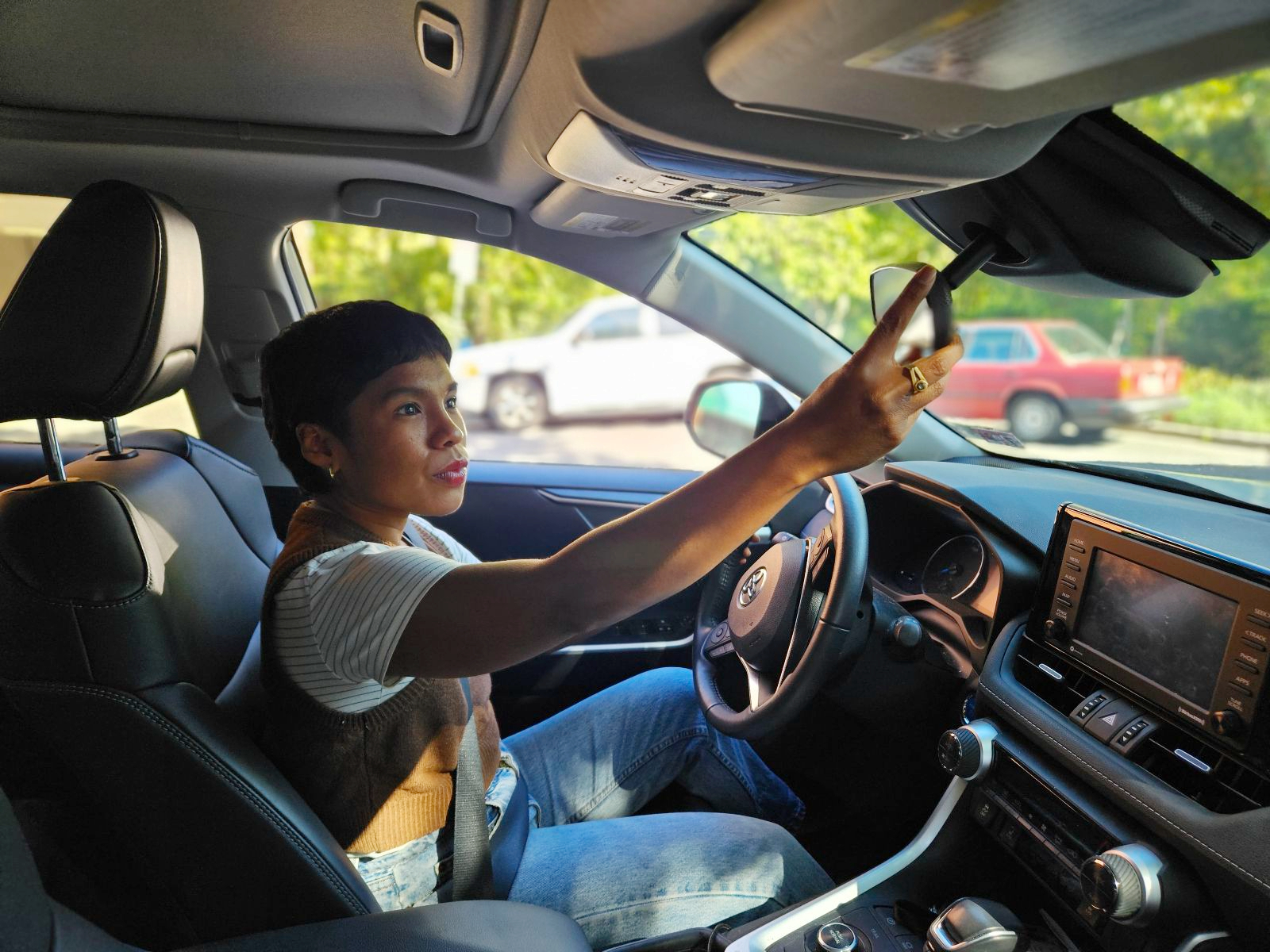
I figured my driving test wouldn’t be quite so smooth, however, so I signed up for driving lessons with DMV-certified instructors.
Although a friend and my girlfriend offered to teach me how to drive using their cars — a tempting (and free!) offer — I decided to hire a professional. My two friends who had gotten their licenses later in life had taken lessons and recommended CAS Driving School. Because their recommended instructor, Elaine, had retired — a shame, because she apparently grew up in D.C. and gave history lessons on the neighborhoods as they drove — I took lessons with three different instructors. The five hours cost $260.
I took lessons with different people because appointments fill up fast, particularly weekend ones. If I had to do it again, I would try to stick with one instructor. During my last class, when I was supposed to mainly work on parking, my instructor didn’t trust that I could drive, even though I had already taken four hours of classes with two of his colleagues. I assured him I practiced on my own time too, including a three-hour trip from Delaware to D.C.
He still had me drive around for most of my hour — so I didn’t get much parking practice ahead of my first road test.
A tough parallel parking requirement
I didn’t get as lucky with the road test as I had with the written. I failed my first (and second) tries without ever leaving the DMV parking lot, thanks to botching the parallel parking requirement. I never thought I’d say this but the real world is more forgiving. If you go over a curb or tap a bumper while street parking, it’s usually no big deal. But I automatically failed for such infractions, first for hitting a cone, and the second for going over the curb.
Apparently, I’m in great company — many more locals fail since D.C. resumed testing on parallel parking back in 2021. The DMV explained at the time that the requirement was back after a 12-year hiatus because it is “a necessary driving skill and is essential to protecting pedestrians, cyclists, and property.” Plus, the agency only eliminated parallel parking due to space constraints at the previous facility, an agency spokesperson tells me.
Approximately 10% more residents fail the road test now that they have to squeeze into a 24-foot-by-8-foot space flanked by bright orange cones in the DMV parking lot, per the agency spokesperson, bringing the failure rate to about 24%. That’s more than in Virginia but lower than in Maryland, according to those states’ motor vehicle agencies.
The pitfalls were evident the first time I took my road test: Two of the three people who were ahead of me in line to meet an examiner failed. I suspect that’s why the DMV starts the road test with parallel parking. Weed out the weak. Save their gas and time.
I opted to use the DMV’s car for all my road tests (which is free but make sure to print and fill out a waiver ahead of time). I felt confident — I had successfully parked in the real world prior to my test, and in the narrow streets of Mount Pleasant, no less! The test gives you three attempts to park. Yet, I choked.
I got into the DMV’s white Toyota Corolla hybrid and was immediately thrown by the backup camera, as every car I had practiced in was manufactured before 2018 and didn’t have one. I moved ahead: I aligned my bumper with the front three cones, which represented another car; turned my wheel all the way right; and then backed up. Then boom, here came one of the more anticlimactic moments of my life: I tapped the cone, which means game over. Hitting a cone eliminates any further tries.
Friends tried to comfort me. They assured me experienced drivers tap cars all the time in the real world. Maryland and Virginia both don’t require road test takers to parallel park — Maryland dropped the requirement in 2015.
Maryland’s pass rate for the road test in 2023 was 65%, while the rate for its knowledge test was lower, at 47%, according to the state’s Motor Vehicle Administration. Virginia’s 2023 pass rate for road skills is 87%, while the knowledge portion is 50%, according to the state’s DMV.
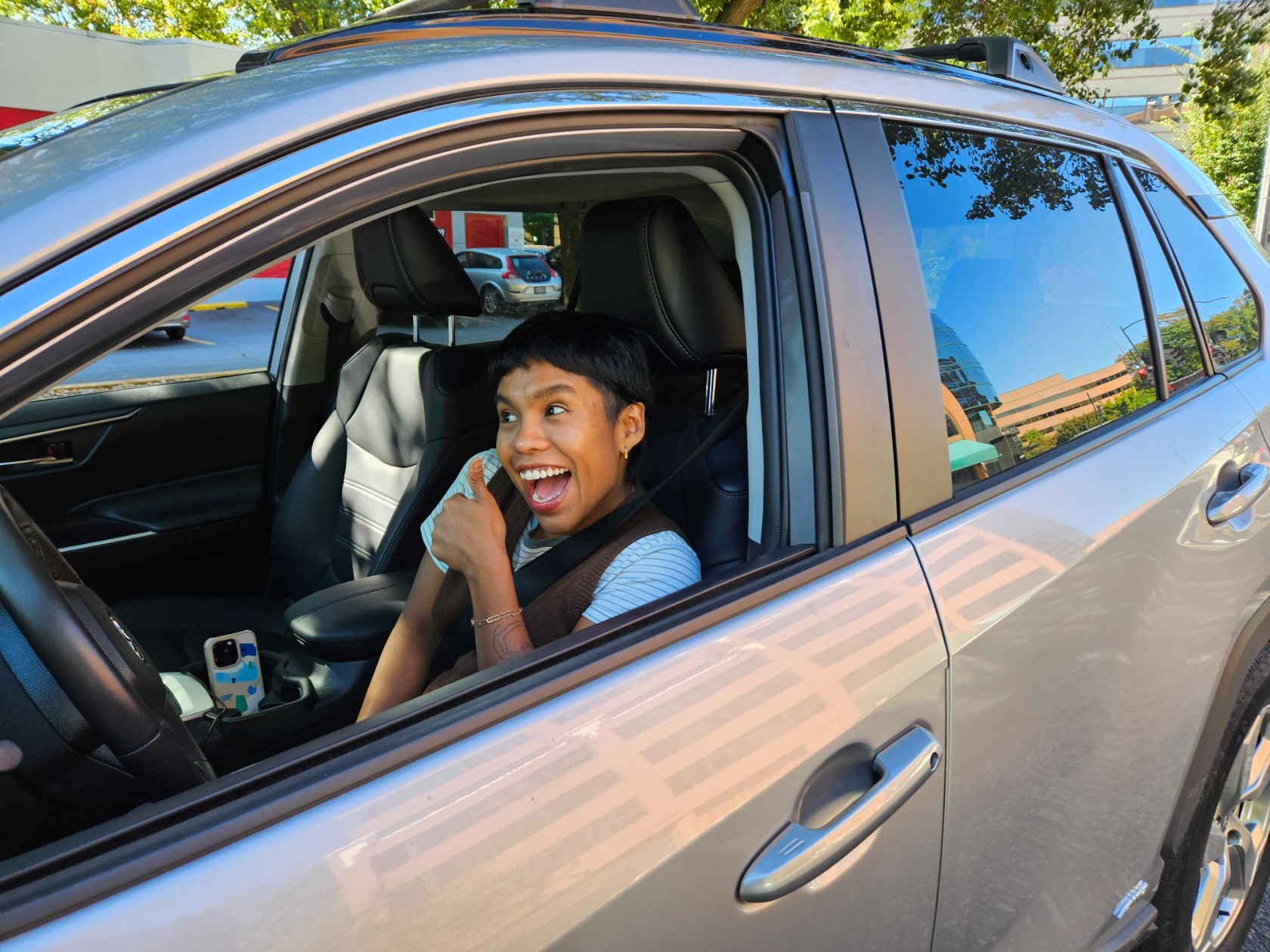
I finally got my D.C. license and you can too
After failing the second time, I figured I needed more lessons, so went to another program called DC Star Driving School. That school’s instructors have you meet at the Brookland Metro Station, so students can drive to the DMV’s road test area in Deanwood. That way you get to familiarize yourself with the traffic pattern and roads there — which, by the way, have plenty of school zones.
I spent $190 for four hours at DC Star Driving School. I told my instructor Mr. Teddy that I wanted to spend most of my hours practicing parallel parking. And we did. He even set out cones at the Kenilworth Park and Aquatic Gardens’ parking lot. He taught me the trick to parallel parking in between cones, which I eventually mastered.
The day I took my last lesson with Mr. Teddy is the day I finally passed my road test. When I walked into the DMV that day, the staff were very encouraging. One of them tried to teach me how to park while I was waiting in line, motioning how I should turn my wheel and maneuvering his body like it was a car backing up. I’m a superstitious person, so I felt reassured when I learned that my examiner was also 30 years old. He kept repeating “lucky number 3.”
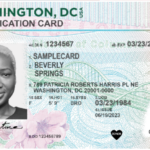
I wasn’t prepared to pass. I didn’t even have all the documents I needed to get my driver’s license with my updated address. Thankfully, the staff let me print my lease and renter’s insurance there, which I know is not the universal experience. I gleefully paid $47 for the piece of plastic that would allow me to drive alone. Where to? Who knows. But probably not in D.C. — I prefer biking and Metro commuting.
On my way out of the DMV, I thought to myself that perhaps getting a driver’s license should be this hard, given the number of traffic incidents and fatalities on our roads. Traffic deaths are up over 50% compared to last year, according to the Metropolitan Police Department.
But should it be this expensive to learn? The city’s DMV tells me it will soon be launching a free “knowledge test bootcamp” for young people. But that wouldn’t help the nearly 5,000 people age 30 and older who have taken their road test this year alone — myself included. Then I muted those thoughts with some music as I hopped into an Uber. Of course, I played Olivia Rodrigo’s “drivers license.”