Jacob Fenston
What do goats, satellites, and tiny solar panels have to do with Chesapeake Bay water quality?
Potentially a lot: agriculture is the biggest single source of pollution flowing into the bay. Farms pollute not only the estuary itself, but also its tributaries, including the Potomac River and the Anacostia River. But agriculture can also help make the water cleaner.
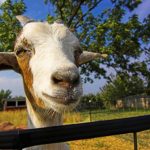
One farm in Northern Virginia is testing out solar-powered GPS collars to manage livestock in an environmentally sustainable way. Molly and Sam Kroiz run George’s Mill Farm on about 90 acres in Loudoun County. It’s a seasonal farmstead goat dairy that produces cheese, gelato, caramel, soap and fudge from goat milk.
The land has been in Sam’s family since the 1750s. Plenty about the farm harkens back to an earlier era, like the 19th century stone barn. But they’re also embracing technology. The farm is part of a pilot program with a Norwegian company called Nofence. Until now, the company’s GPS collars were only available in Europe.

“I just kept sending them e-mails being like, ‘When are you coming to the U.S.?'” says Molly Kroiz. “Like once a year I’d be like, ‘How about now? How about now?'”
The Kroizes got the collars in April. There are 43 farms in the U.S. currently in the pilot program, and the company aims to expand to more farms next year. In Europe, there are some 60,000 Nofence collars currently in use, according to the company.
Livestock can be terrible for the environment – manure pollutes waterways with bacteria and also nutrients that cause algae blooms. But livestock can also be great for the environment – enriching soil, encouraging plant growth, and even making the water cleaner. It all depends on how the animals are managed.

The Kroizes say the GPS collars help them farm in a way that’s environmentally responsible – a practice called rotational grazing – moving the goats from place to place on the farm.
“We’re big on the environment, we love the environment,” says Sam Kroiz. “But to be honest, a lot of the things we do that are environmentally friendly on the farm, we do it’s because we’re also very cheap and it’s cost effective.”
“It’s cost effective and it’s better for the animals and therefore better for our products as well,” Molly adds.
Rotational grazing makes for healthier animals, as they’re less likely to pick up parasites from their own poop. The practice can even make food taste better: Kroiz says their animals’ varied diet gives the goat cheese more interesting and complex flavors.

The GPS collars create a virtual fence, communicating with satellites orbiting the earth, and keeping the goats inside a boundary that Molly and Sam set using a smartphone app.
If a goat approaches the virtual fence, it gets an audible warning from its collar. If the goat doesn’t back up, it gets a shock. The Kroizes say it’s actually much more effective than a physical electric fence, which goats can learn to sneak through. They can track each goat’s location in real time, and look at visualizations showing where the goats spend their time over the longer term. They get notifications from the app any time a goat gets zapped or gets outside the boundary.
The biggest benefit is the ease with which they can rotate the goats to a new section of the farm.
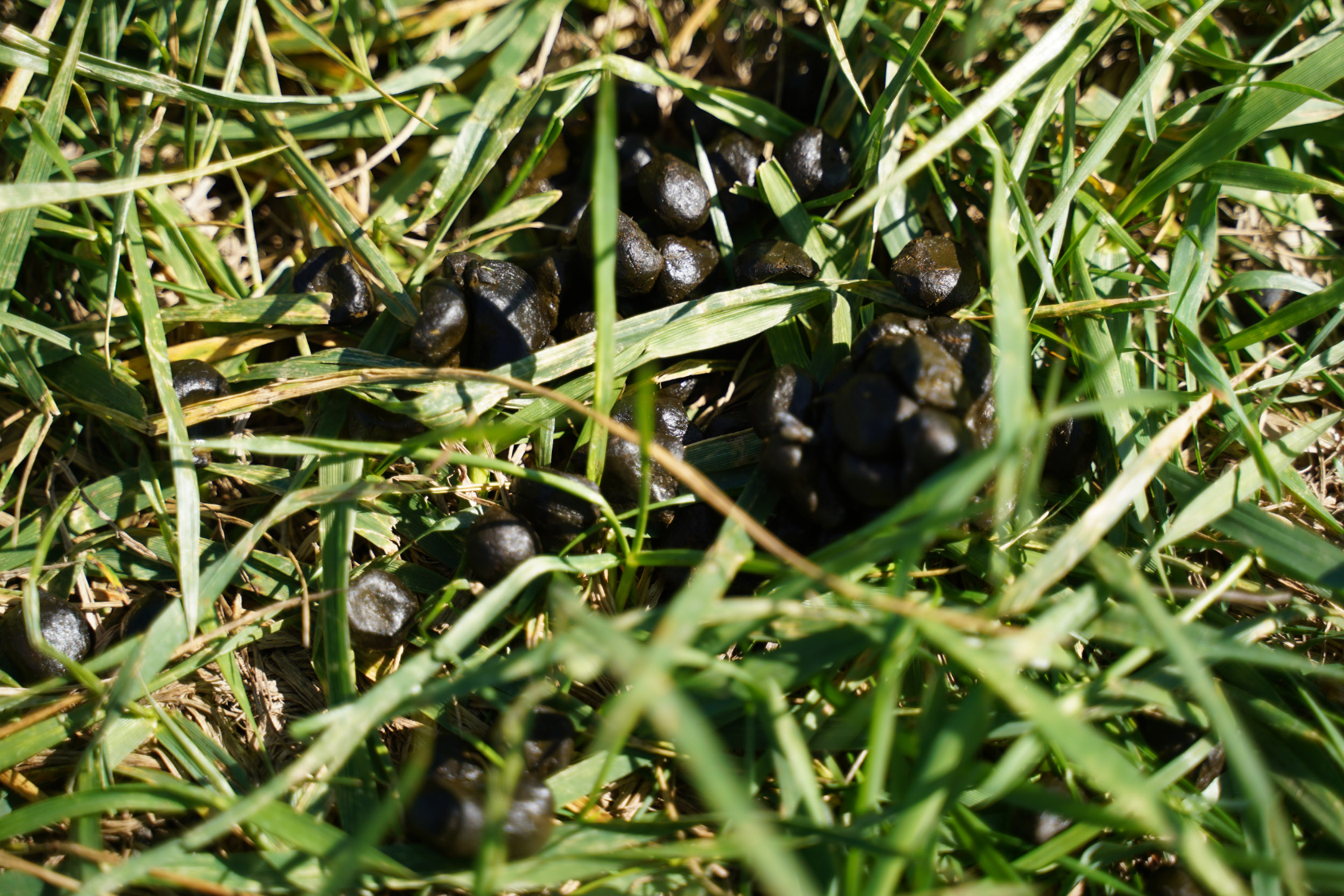
Rotational grazing is good for the environment because it helps keep nutrients on the land. In a more traditional dairy operation animals would be crowded together – all pooping in the same spot.
Matt Kowalski, Virginia watershed restoration scientist with the Chesapeake Bay Foundation, explains:
“If you had a two acre paddock right around the barn, right around where you were milking, you’d get way too many nutrients there.”
In an operation like that, where the manure is all concentrated in one place, any rain will quickly carry the excess nutrients off the land, into the water. This deprives the soil of elements that plants need to grow and it fills up creeks, rivers, and the Chesapeake Bay with too much nitrogen and phosphorus – feeding algae. The algae then uses up oxygen in the water, creating dead zones.
This entire process of environmental degradation starts with too much poop in the wrong place.

But on the Kroiz’s farm, with the goats being rotated over 90 acres, the animals are like roving fertilizer machines – helping cycle nutrients from forage plants back into the soil.
“Once that forage has passed through the the digestive system of a warm blooded animal, when they poop it out, the bacteria and the microbes then add to the the under world ecology,” says Kowalski. “There’s magic that happens.”
Virtual fences have numerous possible uses and benefits in the Chesapeake Bay watershed Kowalski says — that’s why the Chesapeake Bay Foundation is promoting the technology. The technology could be used to quickly and easily fence livestock out of waterways, or to let animals on fields that would otherwise be used for hay production. Growing hay typically robs the soil of nutrients, which are then replenished with commercial fertilizer, which in turn runs off into waterways, causing nutrient pollution.

The Kroizes have been practicing rotational grazing for about a decade, but until recently they were using actual physical fences to rotate the goats. The collars aren’t cheap — but then, neither is building physical fence. The collars cost $200-$300 dollars per animal, Molly Kroiz says, while a traditional fence can cost $3,000 to $4,000 per acre. The batteries on the GPS units do need to be topped up in charger about once a month. Still, using the virtual fence saves hours of labor a day, she says.
“Sam can update the fence line while drinking his coffee in the morning. It’s pretty great, and that frees up him to do a lot of other things that need doing around here,” she says.