Amanda Michelle Gomez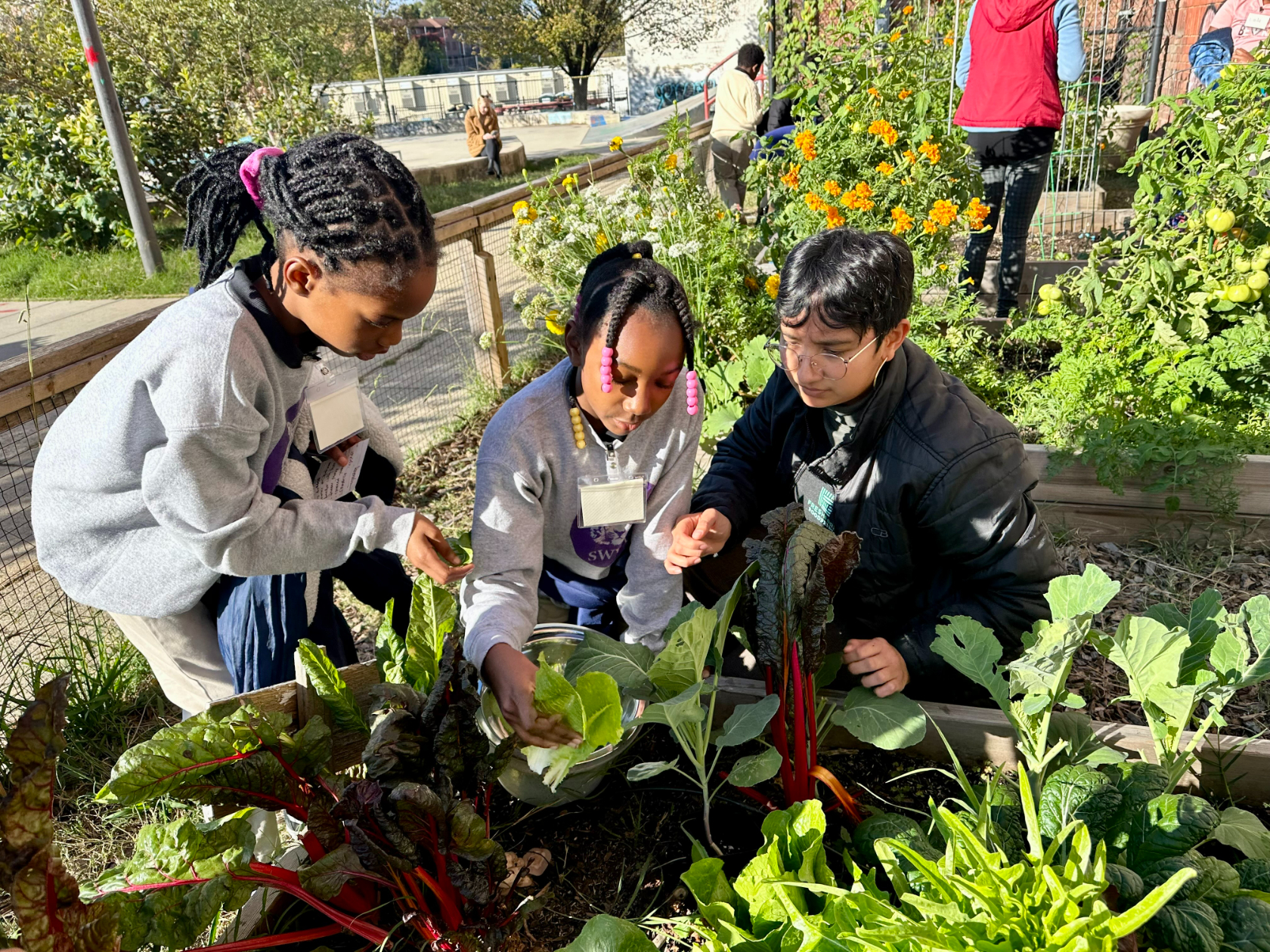
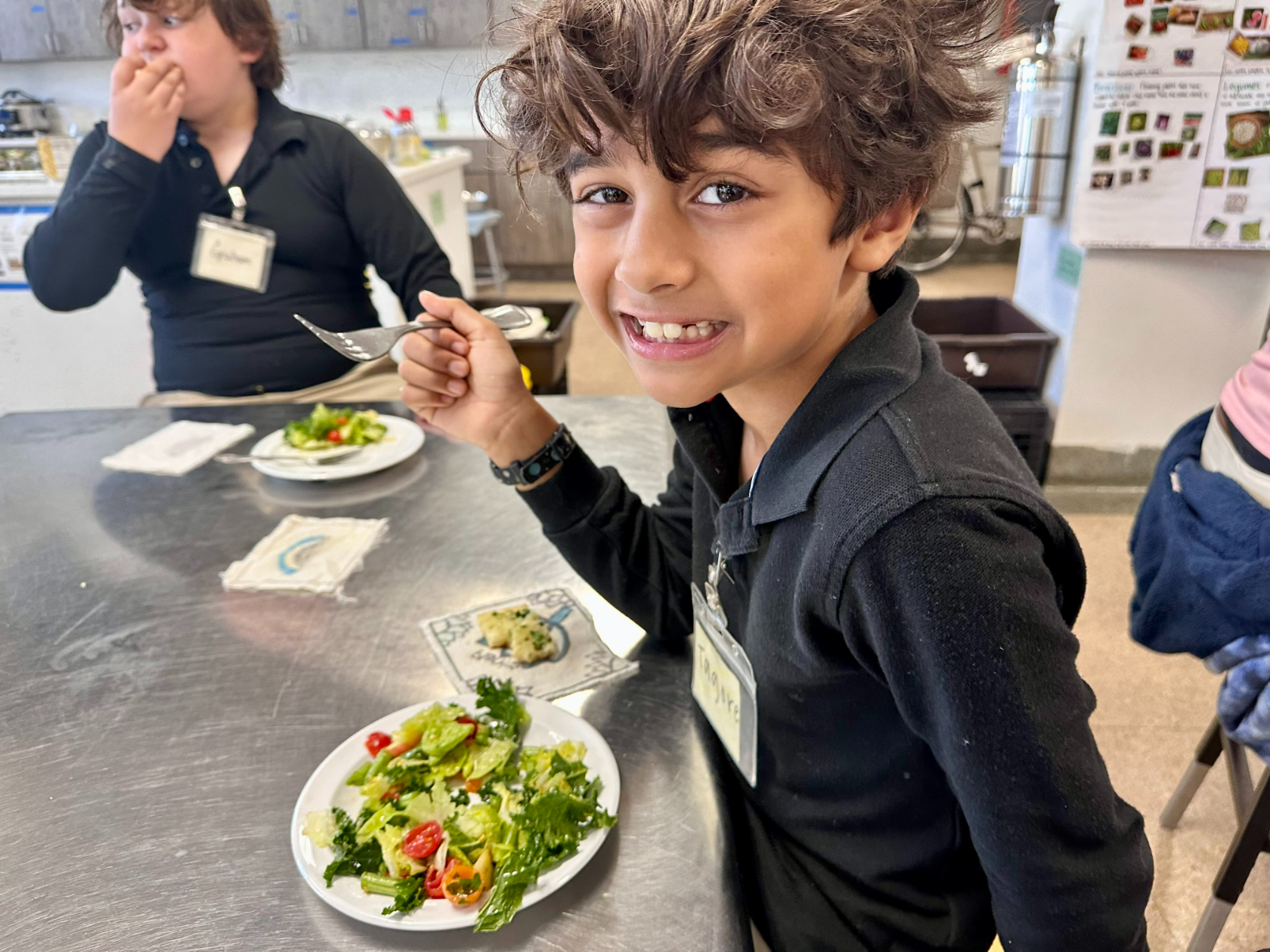
Third grader Ekan Akinrinloa walked into class last Wednesday morning not liking tomatoes — “straight up is not my thing,” she told DCist/WAMU. But by snack time that same day, she was devouring cherry tomatoes in a mixed green salad.
“I wanted to try it anyway, since I don’t like them and I need to try new things,” the 8-year-old said as she chowed down.
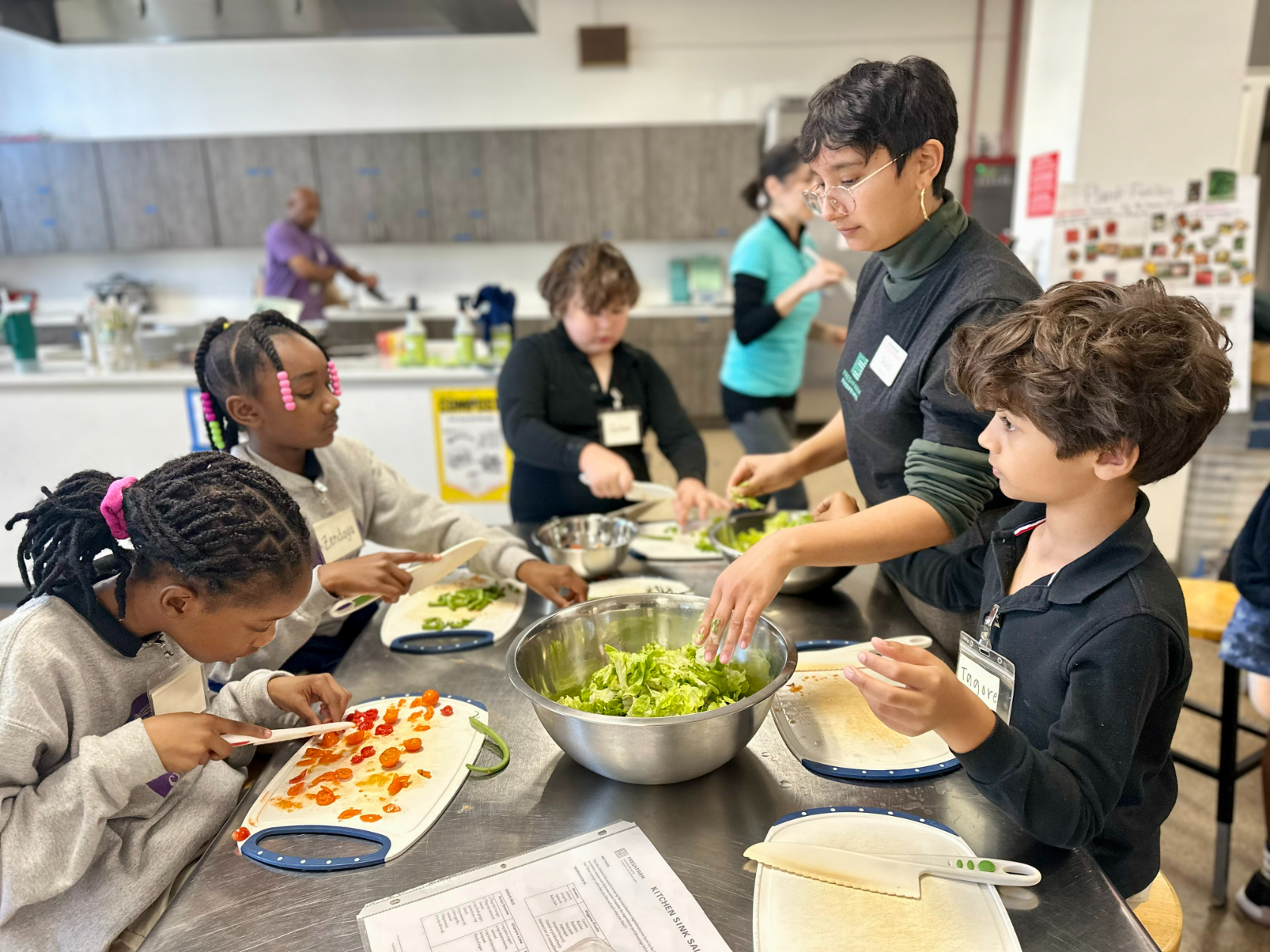
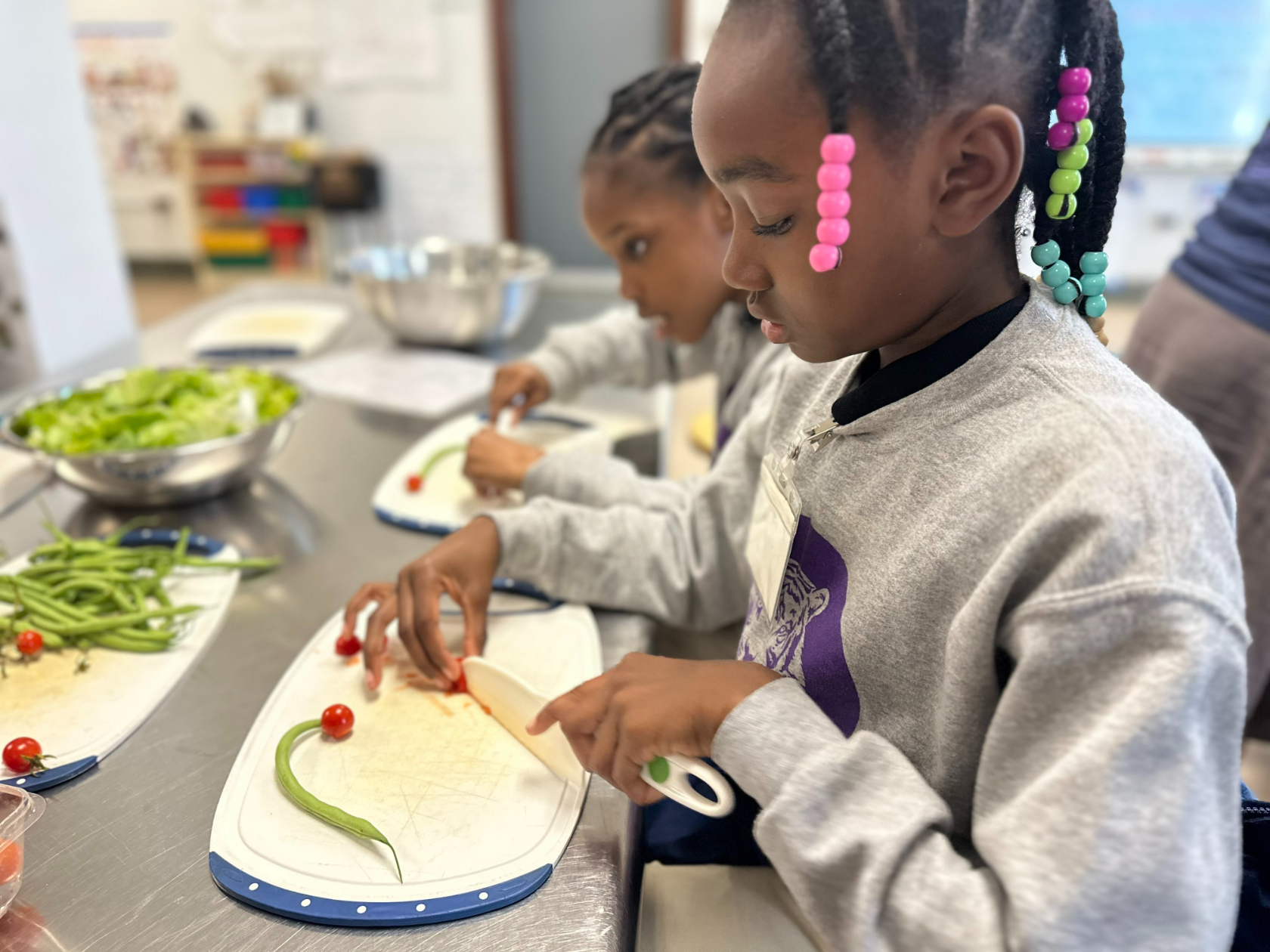
Thanks to FoodPrints, a program at 21 D.C. public schools that helps roughly 7,000 students think critically about food, Ekan not only learned that she liked tomatoes (depending on how they’re prepared) but learned how to grow, harvest, and cook them. In fact, she helped prepare the salad herself during class at her elementary school, School Without Walls at Francis Stevens, in D.C.’s Shaw neighborhood.
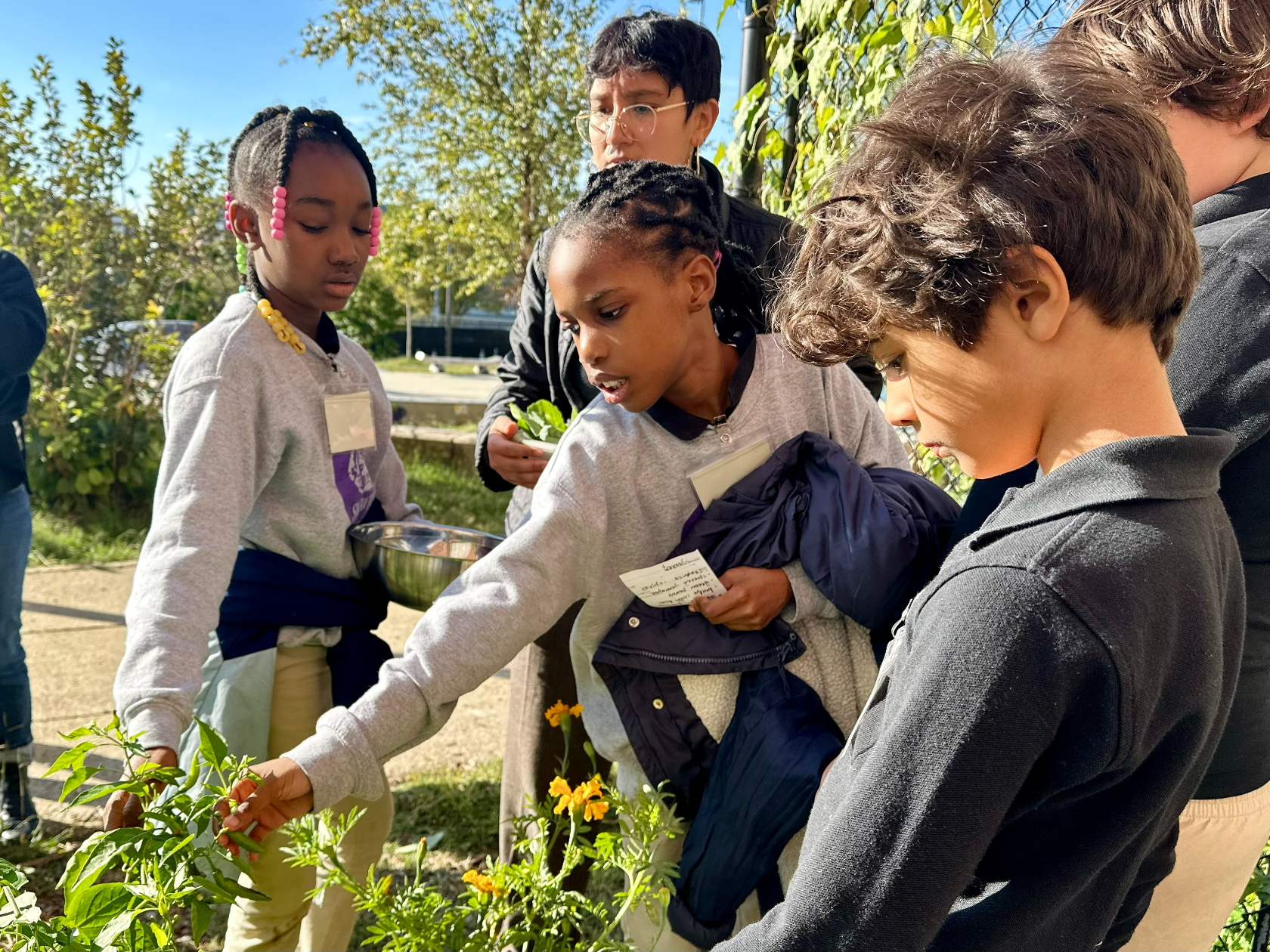
The mission of FoodPrints is exactly what Ekan experienced — rather than telling kids to eat nutritious foods, the program immerses them in food systems to help them develop their own appreciation. During a FoodPrints class, kids as young as pre-K and as old as 8th grade learn about a variety of fruits and vegetables in their school garden, and then sample the produce in a dish they prepare themselves. Along the way, students pick up practical life skills like knife safety as well as learning about complicated science concepts like soil health.
The program is run by D.C.-based farmers market organization FRESHFARM, which sends their staff to take over a teacher’s classroom for a few hours. In Ekan’s class, this happens once a month, according to her teacher, Michelle Mitchell. “This is their favorite time of any week,” Mitchell says of her third graders.
Jenn Mampara, FRESHFARM’s director of education, says the program started when FRESHFARM founders, Bernadine Prince and Ann Harvey Yonkers, wanted to build gardens in local schools. They built their first one at Watkins Elementary School in Capitol Hill in 2009 and Mampara created a curriculum that connected the garden to the students’ existing curriculum. Now, FoodPrints is taught at schools in wards 1, 4, 5, 6, 7, and 8. In some cases, they’ve helped schools improve and expand existing gardens and in others they’ve assisted with building them from scratch.
“FoodPrints is an awesome way to provide hands-on learning,” said FoodPrints teacher, Soleil Ephraim.
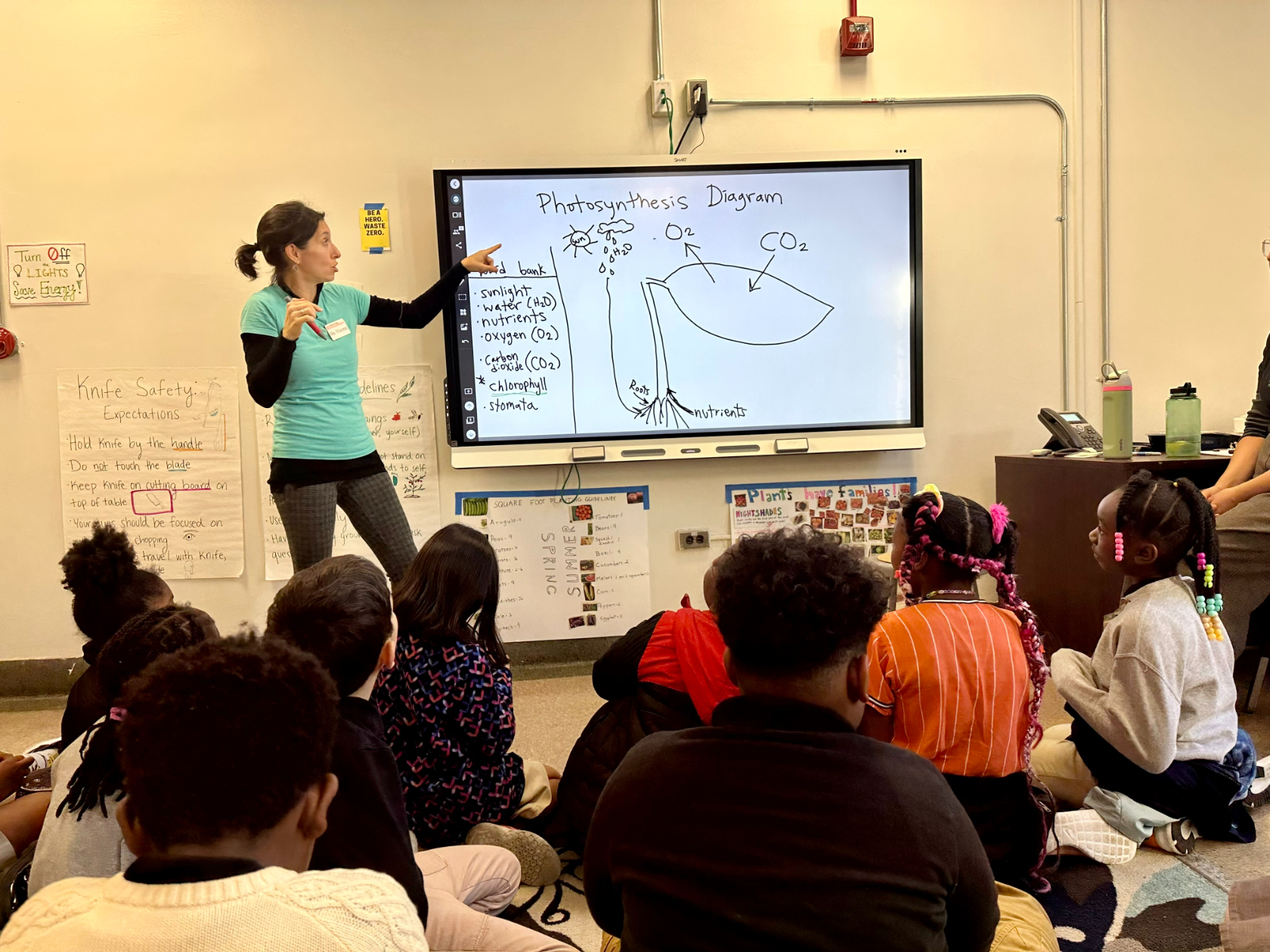
That Wednesday, she and her co-teacher, Ibti Vincent, taught what might have been a complicated and dry biology topic to roughly a dozen third graders: photosynthesis. The kids learned the basics — how plants use carbon dioxide, sunlight, and water to create oxygen and sugar — on a whiteboard in the classroom. But after that they ventured into the garden.
“Can everyone see these tendrils? They kind of look like arms, right? This plant really loves the sun,” said Ephraim as she showed a group of kids sugar snap peas. “What do the leaves do for the plant?”
“They give them the food,” replied one student named Zendaya Lee.
“The leaves get the sun using photosynthesis,” replied another named Graham Kelly.
“So you can kind of think of the leaves as like the kitchen for the plant, right?” said Ephraim. “Just how we can go to the kitchen in FoodPrints and cook for ourselves. The leaves need sunlight in order to make their own food.” Several of the kids jaws dropped at the comparison.
Then they walked to their school kitchen with their harvested sugar snap peas as well as cherry tomatoes, kale, lettuce, and garlic. They made salad and garlic bread using the produce they grew themselves supplemented by ingredients harvested by local farmers.
“Something that’s in this dish is kale. And that’s my favorite super food,” said Graham. When it came time to eat the class creation, he ate all the kale first while doing a happy dance.
The kids were all smiles throughout class, giggling at putting on gardening gloves or whisking the dressing. Several said FoodPrints was their favorite class and that the meals were better than their traditional school lunch, which students said is sometimes pizza and hamburgers.
Based on interviews with 78 current and former FoodPrints students, researchers with George Washington University Milken Institute School of Public Health found that the program had long-lasting impacts: many students still cook FoodPrints recipes and are more likely to try eating or cooking with a variety of foods.
While FRESHFARM thinks the class has been a success so far, it’s currently taught at less than one-fourth of DCPS schools.
Which schools get FoodPrints depends mostly on word of mouth, in large part due to lack of sustained funding. According to Mampara, 60% of the program is funded through the city’s Office of the State Superintendent of Education. The other half is through FRESHFARM’s private fundraising and federal government grants.
D.C. funds FoodPrints on an annual basis, and the Council usually has to add one-time funding to the program in the mayor’s proposed budgets as it did last year.
“The two biggest challenges are our inability to plan because there’s not dedicated funding. And then also the the additional fundraising we need to do to match this incredible investment from the city,” said Mampara. “But we need to fund it in the same way that we fund art teachers and music teachers and PE teachers. We need to fund the food teachers in our public schools.”
FoodPrints is trying to respond to big problems, like diet-related diseases. Roughly 8.6% of the adult population in D.C. have been diagnosed with diabetes and even more go undiagnosed. That figure has been historically higher among residents living East of the Anacostia River, where there are only three full service grocery stores. In an effort to make a dent in these access gaps, FRESHFARM also has a farm stand at a Ward 8 school that teaches FoodPrints, so families can pick up the fruits and vegetables necessary to make class recipes at home.
The lessons of FoodPrints have a ripple effect in many communities. Graham, who’s taken the class for several years, recalls making a cauliflower curry dish for his family.
“I’ll eat anything we make in FoodPrints,” said Graham.
This article has been updated to correct that FoodPrints is taught to students as old as 8th grade, not 5th grade.
This article is part of Health Hub, DCist/WAMU’s weekly segment on health in the D.C. region. Tune in to WAMU 88.5 every Tuesday or on the NPR One app for a conversation with reporters and newsmakers about local health news.