 Jenny Gathright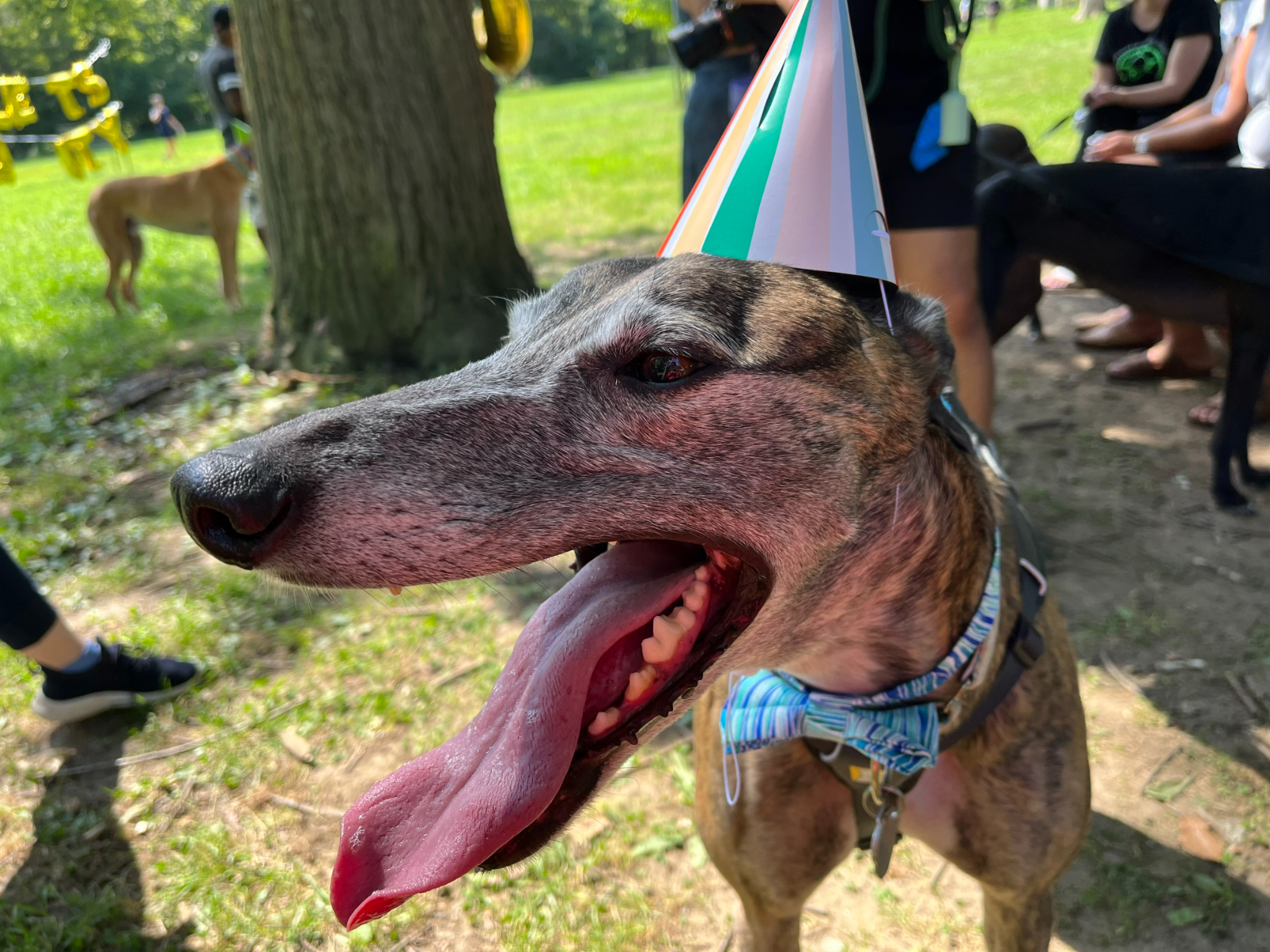
For two years in a row, I have managed to find myself in Rock Creek Park at a birthday party for four greyhounds.
Last year, I found the party by accident while on a run. Charmed by the sight of a dozen greyhounds lounging together in the park, I asked some questions and discovered the people there were all members of a large and active local greyhound groupchat – a community of people who love their quirky, spindly dogs. I clumsily fired off a tweet about the gathering.
As it turns out, that tweet – and a subsequent repost on the popular local Instagram page Washingtonian Problems — led to a spike in interest in the D.C. greyhound group chat. Prior to the post, the group tended to grow slowly through word of mouth, mostly when one person happened upon another greyhound owner on the street. But group members told me that after my tweet, the chat’s membership doubled to 200. As a thanks for my unintentional service to them, they graciously invited me back this year to document the celebration.
So on a Sunday in late August, I found myself surrounded by about a dozen greyhounds and their owners.
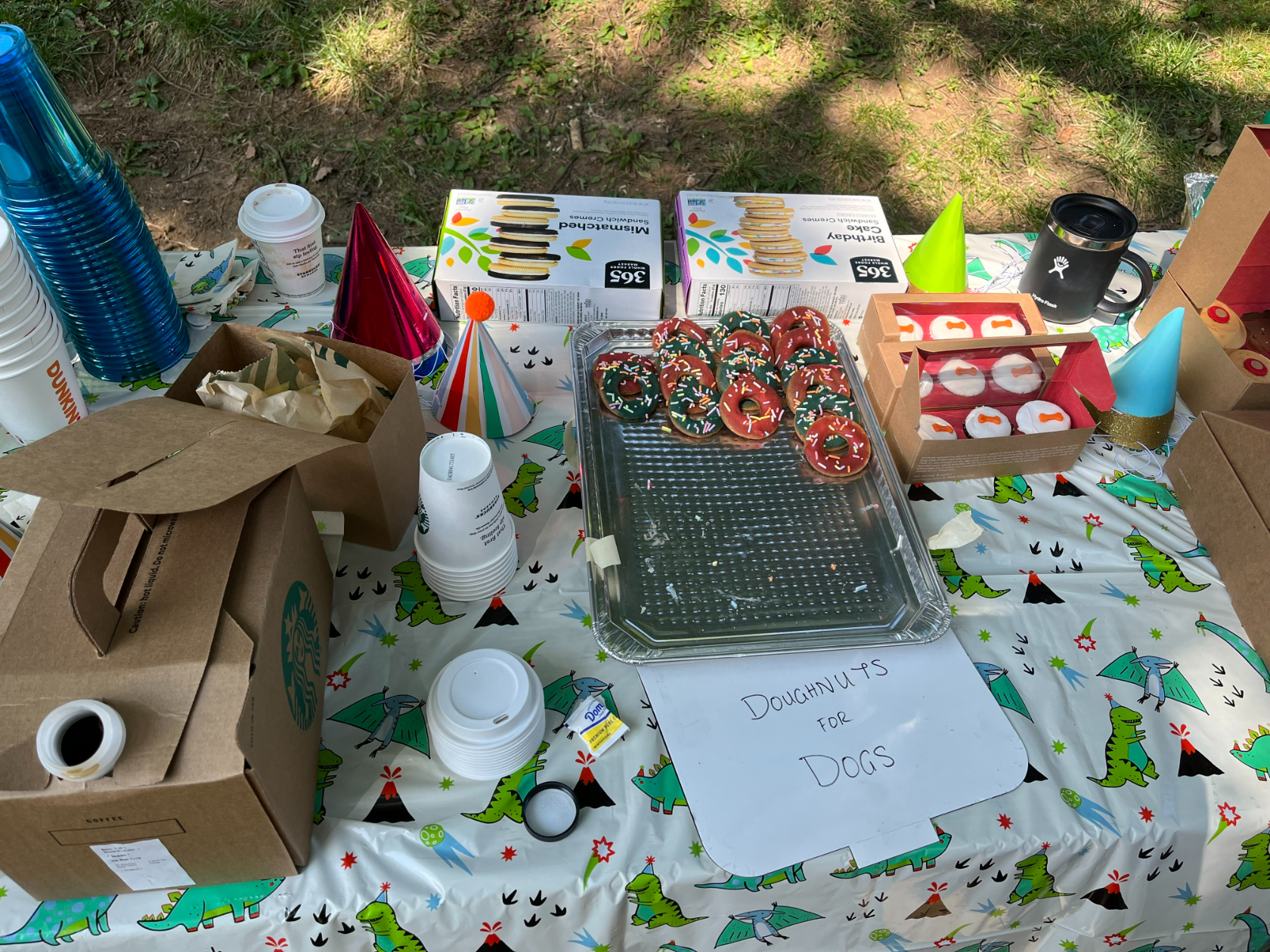
I came back, in part, to learn about why this specific community is so important to these people – to the point where they lovingly set out a spread of dog donuts and cupcakes, arranged gift bags for the dogs with birthday hats and poop bags, and gifted each other handmade dog collars. All of the greyhound members said that it’s because greyhounds are simply not like other dogs — and the experience of having one as a pet is unique enough to bond people together.
“When you adopt one, it’s kind of like teaching an alien to live on earth,” explained Lindsay Martin, who lives in the H Street corridor with her greyhound Mika — one of the birthday dogs being celebrated that day. “They have no concept of stairs, hardwood, how to take a treat out of our hand, nothing.”
This is because these greyhounds weren’t bred to be pets; they were bred to participate in the dying sport of dog racing, which has been banned in most states and now only really happens officially in West Virginia.
Luckily for their new owners, this party’s guests “failed up,” as Brian Gilmore put it when he spoke about his dog Basil, a brown and gray pup who sported a birthday hat and tie-dye bandana for the occasion.
“He raced about 10 races. He came in dead last and almost all of them. And then he retired before he was two,” Gilmore said.
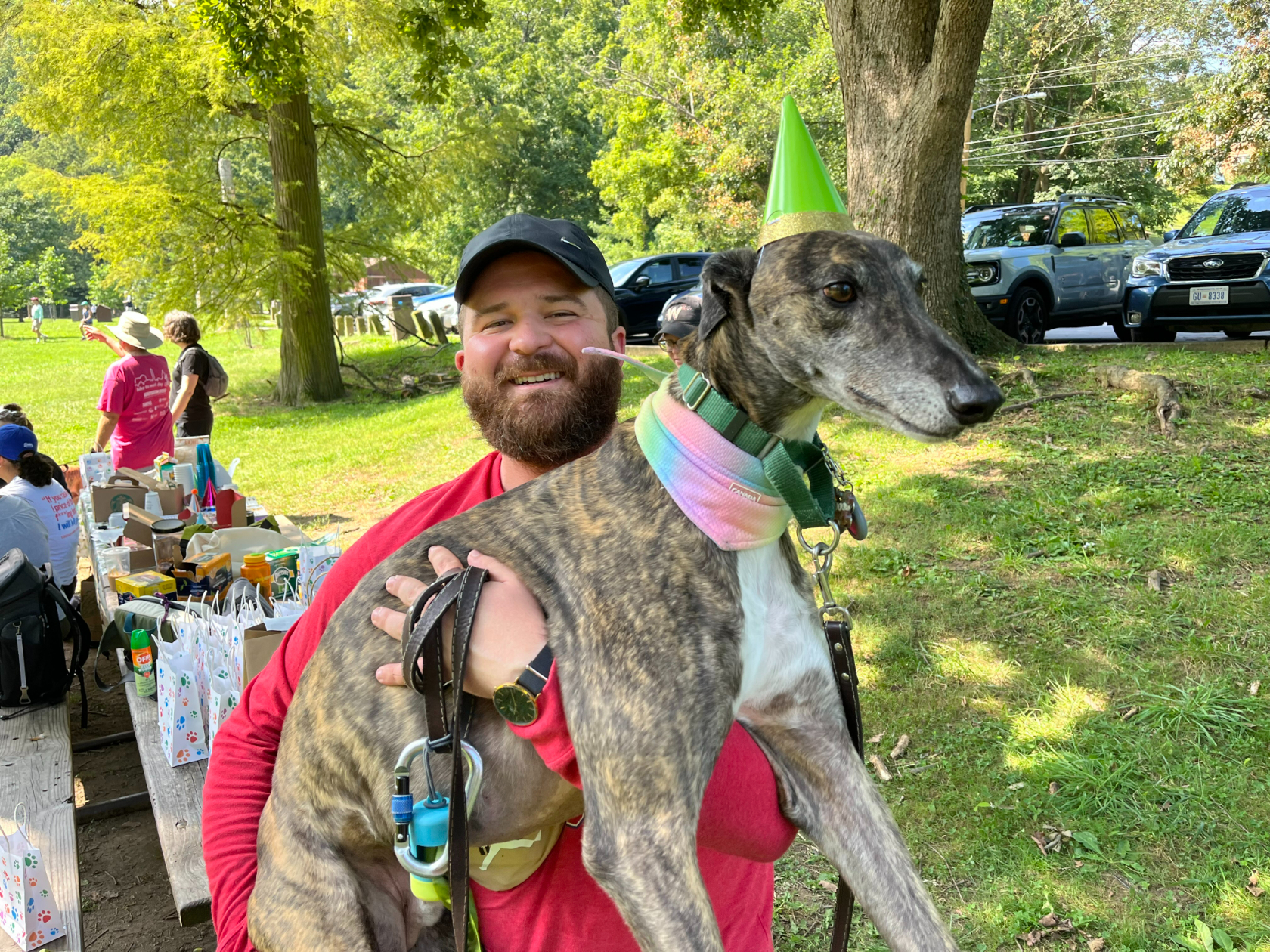
Martin said Mika was “a total failure” on the track. Mika’s brother Coco was actually pretty fast – “except he couldn’t pay attention, so they kicked him out early,” said his owner, Elite Truong.
The owners all know so much about their dogs’ past lives because it’s easy to look up in the big online greyhound database. Dogs who have raced have a unique set of numbers tattooed on their ears, as well as a racing name. Some of these greyhound owners have used this information to trace their dogs’ lineage back to the 1800s.
This is also how the birthday dogs’ owners learned that Mika, Coco, Assam, and Napa – the four guests of honor at the party – were siblings. Mika and Napa’s owners also happened to be neighbors in the H Street corridor, which is how they met and later discovered their dogs were brother and sister.
Christina Hernandez, whose dog Assam is another one of the siblings, found Napa’s owners on Instagram.
“I think they kind of recognize each other, because when they’re racing they’re raised for the first year with the litter mates,” she said.
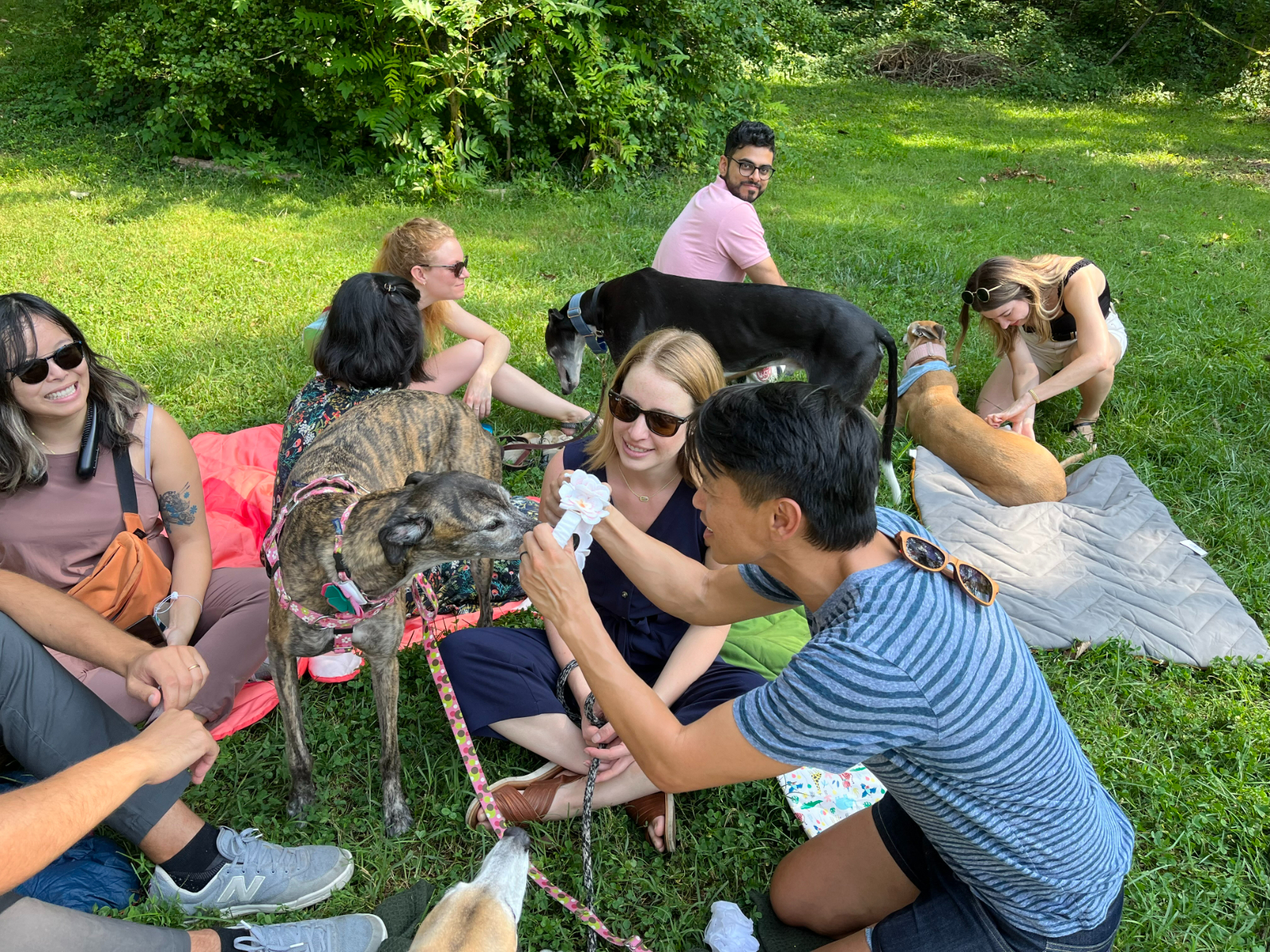
The gathering at the park was a party, complete with costumes and gifts for the dogs, who were turning 5 years old. But it was also extremely relaxed. The dogs didn’t play with each other very much, though there was a lot of gentle sniffing. Many of them decided to simply lie down; though they’re known for being fast, greyhounds are actually notoriously low-energy.
Their owners sat on blankets, chatted, and ate snacks. The most audible excitement came when Martin gifted Napa — the only girl sibling, described by her neighbor Hannah Catlow as “a little queen” — a homemade collar that had large white flowers on it.
Catlow, who describes her greyhound Butter as a “20-hour-per-day sleeper,” said she thinks greyhound owners tend to have personalities similar to their dogs.
“We’re all pretty mellow people,” she said. “I mean, you see what’s going on here. Everybody’s like mellow and nobody’s like making a big scene. It’s a very chill gathering whenever we get together.”
Many of these greyhound owners got their dogs exactly because they tend to be extremely relaxed and don’t require a lot of exercise – which makes them great for apartment living.
Catlow had long wanted a greyhound, she said, because “I’m a big dog girl, but I’m kind of a cat person on the inside.” So once she started renting an apartment that allowed larger dogs, she adopted Butter.
“He has been an absolute perfect angel since,” she said.
Still, all the dogs have had to get used to being pets. Jim Coker remembers that for the first two or so years he had his greyhound Fynn, he never saw him get excited to play with another dog; after all, these greyhounds were bred to work, not to play. But one day, he said, it suddenly happened: Fynn saw a dog, leaned forward, and looked eager to play. Coker glowed as he described the encounter.
“I was like, ‘Oh my God, you’re like a real dog now!’” Coker said.
But “the saddest thing” about Fynn, his other owner Rasika Kalamegham said, “is he still doesn’t know what a ball is like.”
When he first came home, she threw him one — and he just stared at her.
“I realized no one had ever played with him,” said Kalamegham.
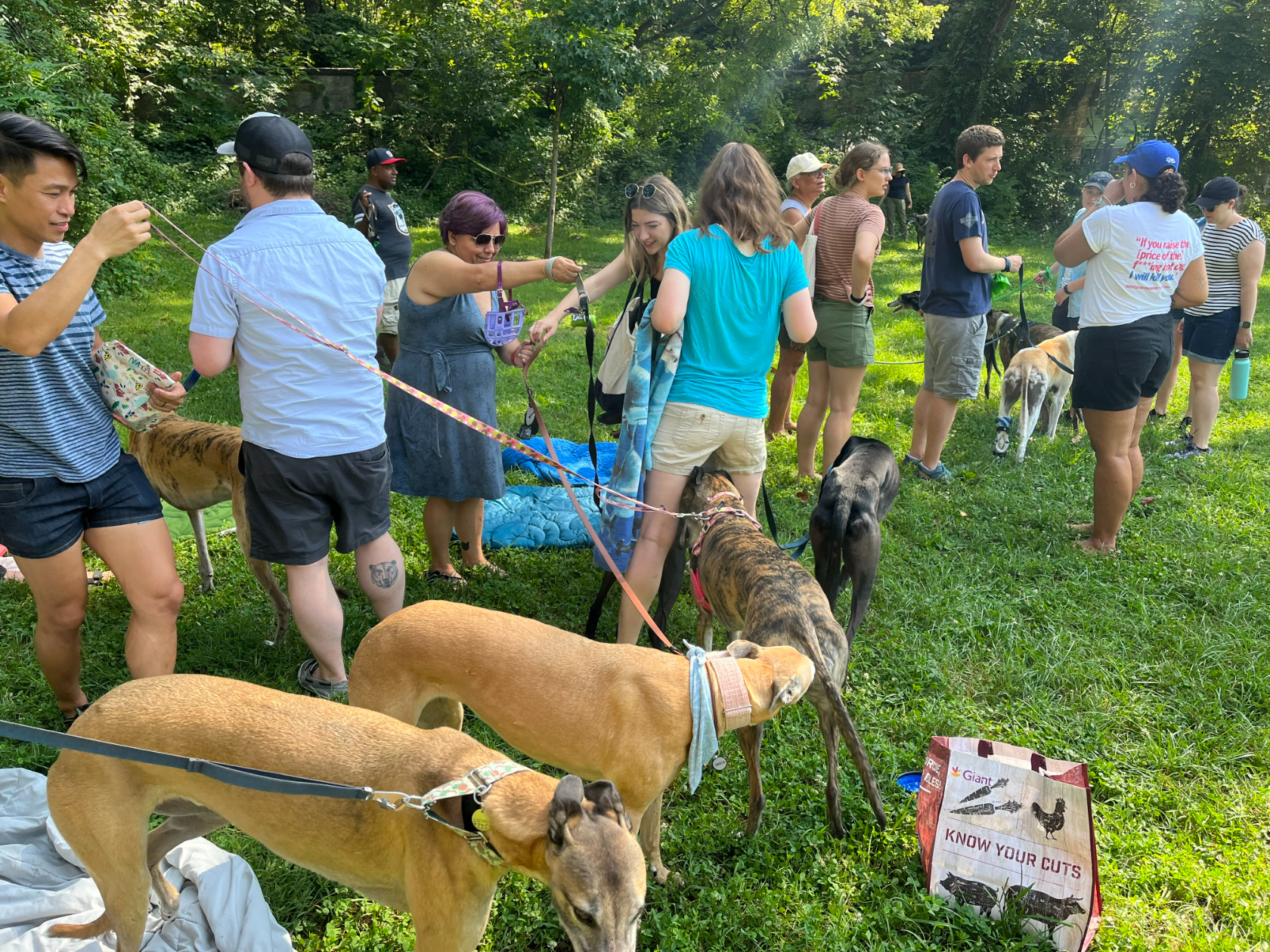
Everyone here at the party said the greyhound group chat has been a huge help. They watch each other’s dogs, go on walks together, laugh together about their dogs’ weird quirks – which often end up being similar (like a fear of stairs and ceiling fans, or a strange fascination with parked cars).
Anthony Galyer, one of Napa’s owners, said sometimes he’ll watch Napa, Mika, and Butter all at once, since they’re all neighbors who rotate dogs between their homes as people go out of town or have commitments.
“If I’m watching two dogs…what’s one more?” he said, laughing. Plus, it’s easy when they all have pretty much the exact same routines and habits.
Truong said she feels like the greyhound group stands out in a town that can sometimes feel very career-focused.
“It’s just a really, really good community. It’s nice to meet so many people in D.C. where it’s not transactional or it’s like, ‘What do you do?’” she said. Instead, “It’s like, ‘You have this kind of dog!’ and you immediately can connect to so many people on that level.”
Kristen Martin, who brought her small black greyhound named Zaytouni – “olive” in Arabic – said the group gave her solace during a really hard time in her life.
“When Zero — my previous dog — passed, they were a huge support,” said Martin. “They’re a big piece of my life and a big part of my heart.”