Amanda Michelle Gomez
D.C. residents who rely on food assistance through the Supplemental Nutrition Assistance Program (or SNAP) are supposed to have their benefits boosted starting January 2024, thanks to a law enacted by the D.C. Council earlier this year. But that might not happen. (Recipients should still expect their regular allotment.)
Mayor Muriel Bowser’s administration decided not to enhance aid to residents in need of extra support, citing budgetary and staffing constraints. The Council and food security advocates firmly disagree with the Bowser administration, pointing to excess revenue. Most recently, the Office of the Attorney General weighed in, saying the mayor must follow the law as the Council directed and boost SNAP.
“The Mayor may not unilaterally divert or withhold funds appropriated for the SNAP benefit increase,” states an Office of the Attorney General analysis that Ward 4 Councilmember Janeese Lewis George requested. Unless there’s an “imminent threat” of a spending deficiency, the Bowser administration does not have the authority.
It’s unclear if the OAG memorandum will force the mayor’s hand. Her office did not immediately respond to request for comment.
Efforts to get thousands of low-income residents extra food assistance have been over a year in the making. In December 2021, a group of councilmembers led by At-Large Councilmember Christina Henderson introduced a bill that would increase the monthly allowance for residents on SNAP by providing local funds to the federal-state anti-hunger program.
Various advocacy groups voiced support for the legislation when it was introduced, saying residents aren’t given enough money to eat. The average monthly cost for groceries in the District is over $400 per person, but the average monthly SNAP benefit is $142 per person, multiple advocates said in their testimony to the Council.
“Instead of having to buy the cheapest food options, residents will be able to explore options, and afford more fresh food,” said Melissa Jensen with D.C. Hunger Solutions in her testimony. “Moreover, these increases will help keep up with the historic inflation we have all been experiencing.”
The bill, titled the Give SNAP a Raise Act, passed unanimously in December 2022. Lawmakers saw the measure as not only helping over 136,000 residents in need of extra support but as addressing a racial inequity concern. More than 10 times as many Black residents are enrolled in SNAP compared to white residents, according to Henderson. However, the Council did not fund the measure, that is until earlier this year.
In the spring, during the fiscal year 2024 budget process, Ward 4 Councilmember Janeese Lewis George introduced an amendment that would dedicate excess revenue to Henderson’s bill, as well as to undocumented residents and other workers excluded from government relief programs. The Council approved the amendment.
In September, Chief Financial Officer Glen Lee indicated there was more than sufficient excess revenue to fund Lewis George’s amendment, in a letter to the Council and Mayor Bowser. Thanks to higher than expected revenue from sales and corporate income tax, the city’s 2023 revenue estimates were up by $178.8 million, per Lee. The required $39.6 million needed to implement the SNAP boost was then transferred to the budget of the Department of Human Services, which oversees the program, Henderson said she confirmed with Lee’s office in October. That means, residents on SNAP would soon get a 10% enhancement to their monthly benefit, or an additional $47 per month, on average.
However, the Bowser administration was not preparing for the increase slated to begin at the start of the year, said Henderson in a public letter to her colleagues in late November. “The Executive has cited various budget pressures to explain their decision not to fund the SNAP increase in January as outlined in law,” said Henderson.
The Bowser administration said to Henderson and the Washington Post that they did not have the staff to implement the boost, plus there were other safety net programs in need of the funds instead. “The budget for the Department of Human Services, to put it mildly, is underwater at this point,” Deputy Mayor for Health and Human Services Wayne Turnage told the Post.
Cash and housing assistance programs were not adequately funded, according to Turnage. Plus, the SNAP program had other problems to deal with; the District has the worst processing rate of SNAP applications nationwide, according to the federal government.
However, Henderson said Lewis George’s amendment takes into account the administrative costs associated with the SNAP boost. She added that the other challenges the Bowser administration cited were anticipated. Instead of finding other solutions for those problems, the Bowser administration is pitting programs against one another, Henderson added. For example, the Temporary Assistance for Needy Families program requires a 8% cost of living adjustment, which the Bowser administration says is unfunded. But Henderson pointed out that the statutorily required COLA hasn’t been funded for years and is not included in the mayor’s latest budget proposal.
“I am exceptionally frustrated by the Mayor’s choice,” said Henderson in her November 30 letter. “The Executive has chronically underfunded public benefit enrollment and allotments, and now they claim that they cannot implement Give SNAP a Raise because of spending pressures that they have created.”
In a city with abundant resources, there's no excuse for DC leaders to neglect residents in need. Actions speak louder than words, and right now, it's a cold message to those in need. pic.twitter.com/3PEoATBjO0
— DC Action (@WeAreDCAction) December 18, 2023
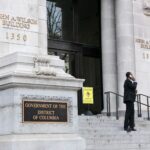
Meanwhile, local advocates have protested the mayor’s decision to divert funding from the SNAP boost. Ahead of Christmas Day, they projected “Mayor Bowser. The Grinch Who Stole SNAP” onto the Wilson Building. They also organized a petition to get the mayor to allocate the funds as the Council intended. Advocates are especially angry at the mayor’s priorities, citing her willingness to offer $500 million to Monumental owner and billionaire Ted Leonsis to keep the Capitals and Wizards in the city. (Though, the mayor and Council were both willing to use additional borrowing authority to fund the deal.)
Just days away from when residents had hoped to get extra food assistance — with many having simply $30 to cover groceries, per Lewis George — the Bowser administration still hasn’t indicated it would change its position. Bowser’s office did not immediately respond to a request for comment.
This type of budgetary disagreement between the Bowser administration and the Council is not new, particularly when it comes to excess city revenue. In her supplemental budget for fiscal year 2024, the mayor diverted $20 million that was allotted for excluded workers in a previous budget cycle to cover other costs in the new year due to lower revenue estimates. The Bowser administration also effectively killed a Council proposal to implement a rent freeze on rent-controlled apartments when it said it couldn’t absorb the administrative cost.