Margaret Barthel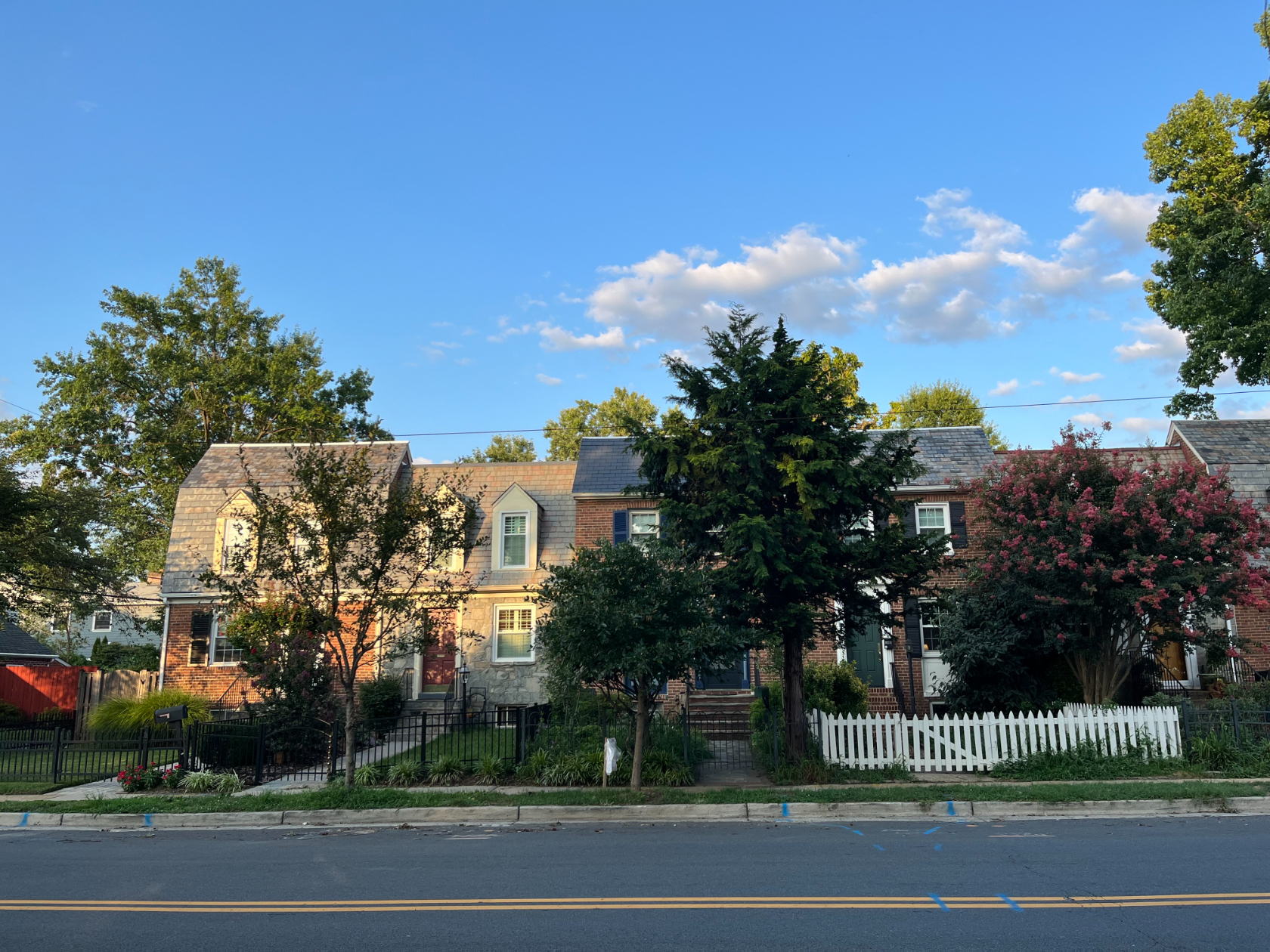
If buying a home in Northern Virginia is on your agenda for 2024, well … good luck.
The already-tight housing market isn’t expected to get much better in D.C.’s Virginia suburbs in the new year, even though high interest rates are expected to ease, according to a forecast from the Northern Virginia Association of Realtors and George Mason University’s Center for Regional Analysis.
Home sales are projected to be down by 10% or more in Northern Virginia in 2024, bucking national projections of increases in home sales as interest rates begin to come down. But in Northern Virginia, home sales are expected to keep declining, for one simple reason: there are not enough houses to buy.
In some Northern Virginia jurisdictions, the decline in home sales over 2024 may be even more pronounced: in Alexandria, sales are expected to drop by 12% from 2023 levels, and in Prince William County, NVAR expects sales of single-family homes to be down 14%.
“We are hopeful that recent spikes in mortgage rates will moderate and stabilize,” said Ryan McLaughlin, CEO of NVAR. “But we expect home values to continue to increase due to historic low housing inventories across the region.”
The National Association of Realtors, NVAR’s national organization, lists the D.C.-Arlington-Alexandria housing market as tenth in the country for most pent-up housing demand.
That level of demand shows up in sky-high housing prices, which are expected to continue rising in 2024. NVAR predicts that the average price of a single-family home in 2024 will be $1.2 million in Arlington, and about $1 million in Alexandria and Loudoun County. In Fairfax, the largest jurisdiction in the D.C. region, it’ll be close to $900,000.
In several local jurisdictions, the pronounced shortage of homes on the market is expected to hit the available inventory of less expensive single-family “starter” homes like townhouses and duplexes especially hard. In Alexandria, Arlington, Loudoun and Prince William counties, the inventory of townhomes on the market is expected to drop by more than 25% from 2023 levels.
As a result, townhomes will get more expensive, NVAR predicts, with prices rising 4.4% in Fairfax, 6% in Loudoun, and 7.9% in Prince William. That would bring the yearly average price for a townhome to just shy of $620,000 in Fairfax, roughly $690,000 in Loudoun, and over $500,000 in Prince William.
Townhouses, duplexes, and small multiunit buildings have been center stage in some of Northern Virginia’s most bruising zoning debates this year. Arlington and Alexandria ended single-family-only zoning in 2023, opening up all residential lots to small multiunit buildings, provided they fit within existing size restrictions.
Those changes are expected to have a very modest effect on incentivizing new construction — in Alexandria, the city expects about 65 new units in the next decade as a result of the law, and Arlington capped the number of so-called ‘missing middle’ units that can be built each year — but are a significant symbolic step away from traditional and often discriminatory ideas about single-family suburban living. In both localities, the shift provoked serious opposition, particularly from current homeowners, an indicator of how politically fraught adding denser, less expensive forms of housing can be in Northern Virginia.
“Local governments are coming to understand that having a supply of for-sale homes at prices affordable to young professional families is a necessary condition for economic success,” the report notes. “They’re just not sure how to achieve that goal, yet.”
Local governments are also grappling with the challenge of building more so-called “committed affordable” homes, subsidized units set aside for households making under the local area median income. The Metropolitan Washington Council of Governments has estimated the region needs to build an additional 320,000 units — 75% of them affordable to middle- and low-income families — by 2030.
In the meantime, people are looking to further-out localities for somewhat more affordable homes to purchase. For the first time this year, NVAR individually analyzed the housing markets in Prince William, Loudoun, and Stafford counties, saying it’s the result of “intraregional migration patterns” to “more distant suburbs” enabled by the pandemic move to remote work.
Consequently, Northern Virginia’s housing supply problems appear to be migrating to the exurbs, too. In Prince William, single-family home prices are projected to increase nearly 6% in 2024, coinciding with a whopping 32% drop in available inventory and a 14% decline in sales. The average price of a single-family home in the county is expected to rise to about $720,000 by next December. The story is expected to be similar in neighboring Loudoun, with a 26% decline in single-family homes available and a 12% decline in sales. The average price of a single-family home is expected to crack $1 million in Loudoun in 2024, per the NVAR estimates.
The tight market is bad news for homebuyers, but fairly good news for homeowners — assuming they can keep up with the property taxes on their rapidly-appreciating real estate. Home values have shot up 42% in Virginia as a whole since the beginning of the pandemic, per the report. (At the height of the pandemic, some localities tried to mitigate that impact on residents’ tax bills by taxing only a percentage of their home values, but steadily climbing property taxes are making it increasingly difficult for some longtime homeowners — especially those on fixed incomes — to stay in their homes.)
The NVAR forecast does not anticipate a major recession in the coming year, a bright spot in a sea of expensive housing figures.
“In the DC region, we expect that the economy will slow through the first half of 2024, and we may even see job losses in the second half of the year, but the correction may not be deep or long enough to qualify as a regional recession,” said Terry Clower, the director of the Center for Regional Analysis, in a press release.