Amanda Michelle Gomez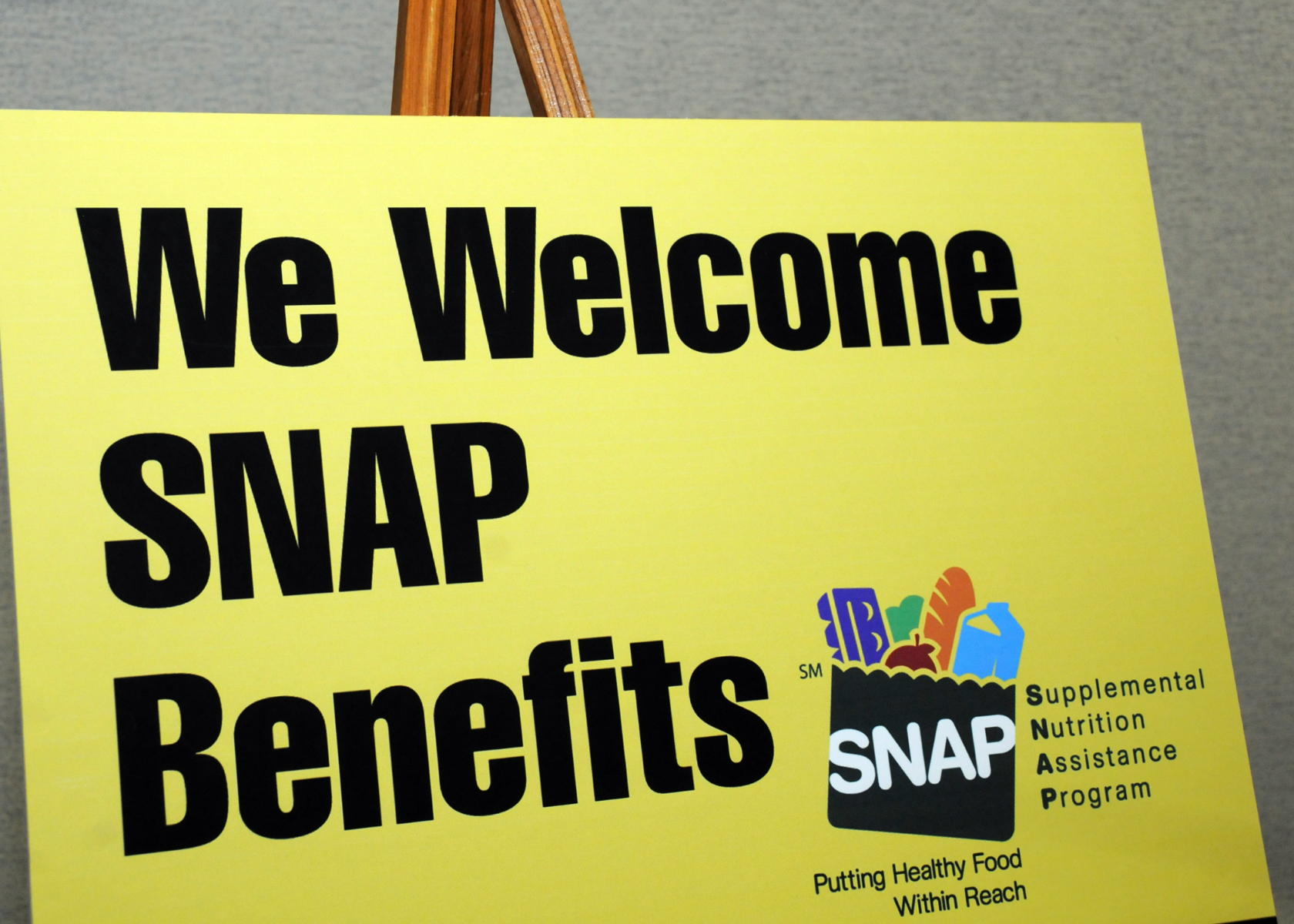
Mayor Muriel Bowser’s administration will implement a legislatively-mandated increase to the Supplemental Nutrition Assistance Program (SNAP) following threat of legal action from the D.C. Council and Legal Aid on behalf of recipients of the food assistance program.
Bowser said she doesn’t know if SNAP recipients will see the increase in January as the law directed, but her administration will work expeditiously to get recipients their money, she said at a press conference on Thursday.
Bowser capitulated late Wednesday on the matter after more than a month of back-and-forth with the council and protests by supporters of the increase.
Approximately 138,000 SNAP recipients were supposed to get a 10% increase to their monthly benefit at the start of 2024. But late last year, the Bowser administration withheld the $39.6 million the council allocated for the temporary SNAP boost, citing administrative obstacles around implementation and other safety net programs more in need of the funding.
For weeks, the Bowser administration received pushback from councilmembers, as well as advocates, for ignoring the law by not implementing the SNAP boost. The Office of the D.C. Attorney General weighed in, saying the mayor must follow the law as the council directed. Then this week, the disagreement between the two branches of government over how to spend excess city revenue escalated: at least one entity prepared to sue the Bowser administration over the funding — and the D.C. Council looked poised to join it.
SNAP recipients represented by Legal Aid DC and Zuckerman Spaeder LLP notified the Bowser administration this week that they would file a lawsuit in D.C. Superior Court Thursday to compel it to follow the law passed in December 2022 and funded in the FY2024 budget, both reviewed by the mayor. And council Chairman Phil Mendelson suggested earlier this week that the council would take legal action over the matter, introducing legislation authorizing its general counsel to file its own lawsuit or support an existing one. Legal Aid DC executive director Vikram Swaruup says they encouraged the council to file an amicus brief in Legal Aid’s suit.
On Wednesday night, the Department of Human Services Director Laura Green Zeilinger suddenly announced the agency will implement the increase to SNAP benefits. It is still unclear how soon SNAP recipients will see their 10% enhancement, an additional $47 per month, on average. Even though Zeilinger had advised the mayor against moving forward with the SNAP increase for several months, the director advised Bowser differently Wednesday evening, according to her statement to DCist/WAMU.
“I advised the Mayor that DHS will make this program work while we attempt to solve ongoing challenges,” Zeilinger’s statement reads.
Mayor Bowser said she regretted agreeing to fund the SNAP bill the way the council directed. In the spring, the council passed a local budget that included funding the SNAP increase only if the city had extra revenue; in September, the chief financial officer confirmed the city did have enough money.
“It wasn’t something I should have agreed to. And I won’t in the future. If there are triggers — that the council spends money that doesn’t exist — I don’t think I’ll be able to support it,” Bowser said.
The Bowser administration’s decision to implement the SNAP increase was sudden and unexpected. Just hours before, the Bowser administration held a media call where a senior official defended the original decision to not implement the SNAP increase. The official, who requested anonymity to discuss the contentious policy matter, argued it was too difficult to execute a benefit enhancement that is only funded until late September. Plus, there were other safety net programs like the Family Re-Housing Stabilization program and Temporary Assistance for Needy Families program that needed the funding more, the official said.
The official said the Bowser administration was still deciding how to spend the nearly $40 million allocated for SNAP, however.
As it turned out, the Bowser administration, specifically Zeilinger, was about to be sued for not implementing the boost to SNAP. A draft of the complaint to be filed on behalf of D.C. residents Katina Cheadle and Maria Alexis Jackson argued the Bowser administration could not simply withhold funding because the law increasing SNAP benefits is clear and recipients of the food assistance program are being harmed without it.
“It’s a lot of us that need that increase. It’s not a want. It is, for some people, it’s a definite need,” Cheadle, a mother of seven, including several teenagers, tells DCist/WAMU.
Cheadle says she often runs out of the $1,405 benefit for her household of eight by the end of the month, so sometimes has to dip into her cash assistance benefit to purchase food. She did that in November and then couldn’t immediately pay her power bill, Cheadle says.
“It should not have taken the threat of a lawsuit for the Administration to follow the law and help families who need it, but we are glad they have committed to beginning that process,” Swaruup says in a statement.
Legal Aid DC will not file the lawsuit but awaits further details on implementation, Swaruup says. The nonprofit will determine next steps when they learn how and when the Bowser administration will execute the law, he adds.
Even though the Bowser administration ultimately decided to implement the policy, some councilmembers are still disturbed by the process.
“Months were wasted while the administration attempted to play chicken with the law, hoping to gaslight the city,” Ward 5 Councilmember Zachary Parker said on X, formerly known as Twitter. “Now SNAP recipients still have to wait for DHS to play catch-up.”
The Bowser administration had multiple opportunities to voice DHS staffing and budgetary concerns before the SNAP bill had been enacted but did not, according to At-Large Councilmember Christina Henderson, who introduced the bill back in 2022. Zeilinger’s testimony to the council on the bill did not raise those concerns. DHS actually recommended a flat 10% increase to SNAP because it was easier to administer, per Henderson, instead of her original proposal of a sliding scale going up to 15%.
Henderson only learned of the cited problems in November, and she thinks they sound questionable. For example, the Bowser administration named DHS staffing issues, but the council funded 18 positions in the recent budget and the SNAP boost was only supposed to require a change in computer code, per Henderson.
“We actually don’t have to go to court to come up with decisions,” Bowser said at the presser.
But councilmembers have repeatedly said the Bowser administration had months to negotiate before not following the law.
“We could go round and round all day long about ‘should we fund this program or should we fund this other program instead,’ etcetera. But the conversation and the time to have that debate was months ago when we passed this,” Henderson told DCist/WAMU ahead of Zeilinger’s announcement.
This post has been updated to include comments from Mayor Muriel Bowser at her Thursday press conference.