Jacob Fenston
This week’s storm brought the first real snow in two years to the D.C. region. With the snow comes another white substance: salt.
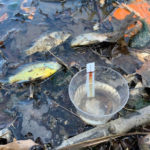
Salt is used to keep roads and sidewalks safe, but it comes with a cost. When snow melts, the salt runs off into local streams and rivers, raising salinity levels. Higher salinity harms freshwater creatures, causing water to leave their bodies through osmosis.
Too much salt also damages infrastructure. Salt causes billions of dollars in damage to roads and bridges — not to mention cars — and it also corrodes water drinking water pipes, leaching metals including lead into the water supply.
“Drinking water supply sources have shown increasing trends of salt over the last several decades,” says Sujay Kaushal, a professor at the University of Maryland Department of Geology, who has been studying the impacts of salt for the past two decades.
“Once salt gets into drinking water, it’s very difficult or impossible to remove it,” Kaushal says.
Due to climate change, the D.C. region is trending toward warmer winters, where precipitation is more often rain than snow. Still, Kaushal says, that doesn’t mean less salt.
“Even though there’s been less snow, there’s been increased variability in our climate and increased pulses of snow,” Kaushal says.
Plus, as the region’s population grows, more and more of the watershed is paved over. More roads means more road salt, which means more salty runoff in local waterways.
There are various ways to reduce salt use. One is to pre-treat roads with beet juice mixed with salt. The beet juice helps the mixture stick to the roadway, meaning less salt is required to keep the road clear. The District has been doing this for several years.
Another way to cut down on salt is to educate residents and businesses to use less: you only need a 12-oz mugful of salt for a 20-ft. driveway. Be careful of deicers that promise to be “eco-friendly” — many of these products are just a different type of salt. If it has chloride, it’s a salt.
“One thing we may consider in the future are low salt zones or no salt zones that are buffers where no salt or low salt is applied near the drinking water source,” Kaushal says. “Because location, location, location is really important when it comes to pollution.”
There is always this salt alternative, especially concocted to appeal to Marylanders:
.@MDOTNews @MDSHA @TheMDTA – sweet (and salty?) new trucks! pic.twitter.com/K2yPS1xsg1
— VDOT Northern VA (@VaDOTNOVA) January 16, 2024