Héctor Alejandro Arzate
 Tyrone Turner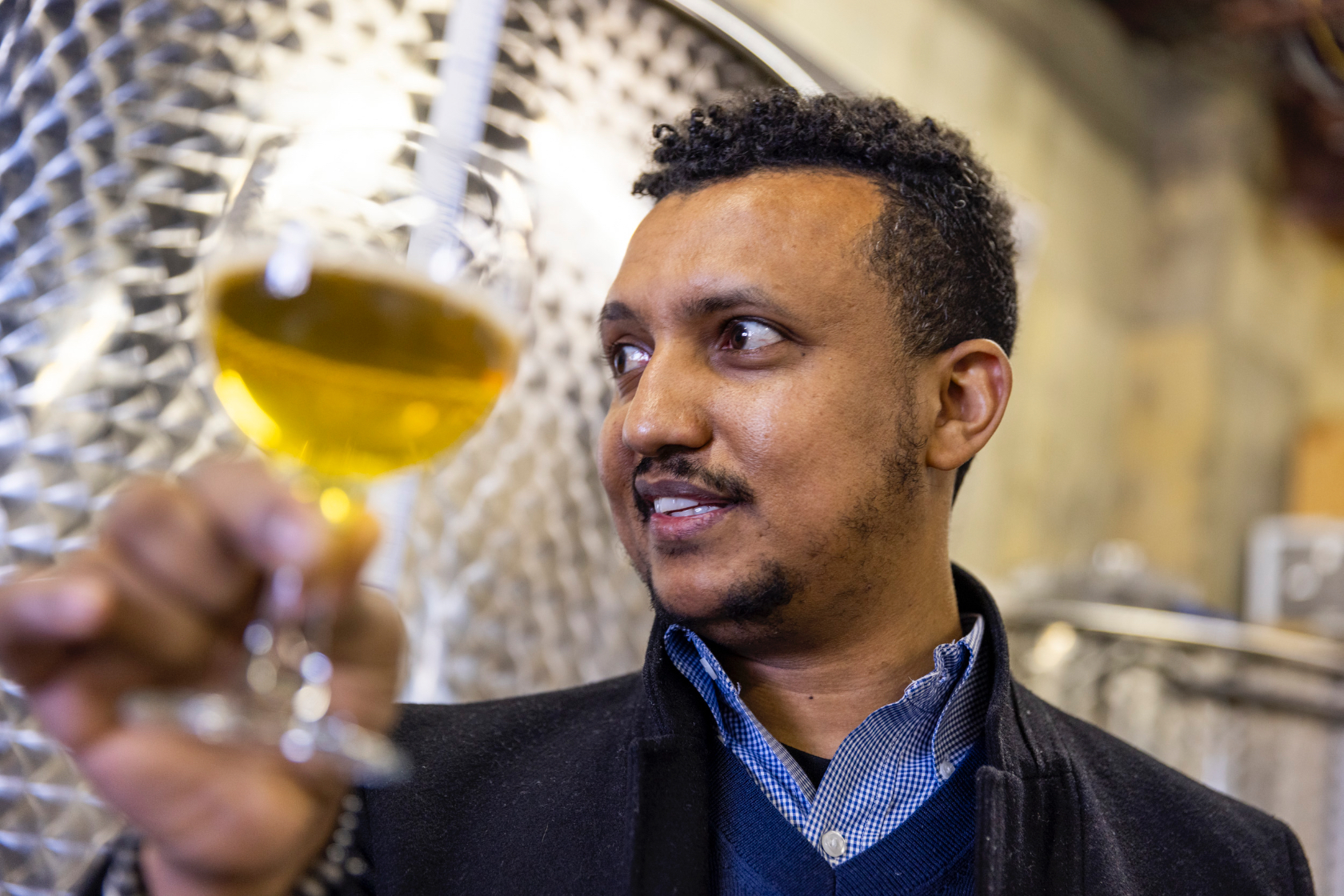
Gize Negussie says that when he was growing up in Addis Ababa, Ethiopia, no Christmas, Easter, or even wedding celebrations would be complete without honey wine – or tej, as it’s called in Amharic.
His mother, Tekuam Hailu, would brew the golden drink for festivities by combining water, raw honey, yeast, and then leaving it to ferment ahead of time. As a kid, Negussie and others would drink the sweet mix, which is sometimes called birz when it has little to no alcohol.
Considered by many to be the national drink of Ethiopia, Negussie says that not much can compare to tej, both in its taste and ability to bring people together.
“If you offer grape wine and honey wine, even Scotch, people will pick the honey wine because it’s pure and usually made with passion and love,” says Negussie.
But his mother’s honey wine doesn’t just evoke fond childhood memories of her preparing it for big family celebrations. Her tej is the inspiration behind his opening of Negus Winery in Alexandria, Va. And it could be the “first and the only” tej tasting room in the United States, according to Negussie.
The walls inside the tasting room are adorned with frames that capture Ethiopian art and history, while the benches are specially crafted with heritage textiles. In addition to the honey wine, the tasting room also offers rosé, white, and a red blend of grape wines that have been produced in Purcellville, Va. for the Negus brand. There’s also an offering of injera (a traditional flatbread) chips from local supplier Tsiona Foods to pair with wine flights for all customers looking to imbibe.

“They can come in, gather, and celebrate,” says Negussie.
Served in the traditional glass bereles of Ethiopia, Negussie says it’s a point of pride to be able to showcase his culture and the deep roots of tej. The name of the winery pays homage to both his father, named Negus, and the Amharic word for “king”– a fitting choice for a drink with such a regal history.
“It used to be for a king or royal families,” says Negussie.
Many believe that tej dates back over 3,000 years when the African Queen of Sheba first paid a visit to the Israelite King Solomon. She fell in love with the honey wine, says Negussie, and for most of Ethiopia’s history tej was reserved for royalty and nobles. Some drinkers are thought to include the late Queen Elizabeth II, who paid a visit to Ethiopia in 1965, according to Negussie.
Negussie wants to continue honoring that heritage, albeit in a way that’s a bit more accessible to most people and that spotlights the craft and expertise of everyday brewers, including his mother. The winery’s featured spirit is dedicated to her as “Mama’s Honey Wine,” and is offered in both semi-dry and semi-sweet varieties. The recipe, of course, was gifted to him by his mother, though not without a bit of trial-and-error.
“So I told her, ‘Hey, show me the traditional, I’ll change it to the modern.’ Because I know how to brew. And then actually, the first attempt was bad. She told me to dump it,” jokes Negussie.
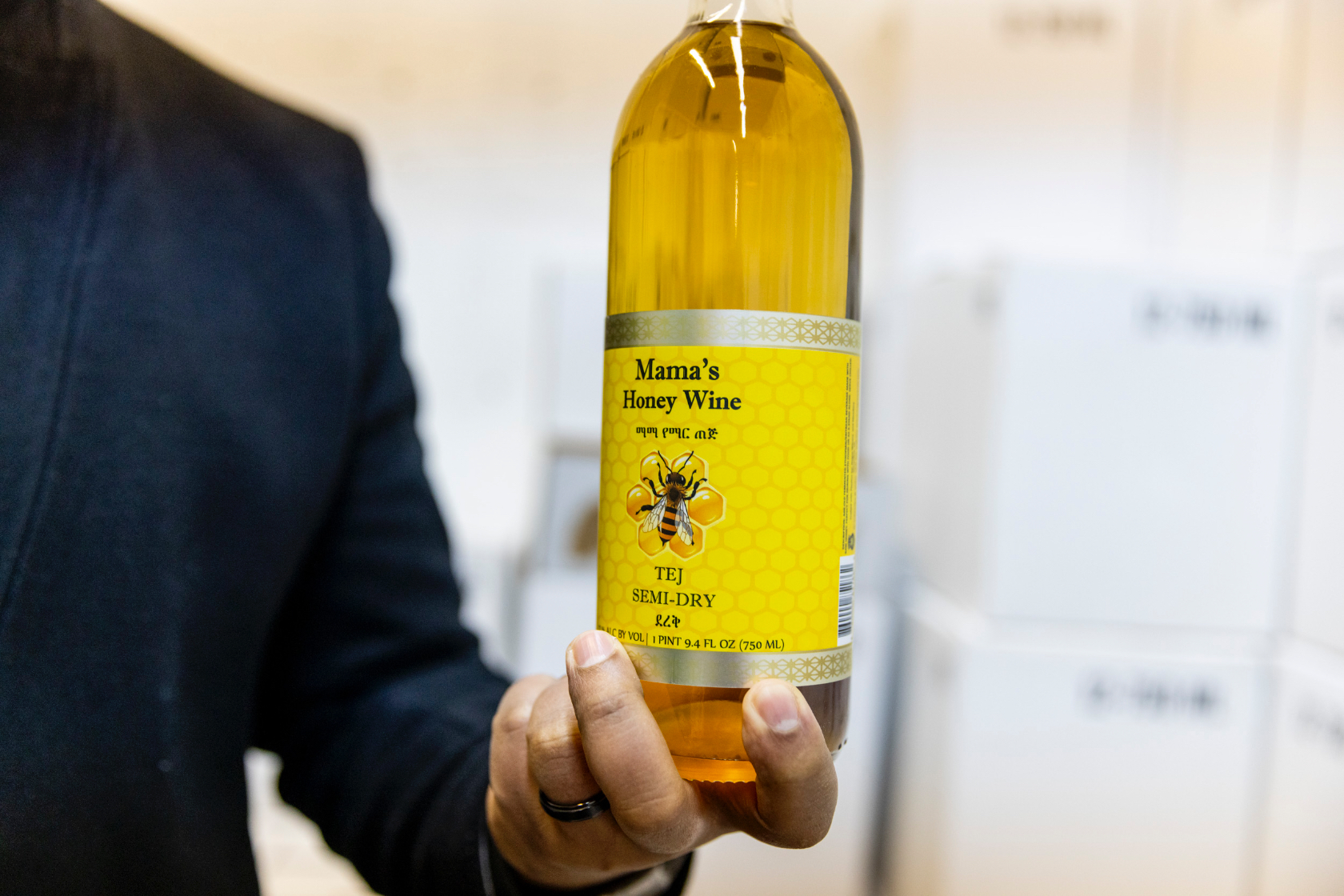


Eventually, he was able to get the mix just right. He even got his mother’s stamp of approval when she visited from Ethiopia for the launch of the tasting room in October of last year. “She was so proud,” he says.
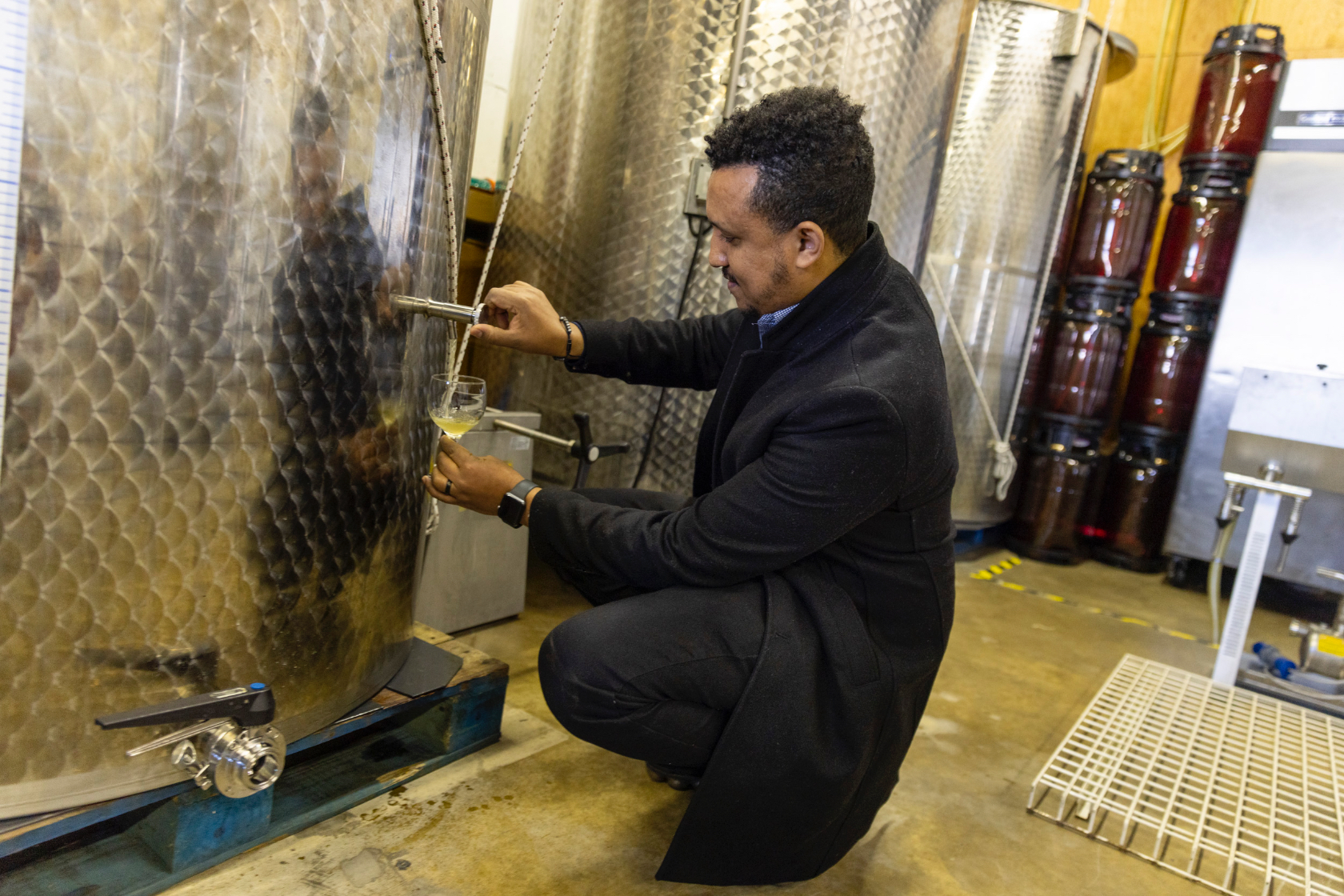
Today, Negussie brews the tej in a warehouse adjacent to the tasting room, offering tours for customers. There, he mixes the honey and water before transferring it to four stainless steel tanks that can hold up to 2,000 liters each. The entire process can take up to six months and requires a close attention to pH levels and alcohol percentages. On a recent visit, he showed off a glass of tej throughout the process, which customers can sample.
“Yellow as you can see,” says Negussie. “It’s around 6% alcohol. So, still young. But beautiful, rich of honey.”
A computer scientist by training, Negussie says he wasn’t always in the brewing business. He first immigrated from Ethiopia to Boston in 2011. He eventually made his way out to San Francisco where he spent several years driving limousines for his family’s company, taking customers all over wine country.
“I got a chance to visit top wineries. But none of them offered honey wine or tej,” says Negussie.


Tsion Bellete, the founder of the injera chips company, says that Negus Winery is filling a need for the Ethiopian community not just in the D.C. region but across the nation. “I’m so proud of him,” says Bellete. “We really needed a clean quality, well- manufactured [tej].”
So far the winery supplies tej for almost 30 accounts across the D.C. region, including Ethiopian restaurants like Dukem on U Street NW. Their wines are also available to ship across the country through an online website.
“I got a lot of positive feedback, especially for those who never had the Ethiopian honey wine before, because when they walk in, they are expecting the same as grape wine or mead. But our honey wine is totally different because of [tradition],” says Negussie.
Anthony Sterling, a customer who works nearby and is half French and half Ghanaian, says the new winery is a welcome addition to a growing mix of African businesses across the D.C. region, and something to be proud of.
“I’m glad that this is here representing the African community,” says Sterling.“Hopefully we’ll get more Africans to come in here and try it and go out there and let people know that, ‘Hey, we have something here different.’”
For Hermela Negussie, Gize Negussie’s wife and manager of the tasting room, it’s been a joy to watch the reactions from people who are trying Ethiopian honey wine for the first time.
“After they taste it, I can tell from their face – and they tell me – that they love it,” she says.
And Negussie says he has even bigger plans for the future of his winery, like opening a vineyard of his own – something that he says is more than possible in the United States. “A place where you can achieve your dream as long as you are a hard worker.”