Elliot C. Williams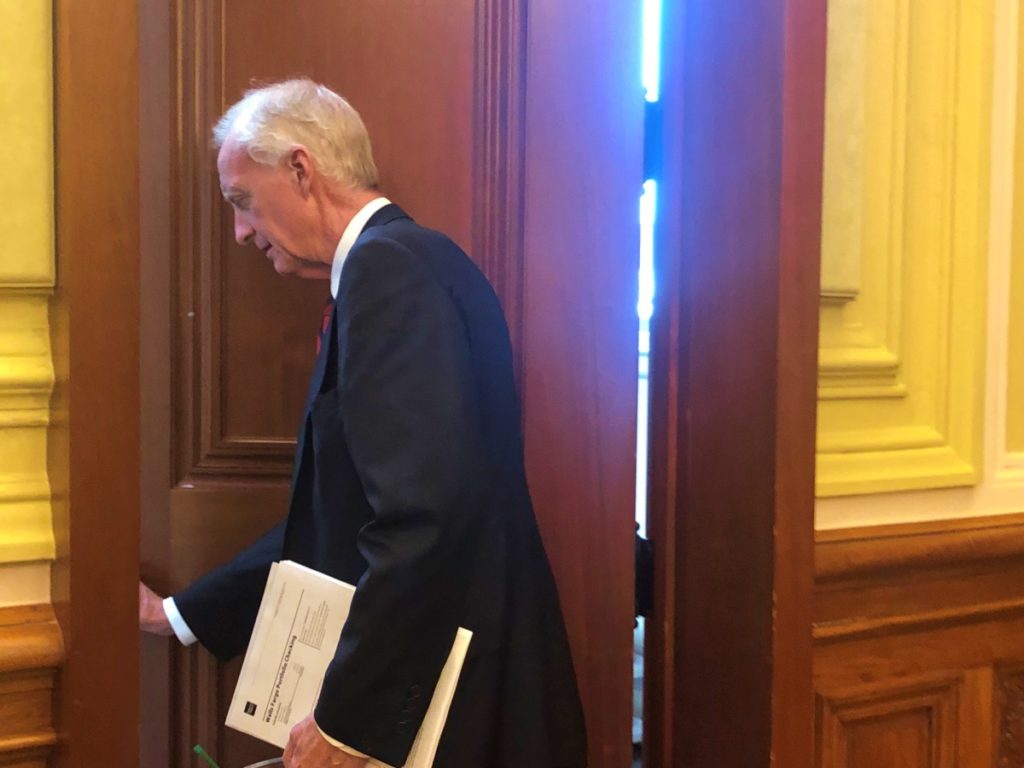
D.C. Council Chairman Phil Mendelson has appointed former Ward 2 Councilmember Jack Evans to the D.C. Commission on the Arts and Humanities (CAH), returning to a public position a disgraced politician who has largely remained out of the spotlight since stepping down from the council and settling an ethics case with a $35,000 fine nearly four years ago.
Evans, who stepped down from his council position in 2020 after he was the subject of multiple ethics investigations, was appointed to the arts commission Monday morning and attended his first meeting later that day, according to a CAH spokesperson.
Typically, the mayor appoints nominees to the commission, an independent agency within the D.C. government that oversees a more than $50 million budget supporting arts programming and nonprofits across the city. The council is responsible for approving the mayor’s appointees.
But Mendelson appointed Evans through a workaround in the law: This particular seat has been vacant since June 2021 — it was last held by Miles Gray — and D.C. Code allows the chairman to appoint someone to the role if the mayor doesn’t nominate someone within 30 days of vacancy.
The appointment raises questions as to why Mendelson would appoint the discredited former councilmember — who Mendelson himself once said had “obliterated the public trust” by using his council position for personal gain. After the news came out, some members of the public, including in the arts community, shared their skepticism about the appointment online, with one advisory neighborhood commissioner calling it “an abomination.”
It wasn’t immediately clear whether Mendelson’s colleagues on the council knew about the appointment ahead of time; multiple councilmembers DCist reached out to were unavailable for comment as they’ve been in hearings this week.
https://twitter.com/DCArtsDirector/status/1749585303323443491
Arts commissioners usually serve three-year terms for the roles, which are unpaid. Evans’ current term would only last until June 30, however, as he is serving the remainder of former Commissioner Gray’s term, which would have ended on June 30 — so he’ll be on the commission for at least the next six months.
Mendelson hopes Mayor Muriel Bowser will reappoint Evans when the six months are up, according to a statement his office sent DCist/WAMU. As to how Evans is qualified for one of the seats, which are reserved for D.C. residents who have a vested interest or ability in the arts and humanities or have been active in their support of the local arts community, the chairman says Evans is “well-regarded” in the arts community and that he has a long track record of supporting the arts.
“[Evans] also understands the relationship between supporting the arts and its importance in the revitalization of downtown,” Mendelson says. The chairman also points out that Evans isn’t directly involved in any arts organizations that receive funding from the commission, so there’s no conflict of interest. Evans did not return calls or emails for comment.
In recent months, the former councilmember has been quietly creeping back into public life: While he didn’t seek reelection to his former Ward 2 seat or his volunteer Democratic party role, there are murmurings that he has remained close to Bowser and is one of the people working on a city-led plan to finance new sports stadiums and invest in existing ones.
But the commission appointment raises other questions about decisions being made within the world of D.C. arts funding, a system complicated by annual budget debates and equity concerns.
CAH staff initially suggested to DCist/WAMU that the vacant seat Evans was filling had belonged to Natalie Hopkinson, a professor at American University, local activist, and author who left the commission last month. But it is not her seat that Evans is filling, according to Mendelson. (American University holds the license for DCist’s parent organization, WAMU.)
Hopkinson, who has butt heads with Mendelson over the city’s arts funding in the past, says she left the commission because she is “overcommitted” with various projects. She accomplished what she came to do, which was to help restructure the city’s arts funding model to be more equitable, she tells DCist/WAMU over text messages. Hopkinson was a vocal critic of a previous funding model that saw larger, white-led organizations in higher-income wards disproportionately benefit from arts grants. The commission has since increased grant allocation to wards 4, 5, 7, and 8 by 78%, per CAH data.
In recent years, the commission has appointed a new chair, Reggie Van Lee, and hired a new executive director in Aaron Myers, a renowned jazz vocalist (who also once upon a time tried to revive DCist before it was bought by WAMU).
Van Lee welcomed Evans to the commission during its public meeting on Monday and noted that the board now has commissioners in 10 of the 14 seats it is mandated to have through June. (After that, the number of seats on the commission goes down to 12.)
Hopkinson says the commission is in good hands, but expressed concern about Mendelson’s decision to appoint the disgraced councilmember, referring to it as an example of a “backroom deal” that emabarasses the District government.
“It shows a disturbing insularity among our elected leadership,” Hopkinson says. “Have they lost the ability to make new friends? Is going back to the archives of ethical rot and racial exclusion the only play they have?”
They mayor’s office didn’t immediately respond to an inquiry about whether Bowser supports Evans’ appointment or has plans to appoint commissioners to fill the remaining seats.