Elliot C. Williams
Long before it was the site of REI’s flagship D.C. location, a La Colombe coffee shop, and Red Bear Brewing, the corner of M and 3rd Streets NE was the historic spot where The Beatles held their first official concert in the United States.
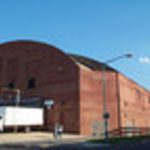
Two days after their historic debut on the Ed Sullivan Show to 73 million viewers, the Liverpool lads arrived in D.C. by train — a massive snowstorm had prevented them from flying. They pulled into Union Station on the afternoon of Feb. 11, 1964, to thousands of screaming fans. Next, the band headed to the Washington Coliseum, formerly the Uline Arena, for a sound check. It was the same arena where President Dwight D. Eisenhower had held an inaugural ball, boxing champion Joe Louis launched his stint in wrestling, and Malcolm X spoke on several occasions.
But it was a location also better suited for boxing matches, hockey, and basketball games, and the 8,000 young fans who showed up screaming from excitement made it nearly impossible to hear the 35-minute set. Marsha Albert, a teenager from Silver Spring, later recalled witnessing a police officer putting bullets in his ears to drown out the noise.
Still, the Fab Four played “one of their greatest performances ever,” according to Beatles historian Bruce Spizer, a tax attorney in New Orleans who has spent the past 25 years writing more than a dozen books on the iconic band.
“These guys are playing by instinct as far as hearing each other that well, because there are no full backstage monitors,” Spizer tells DCist/WAMU. “They’re playing literally through a PA system, the kind of system where the microphone drops down and someone says, ‘And in this corner tonight for the heavyweight championship of…’ But that doesn’t in any way handicap this performance.”

But how did the Beatles, who already had three hit singles by late 1963, end up playing their first major U.S. show in D.C.?
According to Spizer and an episode of WAMU’s former show Metro Connection, it all comes back to Marsha Albert, then a 15-year-old student at Sligo Junior High (now Sligo Middle School).
Local radio helped launch Beatlemania in the U.S.
Like millions of Americans, Albert saw the CBS Evening News segment on The Beatles and wrote to WWDC (now DC101) requesting they play some of the band’s records.
WWDC disc jockey Carroll James got his hands on “I Want to Hold Your Hand” and invited Albert to join him on the air on Dec. 17, 1963, to introduce the song. Other radio stations around the country played recorded versions of that segment, and Capitol Records, in turn, released the record in the U.S. the day after Christmas, six weeks earlier than the label had originally planned.
When Beatles manager Brian Epstein called Harry Lynn, owner of the Washington Coliseum, to see if the band could play there, Lynn had never heard of them, according to former WAMU host Rebecca Sheir’s segment. But Lynn agreed to give the group access to the biggest venue they’d played so far, and ran a single ad in The Washington Post advertising the show. Tickets were put on sale for $2, $3, and $4 at local record stores.
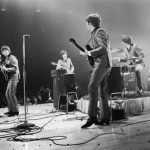
On the night of Feb. 11, the Fab Four took the stage: a square platform in the middle of thousands of screaming fans, who pelted the band with jelly beans. (They had mentioned in a magazine article that they liked Jelly Babies, a much softer candy.)
“It was pretty chaotic,” Spizer says. “But when you look at the video, you can see how much fun they’re having and how much energy there is.”
They played a short set, mostly covers of songs by Black American rock artists, including “Roll Over Beethoven” by Chuck Berry, the Isley Brothers’ “Twist and Shout,” and “Long Tall Sally” by Little Richard.
Over the screams, The Beatles also played their first hits — “I Saw Her Standing There,” “She Loves You,” and “I Want to Hold Your Hand.” There were special moments, never to be replicated, such as a rendition of “This Boy” during which Paul McCartney, John Lennon, and George Harrison harmonized together on one microphone.
Fans who attended have never gotten over the experience. The Beatles were amazed by the enthusiasm of their first U.S. audience; later that night, Lennon called the show “marvelous” at a reception at the British Embassy.
An unwelcome reception
Before continuing their East Coast tour back to New York and then onto Miami Beach, Epstein, their manager, had them stop at a party at the British Embassy. The four were swarmed by fans and members of the press, mostly older men who didn’t understand Beatlemania. Beverly Rubin, an 18-year-old who snuck into the party, managed to cut off a piece of Ringo Starr’s hair.
“They weren’t too happy about that,” Spizer says. “They kind of felt like they were being put on parade.” The band told Epstein they didn’t want to do that type of thing again, Spizer says. “But as far as the concert itself, they absolutely raved about it.”
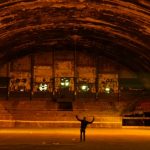
While the party dampened their moods, they still rode high after their concert at the Coliseum. The former venue has gone through many iterations, including acting as a temporary jail for protestors of the Vietnam War, a crumbling parking garage, and a garbage dump. In the early aughts, former owner Waste Management filed a demolition permit before Douglas Development purchased the building in 2004.
In the two decades that followed, the District’s Historic Preservation Review Board designated it an endangered site and it went under protection of the National Register of Historic Places. Douglas converted it into a multi-use facility, with businesses, parking, and administrative offices that locals see today.
Beatles fans — and a Beatles cover band — took over the arena in 2014 for the 50th anniversary of the historic concert. Late Friday night, another cover band from Liverpool, The Savage Young Beatles, will perform at Slash Run in Northwest D.C. And while many have tried to re-create the magic of February 1964, nothing compares to the fan frenzy that awaited the original Fab Four in D.C., Spizer says.
“It was just an incredible time for them,” he says, “one that they could never duplicate again, and had never seen anything like before.”