
The legislation closes a loophole that was left open for two years after a court ruling.
The man was issued a court summons for reckless driving.

One of the suspects in last week’s drive-by shooting that injured 13 people was wearing a court-ordered GPS monitor at the time of the incident.
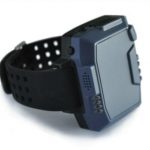
And yet another D.C. criminal caught because they were wearing a GPS monitor while committing a crime.
Some criminals just don’t seem to get what those GPS monitors on their ankles are for. Let’s hope it stays that way.
The Metropolitan Washington Council of Governments is studying three road pricing models that could potentially relieve Washington’s notorious traffic problems.

A suspect in a fatal shooting near Gallaudet University had a court-ordered GPS tracker on, but police say he let the battery on it die before firing five fatal shots at another man.
D.C. isn’t the only place where Uber, the sedan-by-smartphone company, is running afoul of the local authorities. Officials in Cambridge, Mass., are taking issue with the company’s practices, too.

In a case that stemmed from an investigation by D.C. police and the FBI of a local drug dealer, the U.S. Supreme Court ruled unanimously today that police across the country need a warrant if they want to track suspects using GPS monitors.

It’s the first Monday in October, and that means that the U.S. Supreme Court gets back to work hearing cases today. On its docket this term is a case involving a D.C. man, GPS surveillance and the question of how far is too far in tracking a suspect.