Martin Austermuhle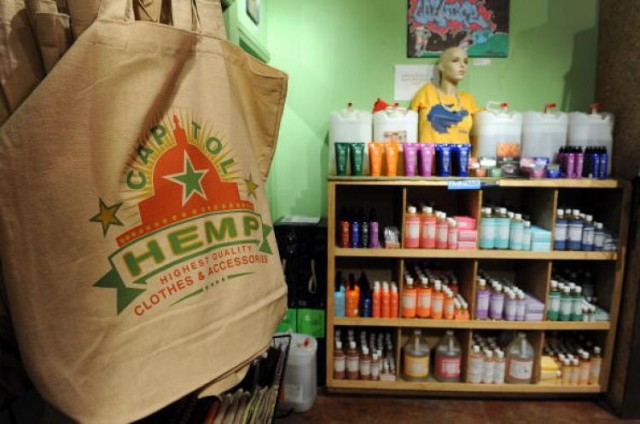
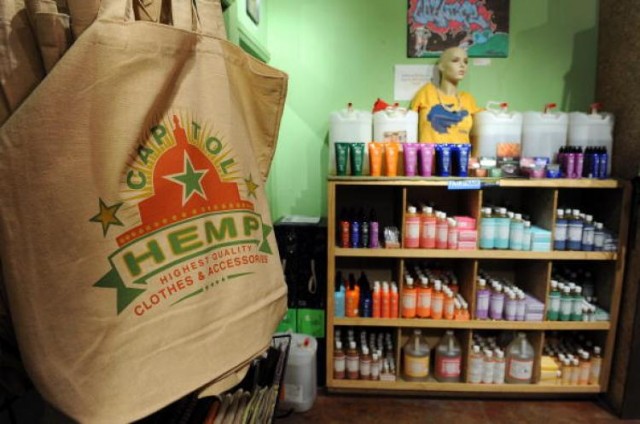
It was roughly a month ago that Metropolitan Police Department officers simultaneously raided two Capitol Hemp locations, arresting seven and seizing hundreds of thousands of dollars worth of merchandise.
And though all charges have been dropped in connection with the Chinatown raid, allowing the store to reopen this Friday, minor charges of possession of drug paraphernalia remains against employees of the Adams Morgan location, and large stocks of water pipes and other merchandise remain in the hands of police.
So far, police have been unwilling to speak to the reasons behind the raids. Early this month, though, we conjectured that they were part of an ongoing fight over what constitutes drug paraphernalia in the District.
The city’s law, after all, is somewhat vague on the matter. It ultimately comes down to intent — if police can prove that a store owner sold a water pipe for the purpose of smoking marijuana, then it’s illegal. But if that same store owner were to sell the pipe to someone who said they were going to use it to smoke loose-leaf tobacco, then it’s fair game. As we noted, that’s why head shops typically have disclaimers saying that their products — from pipes to dugouts and vaporizers — are only intended for legal use.
An affidavit submitted by police in support of their application for a search warrant gives some background and insight into how the raids came to be. (The full document can be read below.)
The affidavit notes that police suspicions of Capitol Hemp’s motives started in March, during an undercover operation at a D.C. nightclub. While a police officer waited in line, he claims he was approached by a Capitol Hemp employee handing out flyers for the store and offering 10 percent off of water pipes. It reads:
The unidentified male said “Hey, 10% off water pipes man, come by. Your Affiant said “Yeah man, I’m in the market for a good one. Do you have any 3 or 6 footers? There’s nothing like packing a fat bong hit and shot gunning it through a 6 footer.” The white male replied “We have a 6 footer but it’s more like a display piece. But we have stackable pieces, kinda like legos.” Your Affiant said “I’m all about it, I need something to smoke my herb in.” The white male said in a long drawn out tone “Oh yeah man, we got the water pipes bro come by.”
A few days later, the same police officer visited Capitol Hemp, where he claims he tried to buy a bong. But when he asked for a bong, salespeople would correct him and say that they only sold water pipes. He also said that every time he referenced marijuana, the salespeople would change the subject, which he claimed was “unnatural and deceptive” behavior.
Little seems to have come of the attempt to buy a water pipe, but a good portion of the affidavit attempts to make the case that the mere look and purpose of the store — not to mention some of the products it sells — makes the case that Capitol Hemp knows it’s selling the pipes for marijuana use. “Your Affiant believes there to be sufficient probable cause that the store has no intention of selling these items to be used for tobacco use,” wrote the officer.
The affidavit sustains its request by pointing to Capitol Hemp’s mission and marketing as a reason to think that those water pipes are really bongs — there are a bunch of cannabis leaves all over the place, after all. But this is where things get murky.
The affidavit notes that hemp and hemp products, which the store carries, are perfectly legal. Regardless, that’s just a cover, says the affidavit: “While hemp is legal, the hemp clothing, accessories, food, books and promotions within ‘Capitol Hemp’ only direct one to see that the focus of the store is its promotion of marijuana, its illegal use and the sales of devices to smoke marijuana.”
Ultimately, the affidavit was enough for a judge to sign off on the search warrant on October 20. A week later, the two stores were raided; two days after that, two more head shops in Adams Morgan were raided.
The affidavit perfectly underlies some of the difficulties in parsing the District’s paraphernalia laws. Since police had to prove intent, they did so by putting Capitol Hemp’s sale of water pipes in a broader context — in this case, the other products the store sold, including books, clothes and even a DVD titled “10 Rules of Dealing with Police.” That’s thin ice, though, since as the affidavit notes, hemp is perfectly legal. Moreover, selling books on marijuana or posting images of it is protected by the First Amendment.
For drug policy activists, it’s not just the blurring of First Amendment activities and the illegal sale of paraphernalia that’s of concern, but also the police resources being dedicated to what is otherwise a low-level offense. (Neither of the store’s two owners are currently facing any charges, and they’re in the process of asking police to return pipes for the Chinatown location.)
“This raid was a complete waste of law enforcement time and taxpayer money,” argues Bill Piper, Director of National Affairs for the Drug Policy Alliance. “Time and money that could have been spent investigating murders, rapes, robberies, and other violent crimes. Unquestionably, this raid made D.C. less safe by taking officers off the streets and wasting time that could have been used to target violent criminals.”