Martin Austermuhle
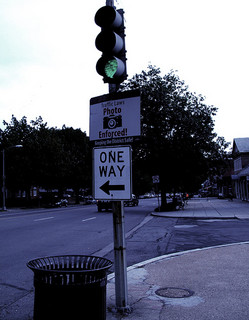 Photo by katmeresin
A number of changes have been made to a bill that would lower speed camera fines throughout D.C., but they might be for naught—the four-year price tag on the proposal is $95 million, which could prove a tough sell for the D.C. Council.
Under an original bill sponsored by Councilmembers Tommy Wells (D-Ward 6) and Mary Cheh (D-Ward 3), fines for speeding between 11 and 20 miles and hour over the limit would have dropped substantially, to $50 per violation. Wells and Cheh, who wrote the bill after meeting with a task force on the city’s growing network of traffic cameras, said that lower fines and more cameras would increase safety and legitimize the system, which many motorists have said they see as a revenue generator for the city.
Since then, though, the bill has changed. Speeding between 11-15 miles an hour over would get you a $75 ticket, down from $125. Between 16-20 mph over would be $100 (down from $150), while 21-25 over would be $150 (down from $200). The fine for speeding 25 mph over would remain at $250. A new portion of the bill would also drop the fine for turning right on red from $100 to $50.
Original provisions calling for a citywide assessment of speed limits and signs warning motorists that D.C. is a strict enforcement zone remained, while one requiring that revenues from the cameras go to a special fund outside of the general fund was scrapped.
The bill was also preempted by Mayor Vince Gray, though, who in early November announced that he was slightly dropped some fines while raising the fine for speeding 25 miles an hour over the limit, from $250 to $300. Given that Gray used his powers to issue emergency regulations, those new fines are now in effect.
And while Wells and Cheh’s bill still faces a second markup today in the Judiciary Committee and then two votes before the full council, it will have to contend with a big obstacle: its price tag. According to a financial analysis by D.C. CFO Natwar Gandhi, the entire bill would cost $95 million over four years, requiring councilmembers to fill that whole with other revenue. (In fiscal 2012, D.C. took in $178 million from the cameras.) While the cost for the remainder of the 2013 fiscal year would only be $621,000, it would jump to between $23 and $30 million a year thereafter. Gray’s proposal, by comparison, pays for itself.
A final provision of the bill tweaks the city’s existing law regarding pedestrians in crosswalks. As the law is written now, a motorist can be slapped with a fine if they don’t stop for a pedestrian in a crosswalk—even if the pedestrian is clear across the street. The change would require that the pedestrian be entering—or at least within a lane’s length—of the side of the crosswalk where the car is driving.