Martin Austermuhle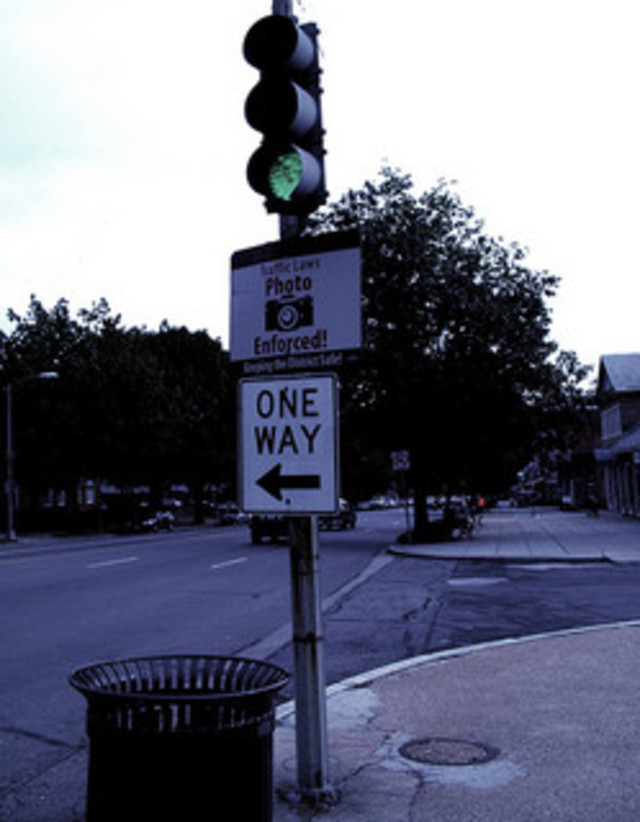
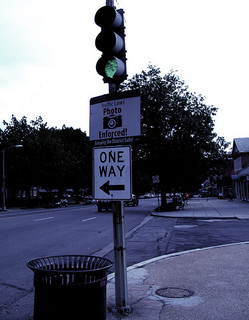 Photo by katmeresin
A D.C. Council bill that would bring down fines for many tickets handed out by speed cameras will be amended at tomorrow’s final legislative session.
Under the current bill, first approved by the council two weeks ago, speeding between 11-15 miles an hour over would get you a $75 ticket, down from $125. Between 16-20 mph over would be $100 (down from $150), while 21-25 over would be $150 (down from $200). The fine for speeding 25 mph over would remain at $250. A spokeswoman for Councilmember Mary Cheh (D-Ward 3) said that the fine for 11-15 mph over would like go up from the proposed $75 per violation, though it would stay under $100.
According to Council Chair Phil Mendelson, the changes to the bill would allow it to go into effect more quickly. As the bill is currently written, it would be “subject to appropriations,” which means that money in the budget would have to be found to cover its cost, delaying implementation until late next year. The D.C. CFO estimated that the bill would cost $621,000 for its first year; according to Cheh’s office, the change being proposed would make it revenue neutral, allowing it to take effect as soon as it’s signed by Mayor Vince Gray and reviewed by Congress.
Speed camera fines have become something of a political volleyball this year. After Cheh and Councilmember Tommy Wells (D-Ward 6) convened a task force to debate lowering them and introduced legislation that would do so, Gray stepped in and unilaterally dropped a number of fines while raising the fine for the most egregious speeders.
And though no councilmember has loudly raised their voice to oppose the bill, last week a Ward 3 ANC passed a resolution opposing any changes to the city’s speed camera fines. According to the resolution, passed by ANC 3E, the changes have been spurred by a small but noisy lobby of speed camera opponents—mostly the Maryland motorists who most often get caught:
We suspect that a modest number of residents and others oppose the current fine levels vehemently, and that this interest group – chronic speeders – has lobbied Council Members intensively. Indeed, nothing in the Transportation Committee report on the Bill suggests otherwise.
Small interest groups notoriously wield undo power in local politics. It might therefore be expected that a public interest advocacy group would consider the possibility, in promulgating policy recommendations, that pressure from interest groups would affect politicians’ willingness to take certain actions. Here, it appears to be the politicians themselves worrying about resisting the “speeders lobby.”
The resolution calls for existing fines to remain unchanged, and if that’s not possible, to create a tiered system of fines so that repeat offenders pay more and more each time they get caught.
Greater Greater Washington’s David Alpert, who sat on the task force, has also come out against the bill that was passed two weeks ago, specifically a provision that would allow the D.C. Department of Transportation to raise speed limits on some area roads based on a traditional model of setting them around the speed that 85 percent of drivers go. According to Alpert, that model does not take into consideration other roadway users, such as cyclists.
12-12-13 ANC 3E Letter Resolution Opposing Speed Camera Bill