 Photo by Blacknell
Capital Bikeshare boasted yesterday that its members save an average of $800 a year on transportation costs. But, not surprisingly, money isn’t the only area where fans of the big red bicycles are seeing benefits.
In the second of two membership surveys released yesterday, Bikeshare said that its members are seeing considerable health benefits. The health survey, conducted for Bikeshare by George Washington University’s Master of Public Policy and Public Administration Program, got responses from 2,830 Bikeshare members, many of whom reported that riding around on the shareable bikes makes them feel a lot better than they used to.
Bikeshare customers who participated in the health survey biked to work 76 percent more often after joining. Additionally, 63 percent say they now exercise between one and five hours per week, and of that group, nearly half say they rely on Bikeshare for their workout regimens.
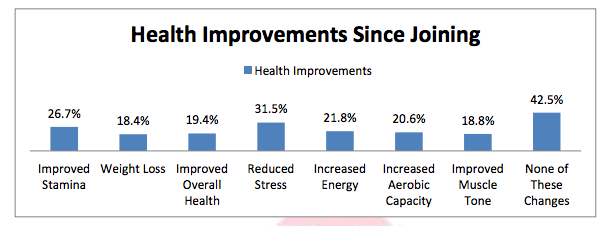
Many specific health benefits were seen by large segments of Bikeshare’s membership. Nearly 27 percent reported improved stamina after joining the system, 31.5 percent said their stress levels diminished, and 18.4 percent reported losing weight thanks to bicycle sharing. The numbers of members who consider themselves in good or excellent condition increased, while figures for those who consider themselves in poor, average, or fair health decreased.
Still the health survey also betrayed the demographic gap in Bikeshare’s membership, especially inside the District. Only 0.8 percent of survey respondents said they live in Ward 7, while 0.4 percent are from Ward 8. The survey’s authors recommend Bikeshare focus on expanding east of the Anacostia River, where the health effects of increased ridership could be more pronounced.
“If these populations have higher rates of obesity, as seen in low-income populations elsewhere, expanding Capital Bikeshare to these areas could offer disproportionate benefits, as other researchers have found that cycling provides greater marginal benefits for adults with low levels of fitness,” the poll reads.