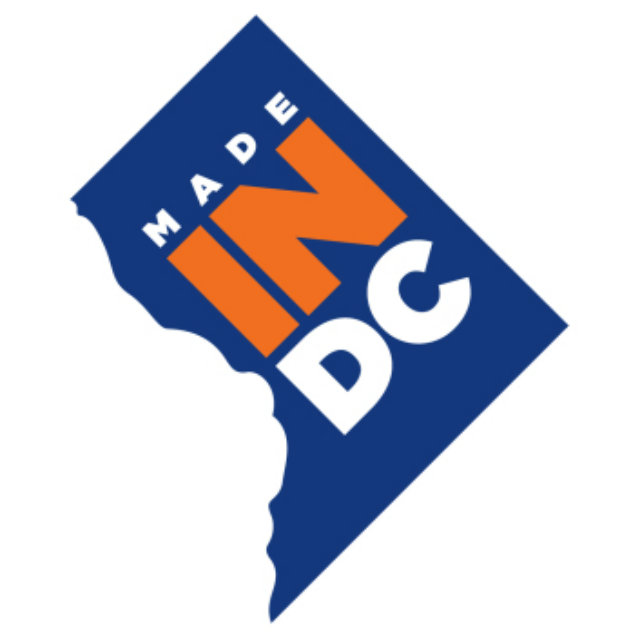
 Logo created by Compass Coffee, being used as an example by Councilmember Allen.
District residents will soon have a better idea of what’s being made in the city, while local artisans reap some government-led benefits of creating goods in the region.
A legislation that the D.C. Council unanimously passed today will allow local artisans and manufacturers to become certified through the Department of Small and Local Business Development. This means that they’ll be able to use an official “Made in DC” logo on their products and marketing materials. The logo has yet to be created.
Ward 6 Councilmember Charles Allen introduced the Made in DC Program Establishment Act in December. It was co-introduced by Council Chair Phil Mendelson and At-large Councilmember Vincent Orange.
“I’m proud to help promote the District’s growing creator economy with a program to communicate the importance of buying local and having pride in DC-made products,” Allen said in a release.
In December, Allen told DCist that the legislation was inspired by local startups like Union Kitchen, Compass Coffee, Think First Local DC, and DC Brau Brewing Company, which he said have helped lay the foundation for a grassroots movement in celebrating local goods.
Made in DC is also the name of another program started by partners DSLBD and Think Local First DC. It has more than 60 members who produce items in categories including apparel and accessories, food and beverage, furniture, print goods, and more. The program touts benefits like “resource and experience sharing,” and participation in events to sell their products, including an open house this weekend.
Local makers including Jonas Singer of Union Kitchen, Adam Kavalier of Undone Chocolate, and Mike Woitach of Confluence Coffee told DCist last year that they were in support of the legislation. And nearly 20 other business owners submitted testimonies in favor of the bill during its hearing process, according to a council document.
Allen told DCist that the only opposition that he expected was from business owners who were weary of the certification process, but “we worked hard to make it as easy and straightforward as possible,” he said.
Ana Harvey, director of the DSLBD, echoed that concern during her testimony, cautioning the council not to make a bureaucratic burden for the small business community or government agencies. She also advised that the council set up an appropriate structure for eligibility, as well as administration and monitoring of the program. Overall, though, she stated that both she and Mayor Muriel Bowser supported the legislation as it will provide much-needed opportunities for the District’s 60,000 small businesses.
One such resource will come by way of an “Innovation Studio Space and Marketplace.” Per the legislation, the DSLBD has 180 days to tell the council how it plans to establish a space that will “support the local arts, craft, and maker community by providing low-cost membership for access to studio space, high-end equipment, sales gallery space, and classrooms.”