Martin Austermuhle
 Amanda Michelle Gomez
Update 10/18: The D.C. Council on Tuesday sent a pair of bills to Mayor Muriel Bowser that would greatly expand who can vote in local elections and how they cast their ballot.
The first bill would allow noncitizens, including undocumented residents, to vote in local elections, meaning D.C. would join a few jurisdictions nationwide (including neighboring Takoma Park). The second bill would make voting by mail permanent, as well as require more ballot drop boxes to be used citywide, and close DC Public Schools on Election Day. Both bills passed unanimously.
Outgoing Ward 3 Councilmember Mary Cheh had opposed legislation that lets noncitizens participate in local elections. She was the only member to vote No on first reading. While she still opposes the effort, she saw no point in fighting the legislation, telling DCist/WAMU: “Futility is not my goal here.”
The bill had been floating around the Council for at least a decade, but struggled to move out of committee until this year. A previous version had only let green card-holders vote in local elections. But the judiciary committee, chaired by Ward 6 Councilmember Charles Allen, was compelled to expand voting rights to undocumented immigrants after public testimony.
“We understand disenfranchisement. It’s personal,” said Allen during the committee vote, alluding to D.C.’s lack of voting representation in Congress. “We know what it feels like to be taxed without representation. That people we didn’t elect make decisions that deeply affect our lives.”
Groups that advocated for expanding the vote to noncitizens include Claudia Jones School of Political Education, DC Latino Caucus, and D.C. for Democracy. Local immigrant rights groups have called for expanding voting rights to engage underserved communities.
“Passage of this bill means that, for the first time in our lives, I and thousands of D.C. residents — immigrants who live, work, and pay taxes in the District — will be able to vote,” says Abel Amene, another local organizer who spent a lot of time at the Wilson Building calling for the bill’s passage. “We will, for the first time, be able to have a say in how this city is governed and choose who represents us in the Wilson Building.”
Bowser’s office didn’t immediately respond to request for comment on the bills. The bills also need to head to Congress for a thirty day review, which is standard practice. Some members of Congress oppose the legislation. Over the summer, 30 House Republicans — led by Illinois Congressman Rodney Davis — proposed a bill that would bar D.C. from allowing non-citizens to vote in local elections. However, the legislation is unlikely to go anywhere so long as Democrats maintain control of the chamber. (Davis lost his primary in August.)
Original: The D.C. Council on Tuesday gave initial approval to a pair of bills that will reshape the city’s election system, largely by expanding how people vote and who can vote.
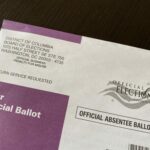
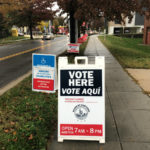
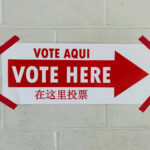
The first bill, which received unanimous support from lawmakers, would make voting by mail a permanent feature of D.C. elections, as well as require that at least 55 ballot drop boxes be used for every election. It also means that D.C. must use citywide vote centers for in-person voting instead of the traditional neighborhood-based precinct and that D.C. Public Schools close on primary and general election days to facilitate voting at schools.
A second bill that was approved by the council would allow non-citizens — including undocumented immigrants — to vote in local elections, as is currently the practice in various Maryland towns like Takoma Park and Hyattsville. New York City passed a similar law, but it was overturned by a state court earlier this year.
“Our immigrant neighbors of all statuses participate, contribute, and care about our community and our city. They, like all D.C. residents, deserve the right to have a say in their government. They raise families here, contribute to their community, they run businesses that people depend on, and they pay taxes that we decide how to spend. Yet they have no ability to elect local leaders who make decisions about their bodies, their businesses, and their tax dollars,” said Councilmember Charles Allen (D-Ward 6).
Still, there was dissent from Councilmember Mary Cheh (D-Ward 3), who raised concerns that an undocumented immigrant could be bussed to the city (as has occured in recent months) and within 30 days be eligible to vote in a local election — without having what she termed a “cultural” connection to the country or city.
“My concern has nothing to do with citizenship. Fine, non-citizens should be able to vote in local elections. Whether you’re documented or undocumented. Fine. You should be treated the same. My concern is also not with strangers per se, who have lived in this country, have some connection on a cultural level, some connection of experience in our community,” she said. “I find it unacceptable to say that somebody who has had no connection at all with the United States, with its culture, its democracy, can be dropped off here reside for 30 days, and vote in a local election. What is wrong with asking they stay a little bit longer?”
But a number of her colleagues rejected that argument, pointing out that students who come to D.C. to go to college are eligible to vote within 30 days of arriving, as well as professionals who come to the city for new jobs. “Someone coming from Oregon is the same stranger as someone coming from Texas,” said Councilmember Robert White (D-At Large). “Voting gives people a connection to their community.”
Both election-related bills require second and final votes next month, after which they will be sent to Mayor Muriel Bowser for her signature or veto. They carry small price tags that will have to be paid for in next year’s budget.
The council also made its way through a number of other measures, including giving final approval to a traffic safety bill that will ban right turns at red lights by 2025 and allow cyclists and scooter users to treat stop signs like yields when there is no traffic present. The only opposition to the bill came from Councilmember Trayon White (D-Ward 8), who did not publicly detail any of his concerns.
Lawmakers also cast a final vote on a bill to expand paid leave for D.C. government employees so that it matches the 12 weeks of leave now available to private-sector workers under the city-run paid family leave program. And they cast first votes on a bill to require certain retailers to provide receptacles for customers to recycle plastic bags, a bill that would protect women who come to D.C. for abortions or gender-affirming care, and a bill that would prohibit race, sexual orientation, gender identity, or other such characteristics from being considered when insurance companies or other entities calculate damages in personal injury or wrongful death cases.
The next scheduled legislative session during the council’s busy fall season is on Nov. 1. Since December marks the end of the body’s two-year legislative cycle, lawmakers are rushing to finalize significant pieces of legislation that could do everything from give every D.C. resident $100 a month for Metro to rewrite the city’s criminal code.
This post has been updated to reflect the D.C. Council’s final vote on Oct. 18, 2022.