
 Rachel Kurzius
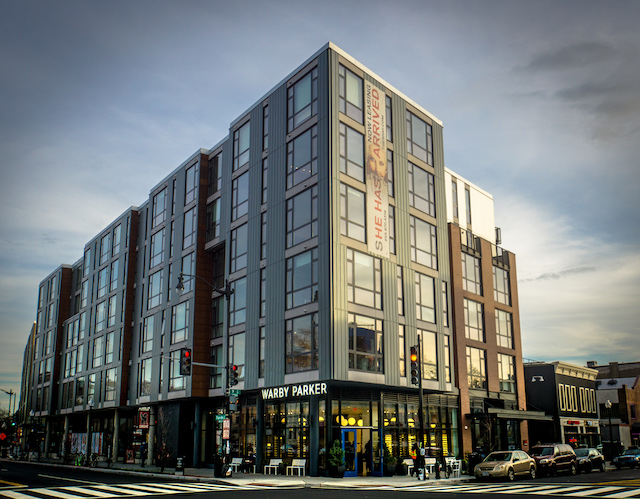 Photo by Ted Eytan.
When my mom was in town, I took her to the new-ish retail center in Shaw. She’s a clotheshorse with a great eye, but we quickly found that many of the stores didn’t cater to her. That’s because the apparel shops around The Shay are, by and large, for men.
Ministry of Supply is a “high-tech” menswear store. Frank & Oak offers men “progressive style.” Bonobos claims “better-fitting, better-looking” men’s clothing. Read Wall has wardrobe options for the “modern man.” Chrome Industries has “durable and versatile” men’s “gear.” Retailers Kit + Ace, Steven Alan, and Bucketfeet have large menswear sections. The only clothing store in the The Shay that doesn’t dedicate some of its racks to gents is Lettie Gooch. (Of course, there’s nothing stopping women, or men, from picking out clothes from the other side of the aisle.)
“We didn’t seek out more men’s than women’s,” says Robin Mosle, an executive vice president of JBG, the developer in charge of The Shay and nearby Atlantic Plumbing, two new developments situated right where Florida Avenue becomes U Street in Northwest, an area JBG (and now the New York Times) has taken to calling “North End Shaw.”
Mosle works on “curating” tenants as part of what the company calls “place-making,” which means tapping into—or creating—a neighborhood’s vibe. The search for retailers to fill the development’s vacancies began more than six years ago, even though the stores didn’t start opening until late last fall. “We had to kiss a lot of frogs to get the princes,” she says.
Her team was looking for a mix of independent national, regional, and local outlets that wanted smaller storefronts (Mosle calls them “vanilla boxes,” because tenants can move in quickly) and didn’t have other outposts nearby, “It turns out that at the moment there are more men’s clothiers that are like that than women’s,” Mosle says. “That wasn’t an intentional result.”
She chalks it up to the large number of nationwide retailers for women, which require more square feet than JBG is offering. Still, two of the menswear retailers at the Shay recently announced that they are branching out into offerings for women (Ministry of Supply is changing its name to Ministry and launching a women’s line comprised of two pairs of slacks and two dress shirts. Frank & Oak is also breaking into women’s wear, though its first collection for ladies won’t be available in stores, says Sophie Desbiens, a spokesperson for the company).
The bevy of options for shaping a man’s wardrobe isn’t in lockstep with how District households spend their clothing allowances. Washington D.C. Economic Partnership predicts that D.C. residents will spend over $851 million on apparel in 2016 but of that, only around $171 million of the total will go towards men’s clothing.
The market for dudes’ duds is on the upswing, though. “Menswear as a whole has been doing well nationally,” says Adam Brick, a senior research analyst on Washington and Baltimore for commercial brokerage CBRE, “Especially for clicks-to-bricks retailers,” meaning stores that began online and then moved into brick-and-mortar locations. Shay stores Frank & Oak, Bonobos, Bucketfeet, and Warby Parker all fall into that category.
Nine new apparel openings occurred in D.C. so far in 2016, a third of them at The Shay, according to CBRE records. Of the total, five have mens and womenswear, one—preppy cruise mainstay Lilly Pulitzer in Georgetown—is just for women, and three others offer men’s clothing. A J. Crew slated to open by the end of the year on 14th Street will add to the men-only selection.
JBG’s decision to focus on retail has excited Shaw Main Streets, a non-profit focused on the commercial revitalization of the corridor. “All of the sudden, people do think about the northern portion of Shaw’s service area as being a retail destination for fashion,” says Alexander Padro, the group’s executive director.
He’s not surprised so many of the options are for men. “We’re a very metrosexual city, so men are much more fitness and fashion-conscious in D.C. than they are in many markets.”
Mosle agrees—flipping on its head a long held stereotype that D.C. is a drab, fashion backwater filled with baggy khakis and cross trainers. “We have a very fashion-forward male population here—it’s a very young and professional group of people,” she says. “D.C. is a city where people do dress up more than, say, Boston.”
The Shay is also blocks from Howard University, points out Keith Sellars, president of the Washington DC Economic Partnership. “You have a strong student population that they’re pulling from, as well as entertainment populations,” he says, referring to the 9:30 Club, which JBG views as a non-affiliated anchor of Atlantic Plumbing, and the Howard Theatre.
Sellars added that it is more surprising that the area was being populated with clothing stores at all, rather than the gender breakdown of their wares. “You don’t see a lot of apparel, men or women, going into many development projects, because of how Americans are shopping now,” he says. “Americans are shopping online.”
While it’s true that increased numbers of Americans make avail of digital shopping options, many of them are still buying their clothes in person. According to a Nielsen report from June, 82 percent of American shoppers who had bought apparel in the previous six months did so at a physical store location.
The increase in retail options is leading Shaw Main Streets to change the focus of its advertising in District hotel magazines, Padro says. Now, the organization is trying to attract visitors who’ve got money to burn on trendy clothes.


