 Jordan Pascale
Until recently, Ashley lived with a roommate in a two-bedroom rowhouse near Capitol Hill for the better part of two years. Once the pandemic hit, Ashley (who asked that we share only her first name for privacy reasons) and her roommate were both home all … the … time. The dining room was his office, the nook in her bedroom, hers.
“I had a pretty good living situation … the rent was in my budget, we got along really well … but being in the house for months at a time,” she said. “I needed a little bit of space.”
So she bought a house: a 3-bed, 2.5-bath in Deanwood with plenty of room for work and living. “It does feel like a great decision, especially looking ahead to winter — it’s going to feel like a home before we really have to hunker down again.”
The coronavirus has been around so long (and with no real end in sight) that Washingtonians like Ashley are making housing decisions based on the pandemic.
They’re finding that COVID-19 has upended some housing market trends in the notoriously expensive D.C. region, where average homes cost $640,000 and the average monthly rent is $2,100. The changes in the region are borne out in some of the most striking numbers:
- Apartment rents are down more than 11% in the District compared to last year, according to Zillow.
- The median sales price for a home in the region last month hit a record high compared to previous Octobers: $510,000, according to listing service Bright MLS.
- A house in the region is only on the market for an average of seven days, per Bright MLS — a record low.
- Even during the pandemic, people are still moving here for jobs, though at a slower clip, about 0.5% population growth over the last quarter.
In some cities elsewhere, there’s been a large movement to the suburbs and rural areas. But that’s not happening to the same extent in D.C., said Clint Mann, president of D.C.-based Urban Pace, which provides marketing, sales, and leasing services to real estate developers.
“If you look at year-over-year activity in the District, it’s up in every measure,” he told WAMU. “Our volume is up year over year, our sales price is up year over year. And so it doesn’t really support that narrative we are hearing.”
What is happening is a rise in moves like Ashley’s, to a larger space in the city, or to a place with more outdoor space in the suburbs, or to enter the region for the first time. And yes: Some have even opted to move their stuff into a storage unit when their lease was up and move back home for now.
We spoke to more than two dozen Washington-area residents about their recent moves into, out of and around the region and why they made those decisions. Some — like Ashley — asked us to use just their first names to protect their privacy and living situations. Here’s a sample of what they had to say.
First-Time Buyers
Many people said they chose to move to larger spaces with better amenities during the pandemic. Outdoor space and room for a desk or office topped the list of must-haves.
Alex Clegg and his fiance took the opportunity to buy their first home after the pandemic dashed their big wedding plans.
“(We’re) saving some money by having a smaller ceremony so we decided to look for a house instead of renewing our apartment lease this year,” Clegg said.
He said the management of their apartment didn’t communicate or handle the pandemic well.
“There was minimal effort beyond closing all the amenities without a plan to reopen, no masks on staff,” he said.
Clegg said house hunting was a nightmare. Many houses in their price range lasted four days on the market— but they found a place in Riggs Park within 24 hours of touring. The buyer accepted their offer.
Now they’ve got a small yard to grill and for their dog to play in. Plus, they’re going to enjoy doing home improvement projects this winter.
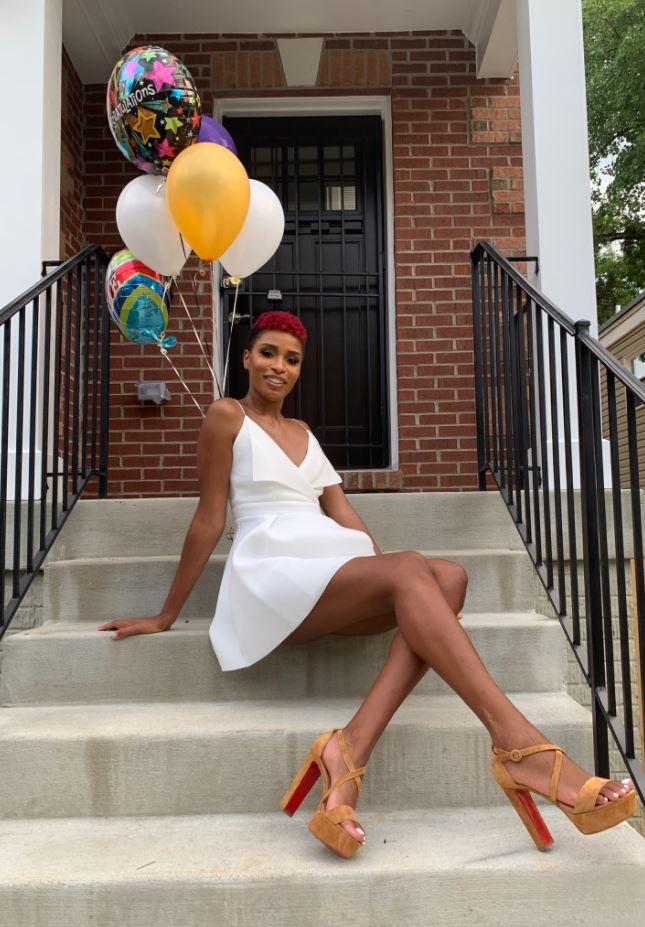
Ashley, the buyer in Deanwood, didn’t plan on purchasing a house right now, but the pandemic changed her plans.
She attended a virtual event for first-time homebuyers with a friend and discovered buying was doable. Low-interest rates helped spur her decision, too.
She wanted a newer or recently renovated house with either a porch or back deck in a quieter neighborhood. Many homes she bookmarked went off the market quicker than she could see them in person.
Then she got lucky, getting a second chance to bid on her house in Deanwood after the first contract fell through. She says the neighborhood, “a stronghold for the Black community,” is a great fit for her.
“It still hasn’t sunk in that I’ve bought a house in a pandemic,” she said. “I hope I don’t lose my job or anything!
Augustus Urschel and his wife left a 450-square-foot apartment in Capitol Hill to get a 1,400-square-foot condo in Columbia Heights.
“We were planning on buying some time. But the crazy-low COVID interest rates and being crammed into our tiny unit 24 hours a day induced our buy,” he said. “We specifically looked for a unit with a good dual home office layout.
“(We also) wanted to stay urban to be near friends, who are keeping us sane.”

Leaving the Region
Being able to work remotely has enabled some area residents to leave the region — either to live closer to family or find cheaper accommodations. Some say it’s a temporary move, others permanent.
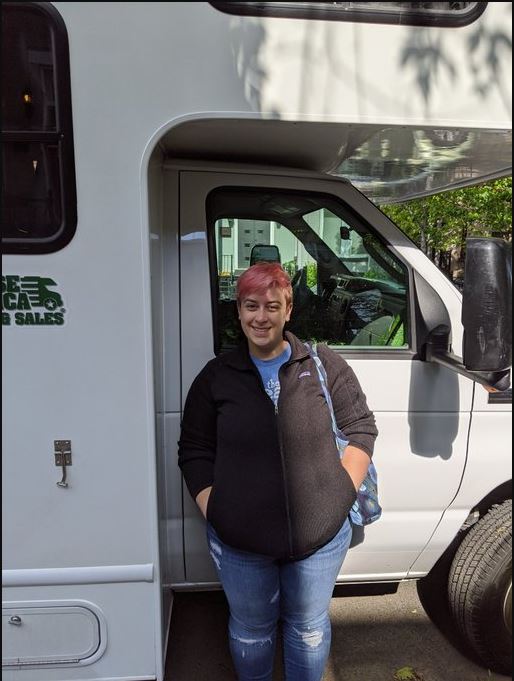
Kate Hovda left D.C. to be closer to family in Seattle. She hopes to come back to the District eventually but said Seattle is her home for now.
“I lived in D.C. for almost five years and I miss it already. But being easy driving-distance from family is worth so much right now,” she said. “If I’d stayed in D.C. I don’t know when I would have been brave enough to get on a plane.”
Hovda was able to visit her grandmother twice before she died in August That wouldn’t have happened if she was still living in the District..
“I would have felt so guilty about that,” she said.
Mina Radman packed up her belongings in a storage unit when her lease ended earlier this year and went home to South Florida.
“It was the best decision for my financial and mental health,” she said. “I don’t expect to return until working from the office is mandatory.”
Tom Cochran has lived in D.C. his entire adult life but decided to move to the Catskill Mountains in New York. He and his wife bought an old farmhouse so they have more room for their three young girls.
“[We’re] not sure how long we’re going to be in this mess,” he wrote. “We need space for the kids to roam free without masks preferably.”
Moving Around (And To The Suburbs)
Many people said they’re seeking more space and better amenities in a new home, like private outdoor access and room for an office. Suburban rents are increasing while the demand is going up, Bloomberg CityLab reports. Many white-collar workers simply do not need to worry about a shorter commute into a central downtown area at the moment.
Samantha Phillips left her small one-bedroom basement apartment in Shaw and upgraded to a one-bed with den in a complex with amenities in Alexandria. Her partner was already working remotely and now she will too for the foreseeable future.
“We wanted to move into a space that is big enough for us both to have comfortable working spaces,” she said. “I got really tired of sitting on the couch all day to work, then sitting on the couch to eat dinner and read after work.
After living in a garden apartment, natural light was at the top of her list especially with winter coming. Plus, a gym and the ability to have a pet in her new building was key to the move. She says the reasons she loved Shaw have faded because of the pandemic.
“We will really miss this neighborhood and our neighbors, but we don’t feel comfortable going to bars or eating inside restaurants, and the local park is usually crowded,” she said. “We didn’t want to stay just for the neighborhood since we don’t know when we can enjoy those things again.”
Jackie Fishman says she’s been looking for a home in the Maryland suburbs after living in a condo in Arlington.
“We have four grandkids ages one through six and want more space when everyone comes over,” she said. “Plus we want some outside living space beyond a terrace.”
But she said the market is so competitive she and her husband haven’t been able to make the move yet, saying bids are often 20% higher than the asking price — or buyers waive inspections in hopes of getting an edge.
Will Martin is moving into the city even as others look to move out. He moved from Pentagon City in Arlington to Shaw in D.C. in April, signing a lease right before “everyone knew,” he wrote.
“My main motivations to move to Shaw were Metro access, which I haven’t taken since February, and U Street bars, which I visit much less often — if at all — during the pandemic,” he wrote. “Also, my company is fully remote now and I don’t really need to live in D.C. anymore … still happy with my decision six months later!”
Chelsea Ritter-Soronen moved closer into the city by chance. She left her Takoma Park place in May because she said her apartment building was “falling apart” and the landlord “didn’t care about anyone’s safety” during the pandemic.
She was able to move into her boyfriend’s place in Mt. Pleasant, but she misses the ritual of meeting new neighbors and checking out the neighborhood’s shops, libraries and bars.
Moving Into the Region
Some people are still moving into D.C. or environs from outside of the region.
Cara, a recent college grad from Ohio, came to the District in August for a year-long fellowship.
When she got her fellowship, the plan was that she and her colleagues would be back in the office at some point. But they later decided to go virtual indefinitely. She’s not even sure if she’ll ever meet any of her co-workers in person.
She had hopes of being able to explore the city eventually. Now it doesn’t appear that will happen anytime soon.
“I was hoping to go out to the bars and have an early-20s experience, meet new people, explore the city, go to museums …”
Instead, she’s living in a basement apartment with roommates in Columbia Heights. Her rent is nearly half of her income.
“I feel like I’m super pessimistic about being here now,” she said. “I kind of want to get out of D.C. because it’s expensive and I don’t know what the world will look like in a year.
“I’m miserable and lonely and don’t want to be super far from family and going broke (during the pandemic).”
She’s considering trying to sublease or break her lease and move back home for her own sanity.
“It would be a trade-off I’m willing to take,” she said.
Amanda moved from California in the middle of the pandemic but had to look for apartments in D.C. virtually.
“I had two weeks to get out here,” she said. So she ditched her furniture, shipped some of her belongings via UPS and bought new furniture once she got here.
She would have arrived ahead of time to scout a place if there wasn’t a pandemic. But she was feeling lucky and signed a lease without seeing the place in person.
“The recruiter working with my company said that she actually wouldn’t have looked at my resume, because I’m from California had it not been for the pandemic,” she said.
Ashley Bowen and her partner got jobs in D.C. in March but moved to Frederick, Maryland, in October. She was living in Philadelphia for two years, and lived in D.C. for about a decade before that.
“Ultimately, we wanted affordability, walkability, and proximity to state parks,” she said. “We don’t see ourselves working from our offices any time soon and, even if we do, we won’t be there five times a week again (possibly ever) so the long commute feels both a little like a pretend problem and less pressing than it might have before.”
She says they’re saving hundreds of dollars on rent each month and more than $1,000 a year on car insurance.
“We have more space and better mental health than we have in months,” she said. “We just couldn’t justify paying D.C. prices when we wouldn’t have enough space to both work remote comfortably AND not do anything that makes living in D.C. worth the price.”
Esther Ciammachilli contributed reporting.