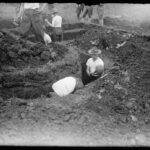
 The quiet, wooded Spring Valley neighborhood of Upper Northwest could be turning back to nature to battle an decades-old problem: chemical weapons poisoning. During World War II, Spring Valley and parts of the American University campus were used as testing ground for chemical weapons and munitions.
The Post reports that the Army Corps of Engineers is using ferns — yes plain old ferns — to battle arsenic contamination that remains in the neighborhood. The Corps has found that a particular kind of fern acts as a “horticultural sponge.”
Corps officials said they know that the work is messy and disruptive, because crews dig up everything in people’s yards, including trees and driveways, to remove and replace the soil. That’s why they said they decided to test the ferns in a $130,000 study. If successful, the ferns could be used to remove arsenic from soil in some cases in a less disruptive manner, cutting costs associated with the restoration, officials said.
Apparently, the “edenferns” absorb the toxins through their root systems and then the fronds will store them. Then the “fronds are then clipped and disposed of.”