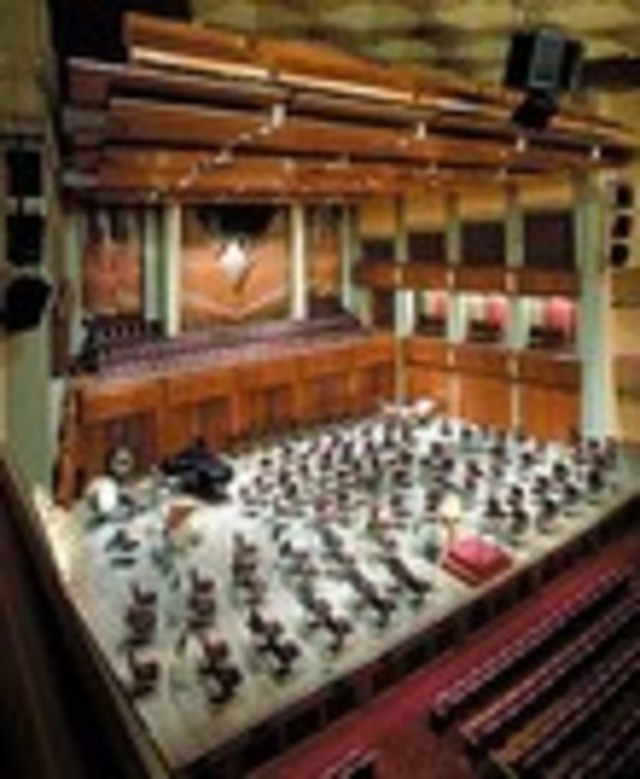
 This year is the 75th anniversary season of the National Symphony Orchestra, as well as the 10th year of the Leonard Slatkin era. So, as we recommended to you people in last week’s Classical Music Agenda, this DCist was in the Kennedy Center Concert Hall last night for the second of two performances by the NSO, kicking off the big season as part of the Kennedy Center Prelude Festival. (The Post and Ionarts were there on Thursday night.) The season may not officially begin until September 24, with the Season Opening Ball Concert, and Maestro Slatkin will not take the podium until September 21, but the NSO was back and that was good.
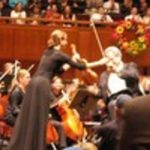
Filling in at the podium was Peter Oundjian, former violinist of the Tokyo String Quartet turned conductor and now Music Director of the Toronto Symphony Orchestra. The evening opened with a spirited rendition of Rimsky-Korsakov’s Capriccio espagnol, op. 34, a Spanish-flavored program work that is always a real crowd-pleaser. To me, the steely violin effects meant to evoke a Spanish guitar’s sound in the opening Alborada could just as easily be a Russian balalaika. By the concluding Fandango asturiano, probably the most famous tune in the entire concert, however, there is little doubt that we are supposed to be in Spain. Many individual players were featured in brief solos, with concertmaster Nurit Bar-Josef sounding particularly strong in her brief but daring spiccato passages. The whole piece comes to a loud, jangling conclusion, with the considerable battery of percussion wailing away with every hammer they could find.
Next, 23-year-old American cellist Alisa Weilerstein joined the orchestra to play Tchaikovsky’s gorgeous Variations on a Rococo Theme for Cello and Orchestra, op. 33. Seated on a podium next to the conductor, Weilerstein appeared lost in the music, which she played from memory, often throwing her head backward and closing her eyes in the slower passages. This performance was strongest in the soft, slow variations, because Tchaikovsky often poses the cellist on the highest string, where Weilerstein has a beautiful tone, even on the difficult and precarious harmonics. In the concluding fast section, however, it was the soloist who drove the tempo faster, shooting a playful glance toward the violin section as she challenged them in a call-and-answer dialogue.