Martin Austermuhle
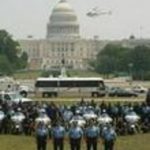
 It was in April 2000 that tens of thousands of anti-globalization protestors marched the streets of the District, protesting the secretive meetings of the International Monetary Fund and World Bank and the policies that emerged from them. Police presence was heavy, given a nervous sense that Washington could go the route of Seattle, which just months prior had been the scene of an epic battle between protestors and police that had provoked an imposition of a state of emergency and the interruption of the World Trade Organization’s meetings.
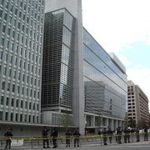
Fast forward to this weekend. The IMF and World Bank are meeting again. Over the course of the last years the crowds of protestors have gotten smaller and smaller, so much so that this year they didn’t even bother applying for permits for marches or demonstrations. Yet the District is proceeding as if it were still six years ago — streets downtown are being closed, and the city is activating its 19-camera CCTV network.
We sympathize with the security-minded among us. After all, instances of violence have marked some of the larger anti-globalization protests over the last years, and we wouldn’t put it past crafty terrorists to use large crowds as an excuse to get as close as possible to the IMF or World Bank headquarters.
That being said, there comes a time when police should question the usefulness of shutting down entire city blocks during these meetings. The only real instance of trouble at any of these protest occurred in September 2002, and that was when the Metropolitan Police Department illegally corralled and arrested over 400 peaceful protestors and bystanders in Pershing Park. In fact, a report issued by the D.C. Council Committee on the Judiciary in March 2004 found that since 2000, it has been the police that have been responsible for the majority of the trouble during large-scale protests — undercover officers have infiltrated political organizations; officers have taken preemptive actions against peaceful protestors and were not disciplined thereafter; the rights of speech, assembly and privacy have not been respected and police have violated their own operating guidelines for handling large protests. Maybe the street closures are to protect protestors from the police, rather than the other way around.
Ultimately, such actions have little impact on our daily lives. Few us venture downtown on the weekends, and fewer of us much care that the police are once again overestimating how much security is needed to handle the expected protestors. But their actions indicate that police might still be unable to distinguish a dissident from a threat, and, more importantly, that they might not yet know how to deploy security measures that balance the security of the city and the rights of its residents and visitors. We’d like to think that six years later they would have learned. Apparently not.