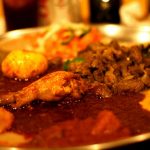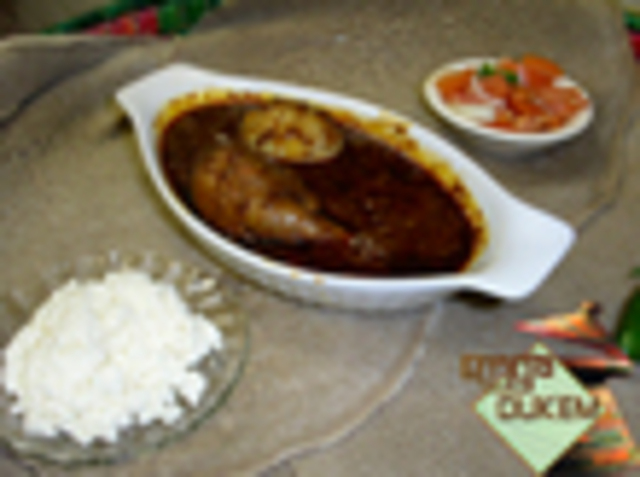
 What’s so special about doro wat — the chicken stew served by just about every Ethiopian restaurant around here? For us, it’s the stew’s heady sauce of red hot pepper and peppery ginger, blended with a dozen other spices, heated and working in harmony, and pounded into a paste called Berberé. It lingers on the tongue. Iit doesn’t seem very hot until after you swallow, when a pleasant slow burn slides all the way down.
In the now-out-of-print Recipes: African Cooking (Foods of the World), deceased South African author and ancient culture guru Laurens van der Post extolled the virtues of Ethiopian cuisine in 1970, well before wars and famine branded a lingering sterotype of Ethiopians into the American consciousness.
Specifically, van der Post was particularly enamored of the complexity of Berberé — a blend of ginger, cardamom, coriander, fenugreek, nutmeg, cloves, cinnamon, allspice, onions, garlic, wine, salt, paprika, red pepper, black pepper, and water. The spices are toasted, blended with the onions and garlic and boiled down with wine and water until the mixture becomes a thick paste. Van der Post called Berberé “the pivot of Ethiopian cuisine … the universal seasoning for everything from a rich man’s delicacy to a poor man’s chunk of bread.” It is what sofrito is to Puerto Rican cuisine. And it is showcased well when combined with chicken, hard-boiled eggs, and more spices and stewed and turned into doro wat.