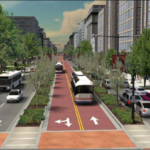
 In the never-ending effort to reduce traffic in metro-D.C., several transportation agencies, including WMATA, have suggested giving buses (and streetcars, when they arrive) “signal priority” in certain congested areas both downtown and outside of the city. Basically this means transit buses would be fitted with a device similar to EZ-Pass that would shorten red lights and extend greens. The goal is to reduce stops and delays for area buses, which already make plenty of stops to pick up and drop off passengers. Several other cities, especially L.A. and Seattle, have had a lot of success reducing traffic and speeding up transit. The L.A. system was actually able to reduce bus trip times by 22-27 percent.
However, a draft report by the Virginia Tech Traffic Institute is saying that the idea doesn’t work, since it can increase delays for cars. The report’s author, Hesham Rakha, was quoted in the Washington Examiner as saying, “The buses are speeding up, but the cars are slowing down.”
But isn’t that kind of the point? The whole idea here is a tradeoff between cars and buses. It would be a mistake to give equal weight to a car with one or two passengers and a bus carrying 40 or 50. Even if cars do wait longer, efficiency must be evaluated per passenger, not per vehicle. Giving the bus priority, even at the expense of the car, moves more people more quickly (isn’t that the goal of mass transit?). DCist is looking forward to the final report, but for now, it seems like a sweet little incentive for people to get out of their cars and on to transit.