Martin Austermuhle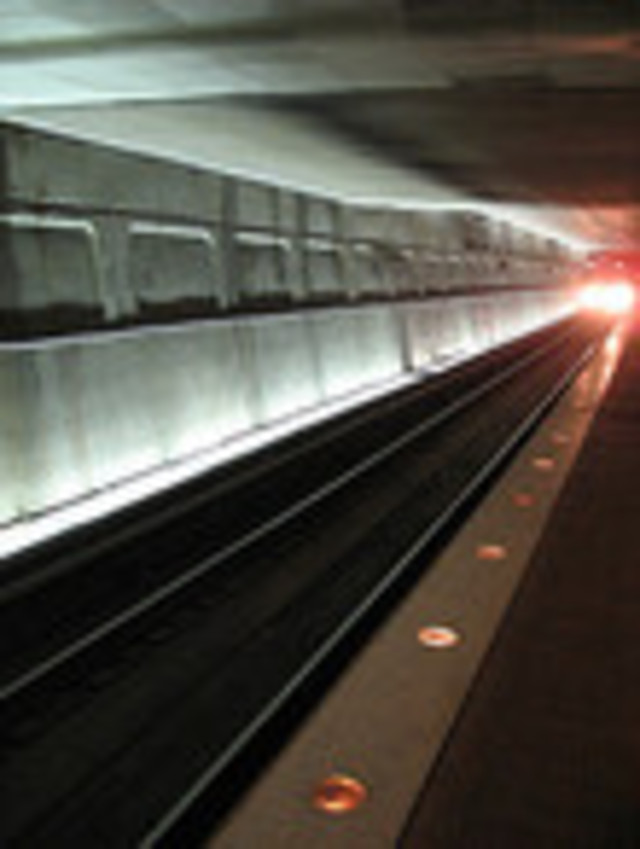
 Metro has always been on the search for more and more money. The transit agency is invariably described as “cash-strapped” by local media outlets (this one included), and rare is a year that Metro officials don’t beg the District, Maryland, and Virginia for just a little bit more to cover everything from operating costs to capital improvements.
Given that getting more money is always a fight, how can Metro seek to better spend what it has? A few months back we argued that Metro should get rid of the carpet and cushions that adorn their railcars. While they may make our rides just a little but more comfortable, they also represent an additional investment in cleaning and replacement. WMATA interim general manager Dan Tangherlini seemed to think the same thing — Metro is currently testing a railcar without carpeting to see how riders react. And based on an article today in the Post, we think that maybe it’s time that Metro start rethinking the lights that grace its Metro stations.
The lights that line the edges of the platform are one of Metro’s signature features. That being said, they also represent an added cost that Metro could easily trim. According to the Post article, each platform is lined with 144 40-watt incandescent bulbs, leaving small stations with 288 of these light-bulbs. Given the number of stations in the whole system — 86 to date — Metro is responsible for maintaining some 25,920 light-bulbs, each of which costs $1.50 and lasts some three months. But the number of lights is surpassed only by the human effort needed to replace them when they burn out. Writes the Post:
As a result, most relamping has to be done when trains aren’t running, typically between 1:30 and 4 a.m. weekdays. It might sound easy, but it takes 13 workers — and this is no joke — working two shifts to change all the lights in a small station. It can take them seven shifts to finish screwing in all the bulbs and tubes at larger stations, such as Metro Center, that have more than one level.
The solutions? One being proposed is lights that last longer. These, though, are more expensive. Ours is to simply cut the number of lights per station in half. While the lights that line the station platforms are a neat addition to the station’s architecture and feel, they serve little practical purpose. And given the costs involved in maintaining them, we think that Metro would be best served by doing away with as many as possible.
Running a transit system the size of our own is a fight to balance needs and means. Metro should be directing its money towards the problems that directly affect the ability of users to get from one place to another — crowded railcars, track maintenance, etc. Lights, carpets, and cushions are all nice additions, but we can still ride Metro without them.