Martin Austermuhle
 When it comes to fighting for District voting rights, activists face two main challengers — the U.S. Congress and themselves. Members of Congress just either don’t care much about whether or not the District’s 600,000 residents have voting representation, or believe its a constitutional mandate written in stone that they shouldn’t. They can be swayed. But many District-based voting right activists differ sharply on what the best approach to gaining voting rights is — some side with the pragmatic and gradual approach, other demand full voting rights and statehood as a simple matter of principle. While both arguments have their merits, the disagreement between the two factions could fracture what small coalition exists to push voting rights in Congress.
On May 11, the pragmatic wing of the voting rights movement took a large step forward with the introduction of legislation that would grant the District one voting seat in the House of Representatives. The legislation, known as the D.C. Fair and Equal House Voting Rights Act, was endorsed by the House Government Reform Committee a week later, and know faces debate in the House Judiciary Committee. Its main sponsor, Rep. Tom Davis (R-Va.), remains optimistic that it may reach the floor and, all heavenly powers willing, actually pass.
But even the prospect of one voting seat in Congress hasn’t satiated the idealistic wing of the voting rights movement. On Monday, the Statehood Green Party issued a press release detailing 10 reasons they oppose the legislation. Stated party activist Gail Dixon in the release:
Don’t be fooled — the Norton-Davis bill is a symbolic piece of legislation dressed up to look like democracy. We call on Congress to grant us real democracy — self-governance in the form of statehood. Democracy for D.C., with its African American majority population, is one of the last major legal civil rights hurdles.
Many voting rights activists similarly fear that if Congress grants the District one voting seat, the movement for full statehood and budgetary autonomy will be set aside for decades to come, and other believe that there can be no compromise when it comes to the basic principle of equal representation.
While both tendencies in the voting rights movement are pushing for the same ultimate goal, they may eventually undermine each other. Should the existing legislation pass, it may well be true that any further steps towards full voting rights and autonomy will be shunted aside. Yet should the idealists gain enough attention, they may cause a split in the movement, thus lessening the movement’s bargaining power before a reluctant Congress.
None of this is to say that these philosophical differences are new. Far from it. But with legislation moving its way through Congress, the differences are magnified. The ultimate danger is that members of Congress decide that since District residents can’t even agree on what they want, the status quo should remain. Let’s hope it does not come to that.
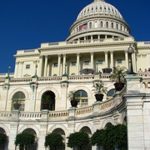
Picture snapped by rllayman