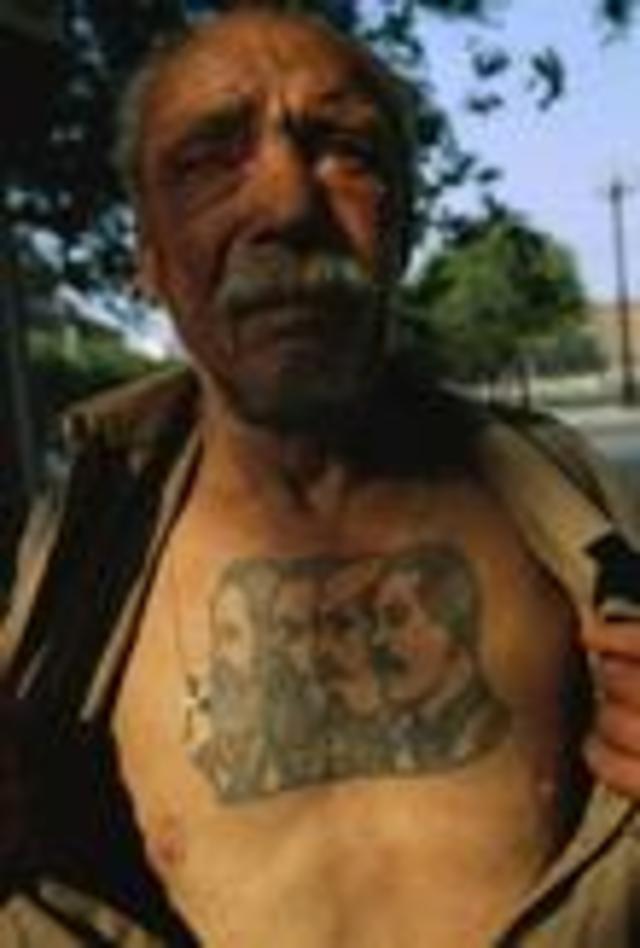
 I know it’s asking a lot, but let’s assume the National Geographic Society has some pretty good photographers on its payroll. Then you know that in their current show by photographer Reza, One World One Tribe, you’ll find some fantastic examples of photojournalism, which is enough of a reason to check it out. However, what makes this exhibit fascinating are Reza’s insights into the nature and purpose of war photography.
Each photograph is accompanied by a paragraph or two, describing the people, the environment – both physical and political – and, quite often, his personal reflections. Born in Iran, Reza has traveled across the globe, from China to Afghanistan to Rwanda. Self-taught, and well-traveled as a correspondent for Agence France-Presse, Newsweek and Time, he seeks with his photography “to witness the agony of war and revolution and express the power of beauty and hope behind human tragedy.”
The harsh reality that one cannot seem to wipe away when viewing these pictures of filthy, starving schoolchildren, men with legs blown off by landmines, and tiny boys with enormous rifles and hard eyes, is the vulgar nature of war photography. Renowned photographer James Natchwey broached this subject in his documentary War Photographer. As a mourning mother wailed horrifically in the arms of her family, the click of Natchwey’s camera twelve inches from her face over and over and over is almost harder to listen to than her screams. He’s not comforting her; in fact, he’s going back to the States to sell those photos and pay the rent on his modest New York City studio.