 Even though he didn’t make the Teenage Mutant Ninja Turtle cut, Rembrandt has an entire line of art supplies and even a toothpaste to his name. Though criticized in his time for his technique of scraping into still-wet paint, Rembrandt has evolved to become one of today’s most widely-known artists.
Rembrandt’s work is the subject of the show Strokes of Genius: Rembrandt’s Prints and Drawings at the National Gallery. The exhibit contains 190 pieces by Rembrandt–all from the museum’s collection of some 300 Rembrandt etchings, and two dozen drawings for good measure. The staggering number of works in the show alone should be enough of an incentive to see the show, especially for those of us who immediately search for the 17th century Dutch room when we visit a new museum, hoping for a glimpse of a few Rembrandts.
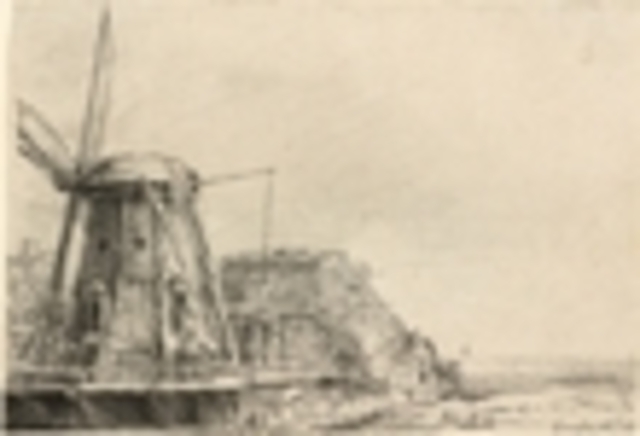
“The Windmill” (1641), an etching and sulfur tint on European paper (pictured), is one of the most interesting pieces in the exhibit. Rembrandt’s windmill is the sort we’d understand Don Quixote attacking; if you look closely, it could contain a face on its walls. Seeing so many Rembrandt etchings and drawings gathered together, it is hard to miss how well the master uses line to capture atmosphere. Rembrandt uses the pen and the etching needle so effectively that his work often exhibits the range of a charcoal sketch.