 The Kirov Opera continues its annual residency at the Kennedy Center with Giuseppe Verdi’s Falstaff. This last opera by the exceptional Italian composer is a mixture of slapstick comedy — Arrigo Boito based the libretto on portions of Shakespeare’s The Merry Wives of Windsor and the Henry IV plays — and an exquisite score of Mendelssohnian delicacy and carefully crafted drama. As the twilight work of a revered composer, it holds a special place in the hearts of opera enthusiasts, the present reviewer included. Imagine the disappointment, on Wednesday night, of seeing the Kirov Opera transform Falstaff into a work of acidic black comedy, a commentary on the divide between a wealthy gangster elite and the freakish, marginalized dregs of society.
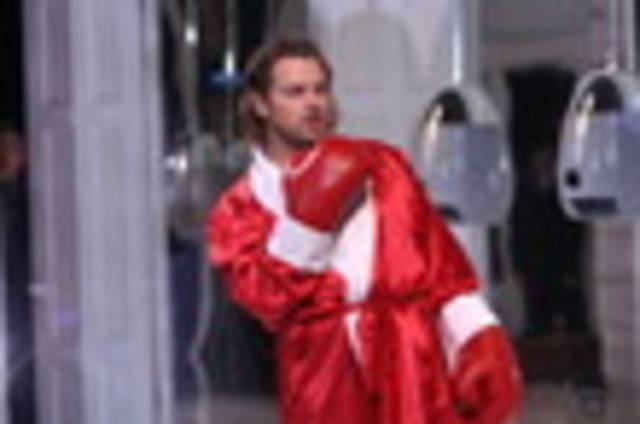
The transformation hinges on making us feel pity for Falstaff’s troubles rather than simply laughing at him as the vain, deluded overweight buffoon that he is made out to be in the libretto. We are not meant to sympathize with Ford, the jealous husband who gets mixed up in the intrigue set by the Wives to humiliate Falstaff for pursuing them sexually. However, Verdi did intend us to see the Wives as the heroic party, a fact that plays at odds with what must happen for the audience to feel bad for poor Falstaff: the Wives must be made unjustifiably cruel. Director Kirill Serebrennikov has done this by making Ford and the Wives into the nouveau riche Moscow millionaires, thinly veiled in the recent past, perhaps the 1950s.