 Written by DCist contributor Maria Flores
Sometime in the early 1970s, when the photographs in Melody Maker, NME, and Rolling Stone were no longer enough to satiate his appetite, Claude Gassian swapped his guitar for a 35mm camera and took to the road with his finger on the shutter button. So began his photographic conquest to document the lives of some of his favorite musical artists. Over three decades later, his photographs stand alone as an iconic visual archive of rock ‘n’ roll as we know it. Paris may be well off the map of the predominately American and British rock scene, but this French photographer has been able to nab a host of the most popular headliners of our time as his subjects.
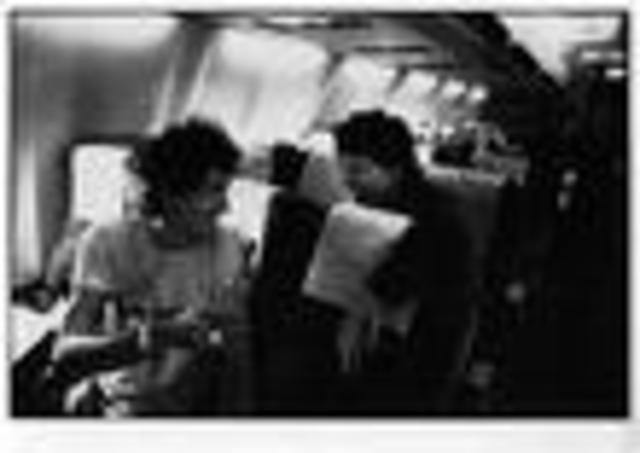
Gassian attempts to capture “that beautiful moment” that exposes the touching, human side of the most recognizable individuals on the planet. By the agency of light alone, Gassian shows us the private moments of these notorious big names: Mick Jagger presses a shirt, Nick Cave takes a smoke break, and James Brown spends some quiet time in a French hotel room. Two of The Stones are snapped sharing a remote laugh flying high somewhere over the European continent. Punk rock’s poet laureate Patti Smith is shown just moments after her puffy-eyed visit to Jim Morrison’s grave at Père Lachaise, Paris in 1976. Swathed in fabric and lament, she sits alone on a stone wall privately mourning her fellow American poet.
The exhibition’s title, Anonymous, announces Gassian’s mindfulness toward the obstacle of photographing such public figures. Unfortunately, even these gorgeous glimpses, these noiseless pantomimes of private emotion on the faces of rock legends, tell us a dramatized story. These intimate portrayals actually add to the mystique that these musicians have accumulated over the decades, and therein lies the rub: the fine line between paparazzo and serious photographer is a hard one to balance when photographing rock stars. The very act of singling these artists out reveals Gassian’s fascination with the “private lives of celebrities,” a trite banner found inside every issue of US Weekly, but he does it with a hushed grace and an instinctual eye. The result is an impressive amount of pictures that are far from exploitative.
Naturally, Govinda Gallery has selected a top-40 playlist that resonates through the two-room gallery – songs performed by the very artists pictured in the more than fifty black & white and color photographs. If you are a rock ‘n’ roll junkie or a sucker for its history, you should have already paid Govinda a visit. But for anyone out there who may not be less of a voyeur, Anonymous promises to get your rocks off with its intriguing chronicle of human emotion.
Image copyright Claude Gassian/Courtesy of Govinda Gallery