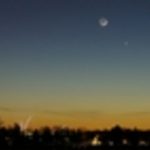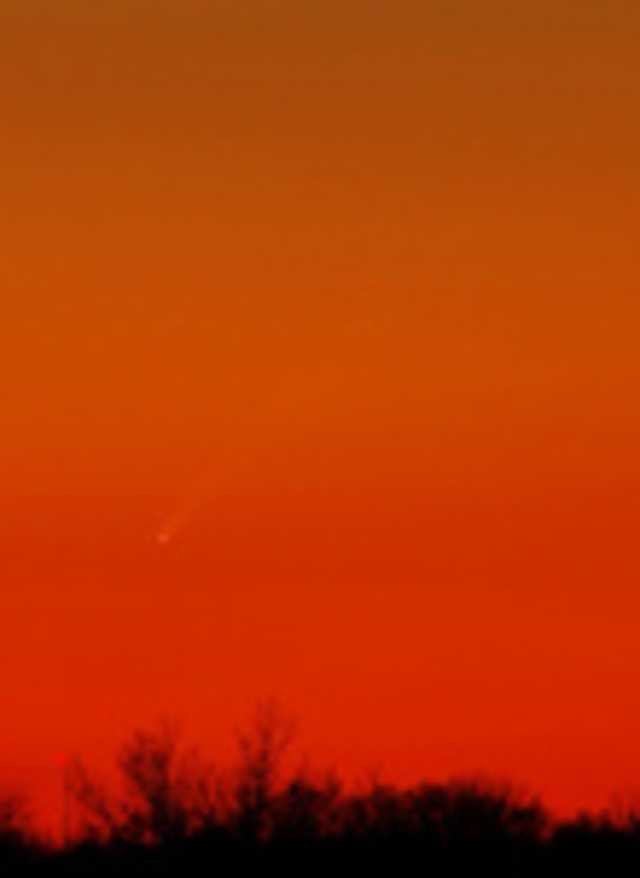

Oooh! This photo is actually from January, but was just added to the DCist pool yesterday (I have to wonder if philliefan_99 waited until I was back doing Photo of the Day, knowing what a sucker I am for astrophotography). He stood at the base of the Washington Monument to take this shot of Comet McNaught, the brightest comet most of us have seen in our lifetimes. So bright, in fact, that it was able to shine through the smog and light pollution that usually obscures views from city centers (but which contributed to the gorgeous orange sky). It’s almost amazing to note this was only a 1/4 second exposure.
If we may take this moment to geek out a little, these late spring nights are the perfect time to step out for a little stargazing. On a warm, clear evening, you won’t even need binoculars to pick out some amazing sights. Start by finding Venus in the western sky just after sunset, which will only be visible for a few more weeks, but should be easy to find sitting right next to the new moon in a few days. Saturn sits higher in the southwest sky in the middle of Leo, also coming close to the moon around May 22. Now turn around and look in the northeast for one of the brightest stars in the sky. Not just a movie star, this is Vega, one of the most prominent stars in the summer sky and a part of the constellation Lyra. Keep your eye on it over the next month and a half, because soon Vega forms part of the Summer Triangle, a great starting point for constellation hunting. Incidentally, we’ll have the first blue moon this month since 2004, on May 31.