 Yellow patches hanging in the window of Addison/Ripley might cause a spark of interest when going down Wisconsin Avenue through Georgetown. Upon closer examination, the work is a print of a woman on doilies, dressed in yellow. There are 57 of these prints by Mara Sprafkin clinging to the wall. In the window next to her is a repeated print of a woman, kneeling in a summer Sunday dress. Some of the dresses are filled in with gold leaf. Whether regarded as art or illustration, there is something about it that is inviting to go inside.
Perfect Competition is curated by Kate Werble of March Gallery in New York City (she formerly interned at Addison/Ripley). Werble’s intention was “to position six young female artists in one room and see if their works resist commodification or lose their individuality if positioned in a commercial gallery.” These two intentions seem, at best, leftover angst from a couple of semesters steeped brooding over nothing but feminist theory texts in graduate school, and as a whole do not represent or encapsulate the work well. At worst, these intentions touch on naiveté and absurdity – especially that of commodification. Any time work enters a commercial gallery and has a price tag associated with it, it is a commodity. This was something that the artists of the last century tried to overcome, and did so unsuccessfully with work more vulgar than a smashed umbrella. After all, in 1961 Piero Manzoni canned his own feces 90 times in small tins. This was an orchestrated effort to critique and offend the art market and gallery commodification. The result: people bought the tins of crap. As for Perfect Competition, there is no crap to put up with. Nor is there any sense of confrontation from the work.
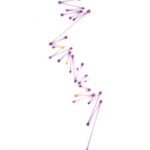
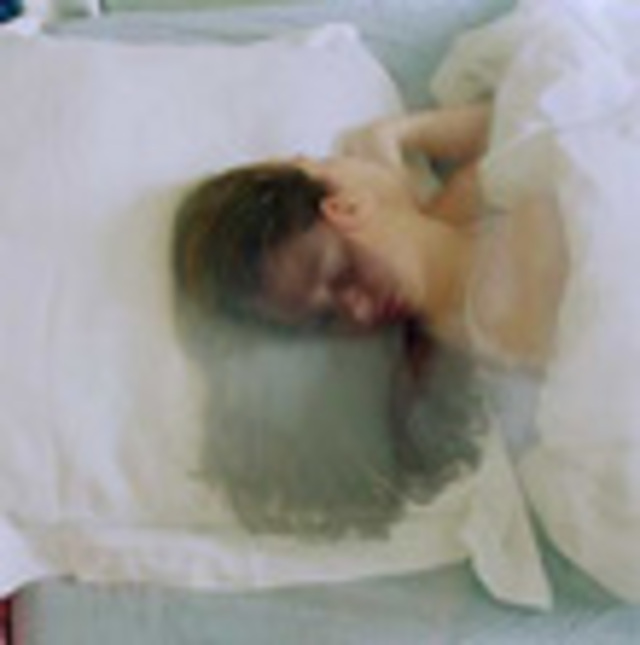
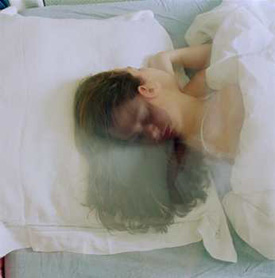
Some of the work is seductive. Elisabeth Bernstein’s C prints in light boxes are the time-lapsed record of a woman sleeping. They often capture a head positioned Janus-like, looking simultaneously to the past and the future. Abby Manock’s Space Rolls are 20-foot long scroll drawings of crayon and china marker. The vibrancy of their color draws the eye like a moth to a flame. Each drawing is like a roller coaster, tracks and lines weaving in and out and jumping the picture frame to the composition next to it. They can work together or separately.