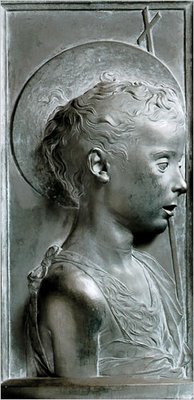
 You may have admired the sculpted heads of children by Desiderio da Settignano (c. 1429–1464) in the collection of the National Gallery of Art. Washingtonians are lucky to have these pieces in their backyard, rare enough for a museum anywhere, and even luckier that the NGA is the only American venue for the first international exhibit devoted to this elusive artist, Desiderio da Settignano: Sculptor of Renaissance Florence. It draws together pieces from three major collections — the Bargello in Florence, the Louvre in Paris, and the NGA — as well as other museums. Although it is modest in size, occupying only two small galleries in the West Building, this show is a knockout that has reduced both the Post’s Blake Gopnik and Holland Carter of the New York Times to paroxysms of rapture.
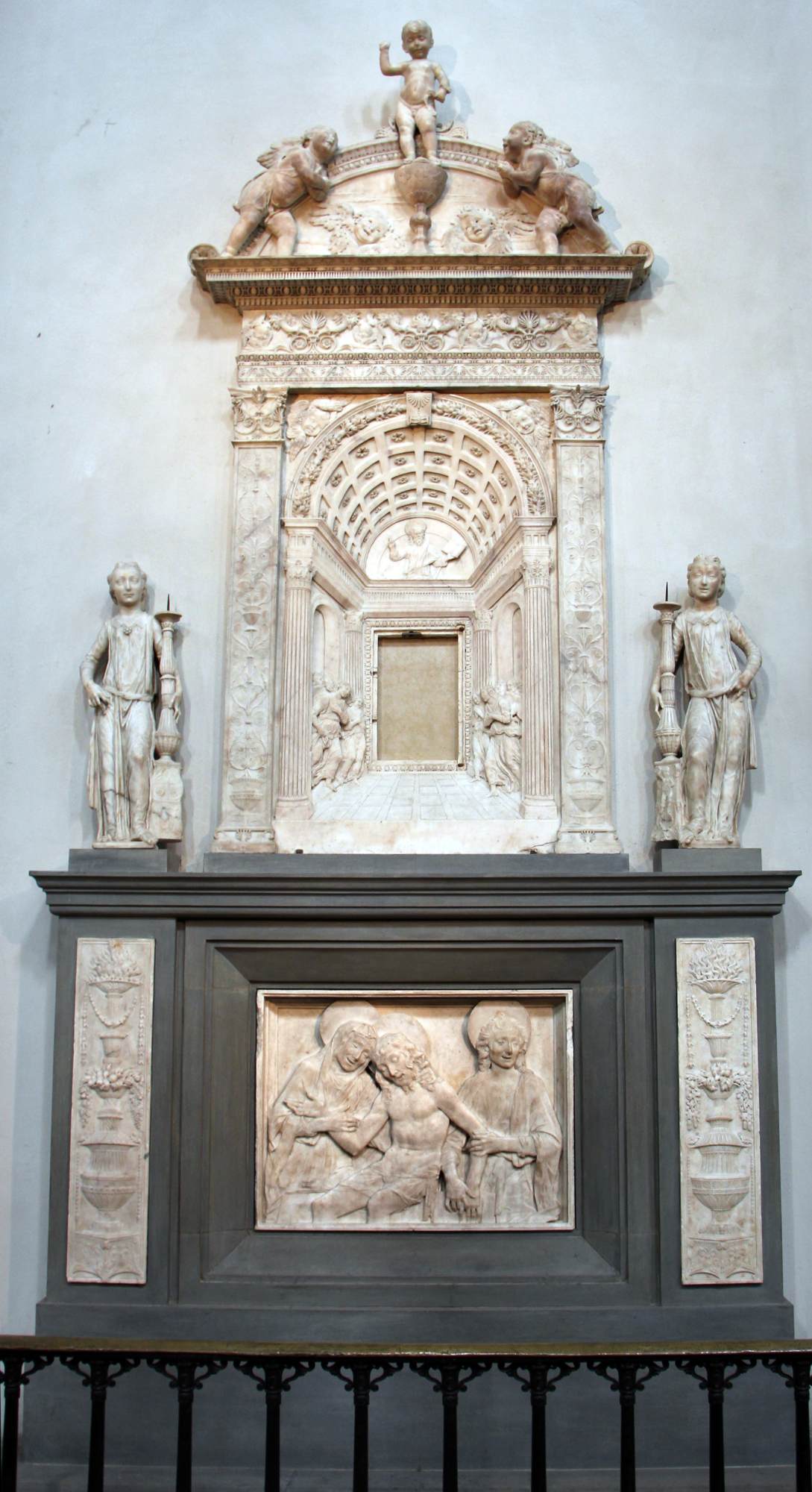
The exhibit offers a perspective on Desiderio’s career, including photographic reproductions of two large-scale (and unmovable) works, the tomb of Carlo Marsuppini in Santa Croce and the tabernacle of San Lorenzo, both in Florence. The Renaissance art historian Giorgio Vasari wrote a brief biographical article on Desiderio in Lives of the Artists that captures the bewitching qualities of the sculptor’s genius:
It is a truly celestial gift, which pours down on these works in such a manner, that they ever have about them a loveliness and a charm which attract not only those who are versed in that calling, but also many others who do not belong to the profession. […] This grace and simplicity, which give universal pleasure and are recognized by all, are seen in all the works made by Desiderio. (trans. Adrienne DeAngelis)
Vasari states that Desiderio died at age 28, but it is now accepted that he lived into his 30s. His short life has limited his fame in later generations, but if he had lived to the same age as Donatello, it is possible that Michelangelo’s career would have been pushed in a different direction. At the entrance to the show is a gorgeous linden wood sculpture formerly known as La Belle Florentine, no longer firmly attributed to Desiderio. Rather than simply a portrait of a pretty Florentine woman, this sculpture has recently been identified as Saint Constance (because of an inscription uncovered in restorative cleaning). A compartment at the top of the head originally functioned as a reliquary.
Photo of Desiderio da Settignano’s Young John the Baptist, c. 1453, Museo Nazionale del Bargello, Florence