 Is there anything new that can be added to the debate over the legality and morality of abortion at this point? Finding anyone without a pretty firm opinion is difficult enough. Finding fresh perspectives on an issue this divisive, studied, thought through, and argued over is even rarer. Tony Kaye’s Lake of Fire, a documentary 17 years in the making, doesn’t necessarily present any new information. But it collects all those varying perspectives and passionate feelings into the most definitive and balanced examination of the issue ever committed to film.
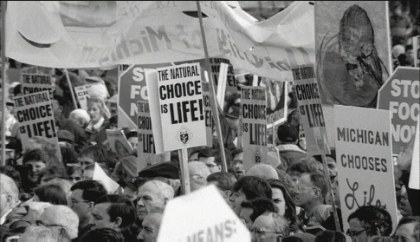
“Film” is a key word here, and for a moment we’ll step back from the subject of the movie and simply marvel at its stunning cinematic beauty. Kaye, acting as his own cinematographer, has shot one of the most visually arresting documentaries since Werner Herzog’s Lessons of Darkness. Part of that is simply Kaye’s innate visual sense. Most of the interviews that are central to the film are shot in intimate closeups, with subjects often addressing the camera directly. And Kaye’s field work is beautiful to look at as well, more skillfully framed than many meticulously staged feature films. But part of it is also the choice of medium, and it’s a striking reminder that while video is cheap and much better suited to many of the vagaries of making documentary films, it is still no replacement for film when the filmmaker wants the images to have impact equal to the facts. And that while color may be closer to reality, black and white can have a power to hit our emotions much more forcefully.
Footage in the film ranges over many of the years of production, though much centers around the mid to late 1990s when Kaye was doing the bulk of his shooting. Aside from the hair and clothing, though, being a decade old doesn’t date most of the material at all. In fact, it only serves to underline the notion that the discussion tends to go around in circles, but never really move into new ground.