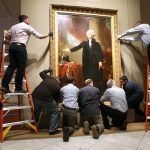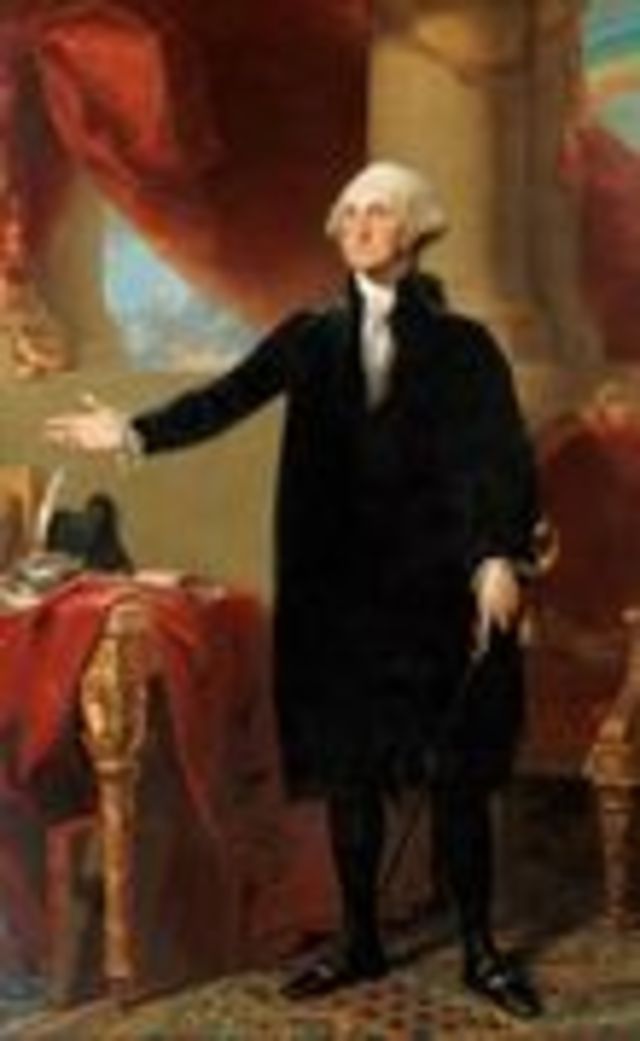
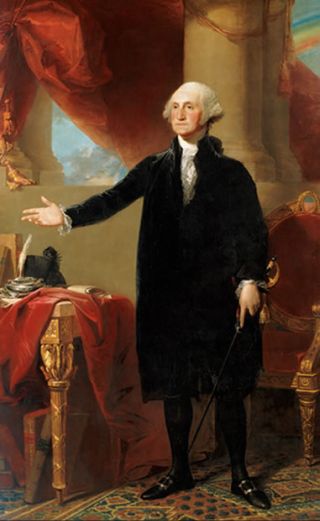
 Even though he has a room dedicated to his likeness in the Corcoran Gallery of Art’s new exhibit, The American Evolution: A History Through Art, one of George Washington’s most famous portraits resides at the National Portrait Gallery and has a storied history.
Nicknamed the “Lansdowne” portrait, Gilbert Stuart’s 205-year-old painting, George Washington, has not spent many of those years in this country. “Lansdowne” comes from the person for whom it was painted, the first Marquis of Lansdowne. Sen. William Bingham and his wife Anne commissioned the painting in 1796 as a gift for the marquis, a British member of Parliament who supported the American side during the Revolution. Bingham earned his fortune through trade and privateering and served as U.S. Senator from Pennsylvania from 1795 to 1801. The marquis was ambitious and overbearing, and his support of the American Revolution isolated him from his fellow British politicians.
Bingham paid Stuart one thousand dollars for the commission, which came about as the result of Bingham’s correspondence with Lansdowne about their mutual admiration for Washington and their interest in open transatlantic trade. The portrait’s iconography includes a nod to Washington’s ratification of the Jay Treaty, and the resulting transatlantic political alliance garnered during Washington’s second term.