 Transit is inherently tied to politics, and as such, involves quite a bit of perspective.
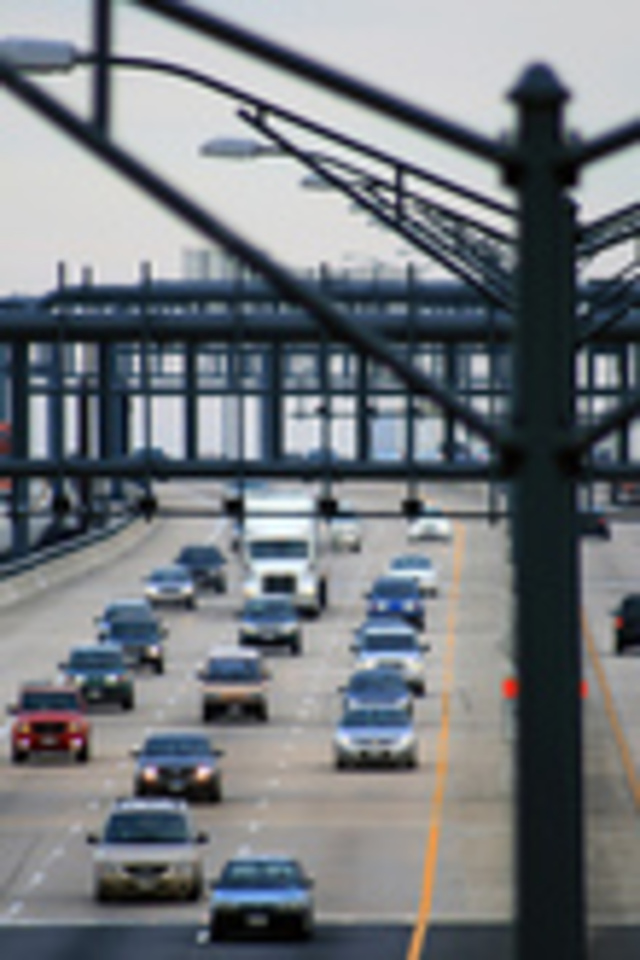
Bearing that in mind, here’s a question for those readers out there that drive to work everyday: how would you like having tolls escalate with the amount of traffic density in order to fund those same roads that you currently sit idly on?
Well, if the Department of Transportation and the Bush Administration have their way, you might be looking at such a system across the country. As the Post reported Monday, the DOT, looking for a solution to alleviating the traffic around urban areas, siphoned off $850 million dollars of a $1 billion funding package to fund a program called “Urban Partnerships” in five different cities across the country. The point of the program is to investigate the idea of progressive tolling, where tolls rise as traffic does the same – a controversial, free-market idea touted by neoconservatives and hated by mass transit proponents.
Although the premise of the idea might not sound that terrible – make the people who create the most traffic pay for maintenance and construction – the unfortunate victim of the theory is a catastrophic loss of mass transit development. The report notes, for instance, that people were using cars to shuttle others in northeastern Iowa because they were unable to afford updated buses without the diverted “Urban Partnership” funds from the DOT. Locally, the Dulles Rail project has been waylaid due to a lack of funds from the federal government as it’s, you know, not a road (and not as easily privatized as a slab of gravel and concrete).
If this pattern continues, streetcars, rail, and other public transportation could see a serious loss of momentum, even though usage is booming:
The focus on toll roads alarmed the transit industry, which argues that public transportation is the best way to fight gridlock in cities. Industry leaders say the DOT has made it increasingly difficult for expensive rail projects to qualify for federal dollars. The number of major new rail and bus projects on track for federal funding dropped from 48 in 2001 to 17 in 2007, even as transit ridership hit a 50-year high last year and demand for new service is soaring.
It’s a pretty slippery slope, too: the process has a likely terminus at the complete private ownership of roads by large firms and corporations – who would be able to charge whatever they wanted, anytime, as they saw fit to regulate traffic. With the Dulles Toll Road, we’re no stranger to that type of arrangement. How does a $5 trip on the Verizon Capital Beltway sound? (Maybe it should be The Capital Beltway, presented by Verizon. We’re split on the whole naming thing.)
It’s definitely something to ponder in a country where public spending on roads is pretty ludicrously out of balance already: according to DCist alumnus and development guru Ryan Avent, for every one dollar we spend on mass transit, $40 is spent on roads.
After the jump, your post-protest survey and a few odds and ends.
Photo by AlbinoFlea. Joshua Davis contributed.