 Jordan Pascale
Faced with both a carrot and stick from Gov. Larry Hogan, a regional transportation board on Wednesday reversed course and approved a controversial toll lane project on the American Legion Bridge, Beltway, and I-270.
The Transportation Planning Board, which is made up of local elected officials and transportation department officials, voted 28 to 10 in favor of the project,reversing its vote from last month.
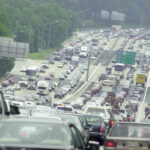
The reversal came amidst heavy lobbying by Hogan, who has pitched the project as a critical step towards reducing congestion in the Washington suburbs. He offered money for one transit project in Montgomery County to curry favor for the toll lane project, and has been fiercely critical of leaders in the region who don’t back it.
The vote change came from a united front from Virginia members, who were previously mixed on the project, and an addition of new members, including Maryland State Sen. Nancy King (D-Montgomery County), Virginia Del. David Reid (D-Loudoun County), and a replacement for Kai Hagen, a representative for Frederick County. The majority of Montgomery County’s Council also moved to change its vote after promises from the Maryland Department of Transportation for some engineering funding for a key transit project in the area. The rest of Maryland’s jurisdictions remained split on the idea.
The vote was a necessary step to get Hogan’s signature project back on track. The public-private partnership project still has numerous steps and votes to go through, and opponents say they’ll use each opportunity to fight against it.
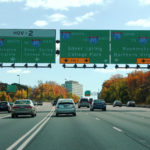
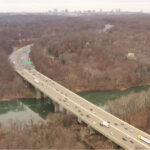
The project would add four high occupancy toll lanes for about 15 miles from the American Legion Bridge at the Potomac River to the I-270 interchange and up north to I-370 near Gaithersburg. It would also cover a few spurs going east.
Those in favor of the project say it’s needed to fix congestion on one of the region’s busiest roads. Maryland’s toll system would also tie into Northern Virginia’s toll lanes which run on I-495 and 395.
Those against say the project would be detrimental to the climate, encouraging more sprawl and more driving.
In June, the TPB voted against the controversial project because board members said it didn’t have a complete environmental assessment. The vote kept the project out of the federal air quality assessment, essentially stopping the project from moving forward.
Earlier this month, the Maryland Department of Transportation said it wouldn’t be able to fund five projects worth about $1.5 billion if the public-private partnership didn’t go forward. Officials said they wouldn’t be able to afford to pay for them as they’d have to redirect money elsewhere to cover the funds lost from the public-private partnership deal.
But in a lengthy tweet thread, toll lane project opponent Del. Marc Korman (D-Montgomery County) said that it was an empty threat — Hogan hadn’t put money toward funding those projects in the next six years anyway, he wrote.
“If the Governor thinks these projects are important, I will be waiting in the Appropriations Committee for his last budget submission to discuss how to get them done,” Korman tweeted. “Until now, he has basically given them zero support.”
In the end, MDOT came back promising money to fund engineering work for a long-time Montgomery County priority, the Corridor Cities Transitway, a bus rapid transit line on Route 355.
Ahead of the meeting, several members of the TPB wrote letters saying last month’s vote was rushed and had unforeseen consequences. They said it would essentially upend the years-long process of trying to replace the American Legion Bridge.
The project has been hotly contested, with 563 comments submitted — 293 for the project, 270 against the project — and TPB staff said Wednesday’s meeting was the most attended in recent memory.
“This is a great victory for Marylanders sick and tired of being stuck in soul-crushing traffic,” said Hogan in a statement celebrating the outcome.
“Through one of the largest public-private partnerships in the world, we will deliver a new American Legion Bridge, real traffic relief on the Capital Beltway, more transit services for the region, thousands of jobs, and long-term economic growth and environmental benefit,” Hogan said. “This is a win for families, commuters, and small businesses, and it’s a win against the small group of Montgomery County politicians and far-left activists who sought to derail a compromise requested by Montgomery County and already approved by the bipartisan Board of Public Works. Their actions needlessly put the new bridge and every critical transportation project in the region at risk.”
Montgomery County Executive Marc Elrich, a chief opponent of the toll lane plan, said Hogan’s political action committee ran an “unprecedented negative campaign” that was “largely filled with lies.”
“[The PAC’s campaign] talked about people being stuck in ‘soul-crushing traffic.’ They don’t tell you that the people who don’t pay the tolls will still be stuck in soul-crushing traffic,” Elrich said.
Elrich said he’ll continue to work with the state and make sure the Board of Public Works “puts a microscope on this deal and makes sure the state does the (full environmental) evaluations.”
Arlington County Virginia Boardmember Christian Dorsey said he would’ve liked to see more consensus from Maryland, but voted in favor of the project anyway.
“(This team) has made significant improvements… clarifying the commitment to transit in terms of development, operations, and construction, along with the commitment to engage with localities.”
The project still has several environmental reviews, a toll rate process through the Maryland Transportation Authority, and votes from the Board of Public Works. But those processes are less politically fraught than the regional board.
Several environmental, transit, and land use groups said in statements they were upset with the vote.
“Last month, the TPB voted on principle when it removed Hogan’s highway boondoggle from its long-range plan,” said Josh Tulkin of the Maryland Sierra Club. “Today, the project was reinstated, not because of its merit, but through coercion. MDOT and Hogan utilized a Trump-esque playbook, including aggressive governor PAC attack ads, threats, and coercion, including bribes from MDOT and removal of TPB members.”
The Maryland Transit Opportunities Coalition, which had advocated for a more transit-focused project, also accused Hogan of a “blatant display of political intimidation to muscle the toll lane plan past the Transportation Planning Board.”
“This misbegotten scheme lumbers on, weighed down by $50 tolls, guaranteed traffic jams, sketchy finances, a fatally flawed environmental study, and dubious procurement practices,” Ben Ross of MTOC wrote.
The Board of Public Works is set later this month to vote on the private partner for the project, Australian companies Transubran and Macquarie, to design and build the project. The state would also sign a $50 million deal for the development work. That money could be lost if the project doesn’t move forward.
This story has been updated throughout with comment from elected officials.