 Hopefully, you didn’t miss us too much last week. But it seems that we weren’t the only transit columnists that got stuck on Amtrak during last weekend’s travel.
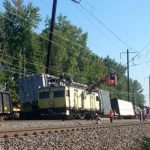
WTOP’s Adam Tuss writes a sadly typical tale about his Amtrak train to New York’s Penn Station breaking down twice and eventually stopping permanently in Newark, New Jersey, due to multiple power failures.
This happened on Amtrak’s National Train Day promotion, no less. Cute.
While Amtrak didn’t manage to supply us with that sort of tailor-made irony, our train to Philadelphia last Thursday night was also halted for about 40 minutes outside of Baltimore – and again on the return trip Sunday near Aberdeen, Maryland – both caused by the ubiquitous “power failure.” Tuss’ delay time totaled two hours, while we spent about an hour and a half idly waiting on the tracks. Of course, we should likely be thanking our lucky stars – Tuss mentions his experiences in college sitting in the aisles and seven-hour trips between here and New York. We’ve got our own tales about 13-hour trips (that are eight-hour rides by car) between Pittsburgh and Connecticut. Chances are you’ve got your own horror stories, too.
So how can an organization have such an overwhelmingly negative reputation and still manage to sell tickets to 25 million people?
Well, it’s not much of a secret: there’s little choice when it comes to traveling between destinations on the Northeast Corridor, unless you’d like your trip to consist solely of travel. There’s Greyhound, the many Chinatown buses, and their newer competitors. And then there’s driving. That’s pretty much it, as the City Paper cover boy Joshua Kucera’s quasi-epic journey through MARC, senior buses, and Philadelphia regional rail proves.
So, how do we fix Amtrak? Or better put, how can Amtrak fix itself? Some ideas, after the jump.
Photo by rsplatpc