
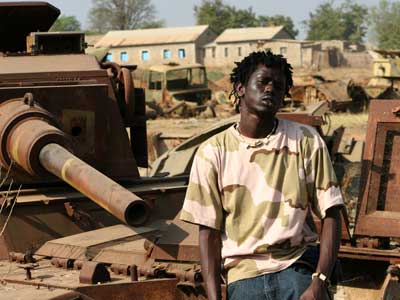
 Emmanuel Jal is a supremely charismatic young man with a gentle way of carrying himself, always ready with an infectious smile, and always willing to talk to a group of strangers about his music and the path that led him to be on a stage or at a podium in front of them. The simple fact of his standing anywhere is a triumph; at the age of seven he was transformed into a child soldier to fight in the Sudanese civil war, and spent five years with an AK-47 at the ready until a British humanitarian helped him sneak out to a better life in Kenya. His difficult path is an inspirational example of just what can happen when a little luck combines with a lot of talent, charisma, and positive attitude, as he now finds himself an international star, both for his story, and for the hip-hop he now performs, much of which is informed by the events that shaped him. He’s a natural subject for a documentary, an unlikely and fascinating story of triumph over adversity, and that alone is enough to recommend War Child. On top of that, five percent of the grosses for the film go directly to Gua Africa, a group that works to help out war and poverty devastated communities in Sudan and Kenya through education. How often do you actually do some good when you spend your entertainment dollars?
Unfortunately, beyond hearing Jal’s extraordinary story, War Child has less to offer as a film. Its inspiration is balanced out by a catalog of missed opportunities. Part of this may not necessarily be the fault of D.C.-based first time director C. Karim Chrobog. It’s clear that while Emmanuel Jal loves to talk and to do good with those words, this characteristic is somewhat at odds with the fact that he, by his own admission, doesn’t like to go into many of the details of his story. The film’s most powerful moments are when Chrobog does get Jal to open up, but the film is more typified by Jal (who practically narrates the film himself via interviews) only scratching the surface of his tale.