
 Time travel stories can present all sorts of wonderfully mind-bending possibilities for the creative storyteller, but an awful lot of logical pitfalls. If Marty McFly accidentally keeps his parents from getting together and nullifies his existence, then he couldn’t have hopped into that DeLorean and keep them apart, reinstating his existence, and around and around the wheel of folded time causality spins. Most filmmakers tend to try to skip over these inherent paradoxes in order to have their stories make some semblance of sense. But new quantum mechanics-influenced models of time travel posit that there are universal laws at work that prevent any such tinkering in time to occur. You can go back for a look-see, but you’ll be prevented from engaging in any action that will alter a future that is established with certainty.
Sounds an awful lot like fate, no?
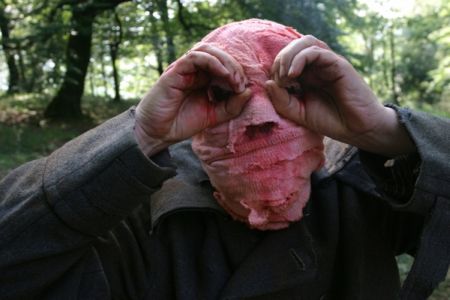
And it’s the concept around which Spanish director Nacho Vigalondo’s debut feature revolves. When his hero, Hector, finds himself bounced back in time by a few hours, he operates under the assumption that his presence in the past is much like Marty’s adventure in Back to the Future. He figures he can influence whether or not the past Hector gets transported back in time the same way that he did, and he figures that if he doesn’t make sure it happens, there will be two of him walking around. And considering how upsetting he finds it to look through binoculars at his house and see another guy (even if that other guy is himself) kissing his wife, he figures he’d better make sure that guy’s future is the same as his own past.