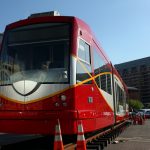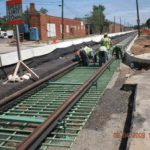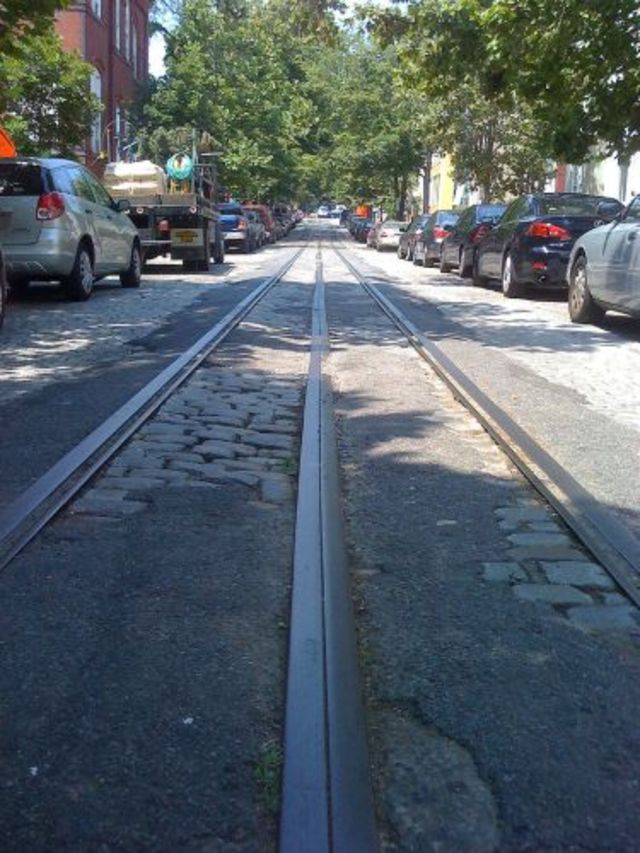
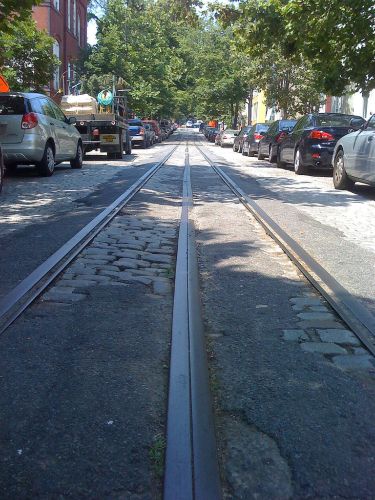
 Photo by SWB Moblog.
Washington’s lack of a versatile streetcar system has been a long-standing complaint of most D.C. transit-types; DCist itself has been no stranger to vouch in their favor. The reasoning behind the absence of trams has been huffed and puffed in so many different forums, but here’s the brass tacks: streetcars normally run on overhead wires, most of D.C. doesn’t allow for them, and lifting that ban would require the approval of Congress, which is just not going to happen anytime soon.
The obvious solution would be to bury the power lines, right? Well, the offerings in that capacity have been mostly lackluster — especially considering our fair city’s tendency to treat it’s roads with all the tenderness of a hardcore professional wrestling match (even when there’s barely any precipitation to be found).
Well, lackluster until now, that is.
Rebuilding Place in the Urban Space (with a tip of the cap to Ryan Avent) brings the news that Canadian company Bombardier has developed a new underground power source for streetcars, which would effectively solve the issue of overhead wires and eliminate the need for Congressional approval. (Ah, be still my beating heart.)
The PRIMOVE system is fairly ingenious — it involves both the transfer and storing of energy to reduce wear on components and keep power levels constant along the track. The only hiccup with the new technology is that it only works with Bombardier’s Flexity tram vehicles, and whether or not the District would be able to purchase these cars (as opposed to the arrangements with Inekon currently in place to provide vehicles for the Anacostia line) is certainly a legitimate question.
Concerns like this, though, can (and hopefully will) be addressed when the time comes — for now, it’s just nice to bask in the independence from the Federal government that this has the potential to bring to local transit.