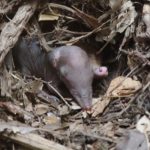
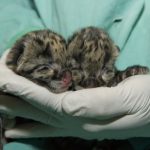
Though the National Zoo had expected and prepared for a second black and rufous giant elephant-shrew birth in as many weeks, staff grew concerned when the giant elephant-shrew appeared outside its nest three days after it was born — nearly three weeks before it should have. Something was wrong. But on Sunday, before zoo staff could intervene, the baby elephant-shrew was killed by its mother.
Elephant-shrews are altricial animals, meaning that the young require nourishment for a time after birth. Some animals — precocial animals, such as the porcupine — are good to go almost immediately after birth, with all the natural defenses and instincts necessary to survive in the wild. The elephant-shrew is not one of them. So when the elephant shrew mother showed abnormal behavior by removing her infant from the safety of the nest before three weeks had gone by, staff grew alarmed.
As associate director for animal care Don Moore explained to DCist in an interview, zookeepers are reluctant to hand-rear baby animals. Hand-rearing can have a debilitating effect on an animal’s behavior and development. As a last resort, staff will intervene in order to save an animal that is in danger, but deciding when that interference is necessary is an imperfect science. Zoo staff apparently did decide to intervene in this case, but it was too late.
“When something like this happens, it’s for a reason,” says public-affairs specialist Sarah Taylor. “There’s some kind of problem, or the environment isn’t suitable. In many cases, infanticide occurs when there is a high probability that a baby will not survive due to factors such as disease, a birth defect or other perceived environmental threats to its survival.”
It’s tragic, even cold, but that’s how it works: Sometimes nature cuts its losses. Scientists may yet learn more about elephant-shrew rearing behaviors and physiology from the incident. And fortunately for zoogoers, the other giant elephant-shrew born to the same pair in January and introduced earlier this month appears hale and healthy.
Photo of a mature black and rufous elephant-shrew used with permission under a Creative Commons license with Flickr user Smithsonian’s National Zoo