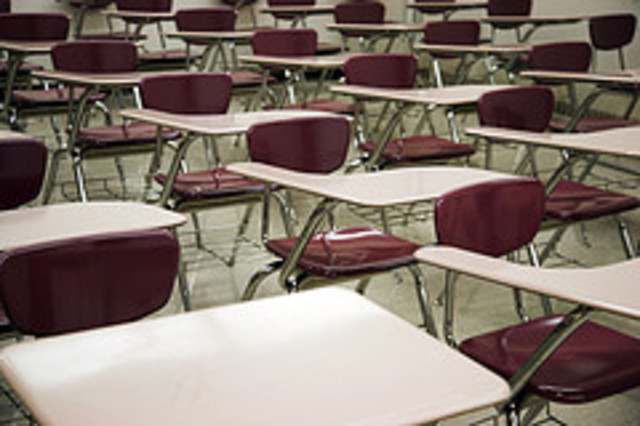
 Photo by dcJohn
Bill Turque turns in a thoughtful piece in today’s Post, examining the loaded dynamics behind disciplining students who attack their teachers. It may sound obvious – kids shouldn’t get away with physical violence, ever – but tension between instructors and administrators, overcrowded or poorly-managed classrooms, and the difficulty of confirming allegations, complicate the discipline process. There are no definite statistics about assaults against D.C. teachers, but Turque interviews instructors at Woodson Academy who complain of being struck by books or shoved by students, and who feel that DCPS and their administrators have done little to address bad behavior.
Anecdotal evidence about verbal and physical assaults against teachers is common in DCPS, even if it is not always formally documented. (A former colleague of mine, who taught at the campus where Woodson Academy is temporarily housed, once had a student defecate and then throw it at her.) But Woodson Academy’s principal told Turque, “the teachers were distorting the situation to deflect attention from their own professional shortcomings” – one of the teachers profiled is currently on a 90-day intervention plan for poor performance. Union officials dismiss that argument as “an example of blaming teachers for student violence.” Some teachers claim that if they “complain or eject too many students,” they are accused of being “weak in ‘classroom management’ by administrators determined to keep a lid on behavior issues.”
But that’s the thing – as Catherine Cullen points out at Fordham, “‘Good’ teachers are also ‘good’ at classroom management, and they don’t tend to have books thrown at their heads.” At the most basic level, you can’t teach if you can’t control your classroom. And while the specific examples of incidents at Woodson may not be indicative of a District-wide trend, it’s clear that the system needs a better way of supporting teachers when students really do get out of hand.